Five hundred years ago, in the dense, candle-lit air of the Ming Dynasty Forbidden City, an older woman named Wan Zhen'er watched a young emperor eat.
She was seventeen years his senior. In a court that traded on the fleeting currency of youth, her continued survival—and her absolute hold over Emperor Chenghua—defied every convention of the empire. History remembers her as Consort Wan, a figure of dark fascination. Rumors bled through the palace walls that she used secret herbs, toxic decoctions, and targeted violence to induce miscarriages in rival concubines, desperate to ensure that no child but hers would inherit the dragon throne.
Her weapon was control over the biological lineage. She understood a fundamental, terrifying truth about the human condition: if you can master the unseen vulnerabilities of the flesh, you can control the destiny of a kingdom.
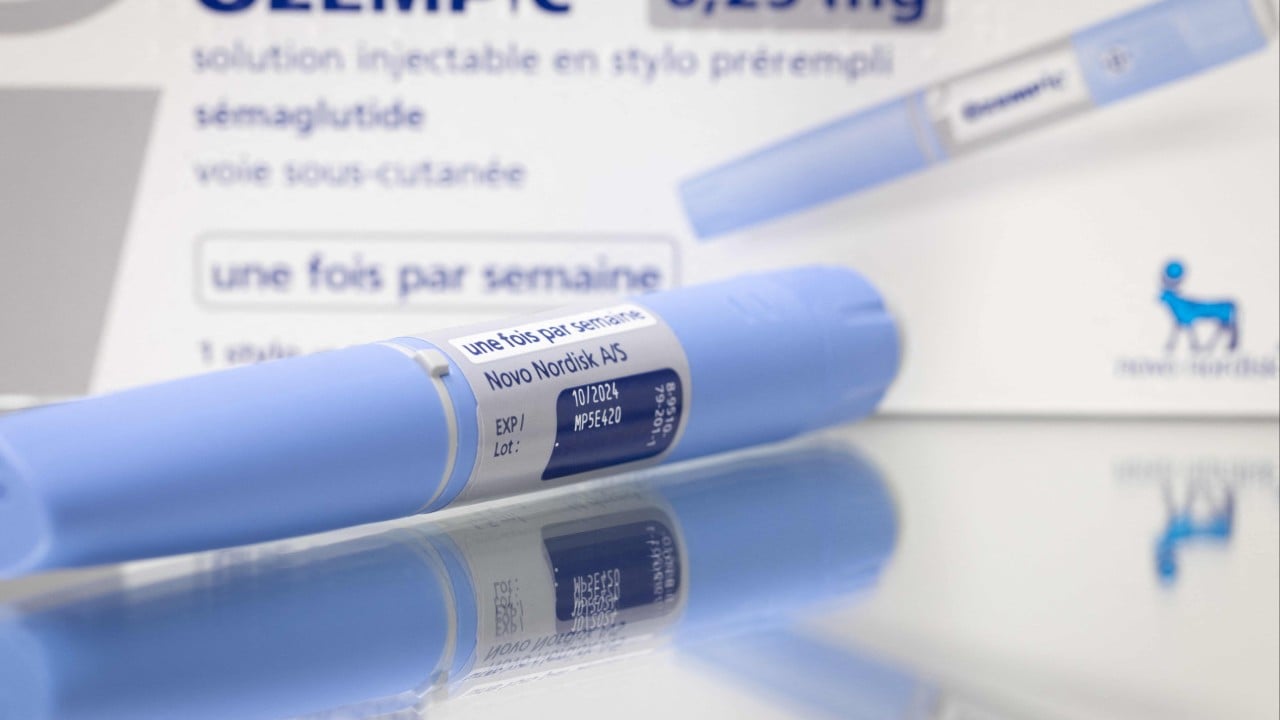
Today, we no longer use palace poison to manipulate biological outcomes. Instead, we use a clear liquid drawn from a glass pen.
I know the weight of that pen. I have held it against my skin, watching the numbers click down in a cold, silent room, listening to the quiet snap of plastic that promises to silence the oldest, loudest part of the human brain. We call them GLP-1 receptor agonists—Ozempic, Wegovy, Mounjaro. To the public, they are the ultimate modern shortcut, a chemical eraser for the sins of gluttony.
But that is a profound misunderstanding of what is actually happening inside the body.
We are not just witnessing a diet craze. We are watching the dawn of a massive biological realignment, one that mirrors the desperate measures of ancient palaces. Like Consort Wan’s legendary maneuvers, the manipulation of our internal chemistry offers immense power over our quality of life, but it arrives with an invisible ledger of debts that must eventually be paid.
The Ghost in the Machine
To understand why a diabetes medication has rewritten the rules of modern life, you have to look at a hypothetical patient. Let us call her Sarah.
Sarah does not suffer from a lack of willpower. She suffers from a biological broadcast that never stops screaming. When she looks at a plate of food, her brain does not register fuel; it registers survival, comfort, and an urgent, Dopaminergic demand. For decades, the medical establishment told Sarah to simply try harder, as if a thin layer of conscious thought could easily override millions of years of evolutionary drive designed to keep her from starving.
Then came the synthetic hormone.
GLP-1, or glucagon-like peptide-1, is a hormone naturally secreted by our intestines after we eat. It does something beautifully complex: it tells the pancreas to release insulin, slows down gastric emptying, and travels up to the hypothalamus to whisper that the hunt is over. The belly is full. You can rest.
In a healthy system, this message is a clean, passing signal. But in a world engineered to trigger our deepest appetites, that signal gets drowned out. The new class of medications works by mimicking this hormone, but with a crucial modification—they stay in the system for days instead of minutes.
When Sarah took her first dose, the silence was immediate. It was shocking.
"The food noise just vanished," she told me, her voice carrying a strange mix of relief and mourning. "I walked past a bakery, and for the first time in thirty years, I saw bread as an object, not an emergency."
This is the miracle. It extends far beyond the numbers on a scale. Recent clinical data indicates that these peptides do more than shrink waistlines; they actively calm systemic inflammation, dramatically reduce the risk of major adverse cardiovascular events, and protect failing kidneys. The body, unburdened by the constant stress of metabolic overload, begins to repair itself.
But nature never gives away something for nothing.
The Price of Permanent Silence
In the historical records of the Ming Dynasty, Consort Wan's absolute control eventually turned toxic. The very mechanisms she used to maintain her security created an atmosphere of paranoia and depletion within the palace. The empire's future was strangled by her grip.
When we artificially force the human digestive system into a state of perpetual pause, the side effects are not merely inconvenient; they are a direct consequence of that control.
Consider what happens next when the stomach refuses to empty at its natural pace. The food sits. It ferments. This leads to the intense, sulfurous burps, the chronic nausea, and the debilitating bouts of gastroparesis—stomach paralysis—that have landed a growing number of users in emergency rooms. The gut, once a dynamic river of nutrient absorption, becomes a stagnant pond.
Worse still is the invisible theft occurring beneath the skin.
When the body drops weight at a breakneck, chemically induced velocity, it does not discriminate between fat and fiber. Clinical trials have revealed that up to 40% of the weight lost on GLP-1 medications can come from lean muscle mass. We are trading fat for frailty. For an elderly patient, that loss of muscle architecture can be catastrophic, leading to a permanent decline in mobility and bone density.
Then there is the psychological cost.
By severing the emotional connection to food, we occasionally sever the connection to joy itself. Food is our oldest ritual. It is how we celebrate, how we grieve, and how we map our cultural identities. When you extinguish the desire to eat, you risk extinguishing the quiet, everyday pleasures that make life worth living. Some users describe a graying of their internal world—a mild, persistent anhedonia where nothing tastes bad, but nothing tastes spectacular either.
The Palace Walls of the Modern Mind
We live in a culture that demands easy dichotomies. We want these drugs to be either a flawless savior or a dystopian horror. The truth is far more uncomfortable: they are an mirrors of our own broken relationship with our biology.
Just as Consort Wan’s desperate grip on power was a rational response to a ruthless court structure that discarded women as they aged, our reliance on chemical appetite-suppressors is a rational response to a toxic food landscape. We have built an environment that poisons us, and we are now forced to use advanced biochemistry to protect ourselves from our own creations.
The real danger does not lie in the molecule itself. It lies in our desire to use it as an escape hatch from lifestyle discipline.
If we rely on the pen without addressing the underlying lack of muscle-building movement, the nutrient-depleted diets, and the emotional voids we fill with consumption, we are merely building a house of cards. The moment the medication stops—whether due to cost, supply shortages, or intolerable side effects—the biological rubber band snaps back. The hunger returns, often with a vengeful intensity, because the body believes it has just survived a multi-year famine.
The lesson of Consort Wan is not that ambition is evil, but that total control is an illusion.
Every intervention has an echo. As we navigate this new era of metabolic mastery, the challenge will not be finding ways to silence our hunger, but learning how to listen to what our bodies were trying to tell us in the first place.
The needle slides in, the plastic clicks, and the silence settles over the kitchen. It is peace, undeniably. But it is a peace bought on credit, and the bill always arrives in the end.