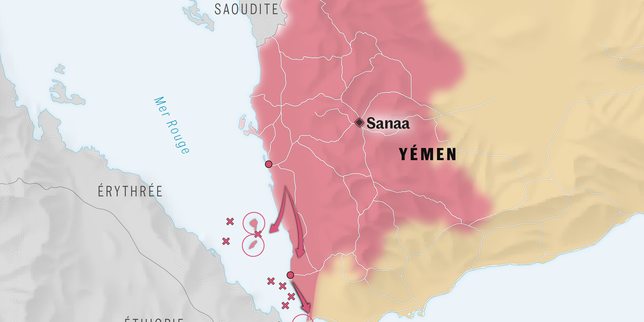
Every shipping analyst with a keyboard and a subscription to maritime intelligence feeds is currently hyperventilating over the Bab Al-Mandab strait. The lazy consensus dominating the economic press runs on a single, terrified note: that Houthi militants have transformed a minor Red Sea bottleneck into a tourniquet around the throat of international commerce, driving up inflation, starving European ports, and rewriting the rules of maritime logistics.
It is a neat, dramatic narrative. It is also fundamentally wrong.
I have spent the last fifteen years watching supply chain executives panic over geopolitical flashpoints while completely missing the structural balance sheets sitting right in front of them. The conventional narrative treats the Red Sea disruptions as an existential crisis for global trade. Let us look at the actual math, strip away the panic porn, and examine who is quietly laughing all the way to the bank while everyone else stares at missile trajectories.
The Container Line Subsidy Machine
The panic rests on a basic geographical truth: diverting a container vessel around the Cape of Good Hope adds roughly ten to fourteen days to an Asia-to-Europe transit. Burn more bunker fuel, stretch the fleet capacity, and watch spot rates spike. Media outlets love a good canal blockage story because it plays into ancient anxieties about trade routes.
Here is what the standard commentary misses: container lines do not fear longer routes; they pray for them.
Excess capacity was crushing the major carriers through late 2022 and 2023. Post-pandemic ordering binges had delivered a massive glut of new tonnage, threatening to plunge freight rates back into pre-pandemic misery where carriers barely covered operating costs. When the southern transit redirection forced ships around Africa, it instantly absorbed global effective capacity. Millions of TEUs of excess supply were effectively vacuumed up overnight because ships were simply moving slower and taking longer to loop back around.
A longer route acts as an artificial sponge for vessel oversupply. Spot rates exploded not because the global economy was booming, but because shipping lines suddenly had a structural excuse to reintroduce surcharges and lock in high-margin long-term contracts. The Houthi campaign in the southern Red Sea became the greatest unintended corporate bailout in maritime history.
When you hear executives wringing their hands over Bab Al-Mandab, look at their quarterly earnings reports instead. They are not suffering; they are feasting on constrained capacity.
The Geography of Vulnerability is Overstated
Another pillar of the doomsday thesis is that Europe is being economically starved because its primary artery from Asia has been pinched shut. This assumes trade is fragile in the extreme. In reality, modern supply chains are remarkably adaptive, precisely because they have been stress-tested by years of trade wars, pandemics, and infrastructure failures.
European manufacturing did not grind to a halt when the Suez route became hazardous. Inventories were adjusted, lead times were recalculated, and higher freight costs were absorbed or passed down to consumers in fractional increments that hardly registered on a macro scale. The idea that a regional militia can hold global gross domestic product hostage misunderstands how distributed modern manufacturing truly is.
Energy markets tell the exact same story. When tanker traffic avoids the Red Sea, oil does not magically vanish from the earth. The barrels simply take a different path. The market adjusts its pricing spreads to account for the marginal increase in ton-miles, and tankers continue moving. The alarmism surrounding energy security through the Bab Al-Mandab ignores the sheer elasticity of global commodity pools. Traders price in the deviation within hours; journalists take months to realize the sky isn't falling.
The Real Danger is Complacency About Domestic Inflation Narratives
If the disruption to Bab Al-Mandab is not crushing global trade, what is the actual risk? It is the weaponization of shipping costs by central banks and corporate pricing desks as an excuse to justify sticky inflation.
When freight rates spike due to a security bottleneck, corporations take the opportunity to pad their margins under the cover of geopolitical uncertainty. Consumers accept higher prices at the checkout counter because the news tells them missiles are flying near Yemen. It is a brilliant psychological cover story for domestic pricing power.
The danger is not that global commerce is coming to an end. The danger is that we are allowing temporary logistical friction to become a permanent structural tax on everyday goods, enabled by an echo chamber of commentators who cannot tell the difference between a real economic crisis and a profitable inconvenience for the logistics oligopoly.
Stop buying the narrative that a regional conflict controls the steering wheel of the world economy. The system is infinitely more resilient—and the major players are infinitely more cynical—than the headlines suggest.
The next time you read about a choke point threatening global prosperity, check which balance sheet is expanding while the panic sets in.