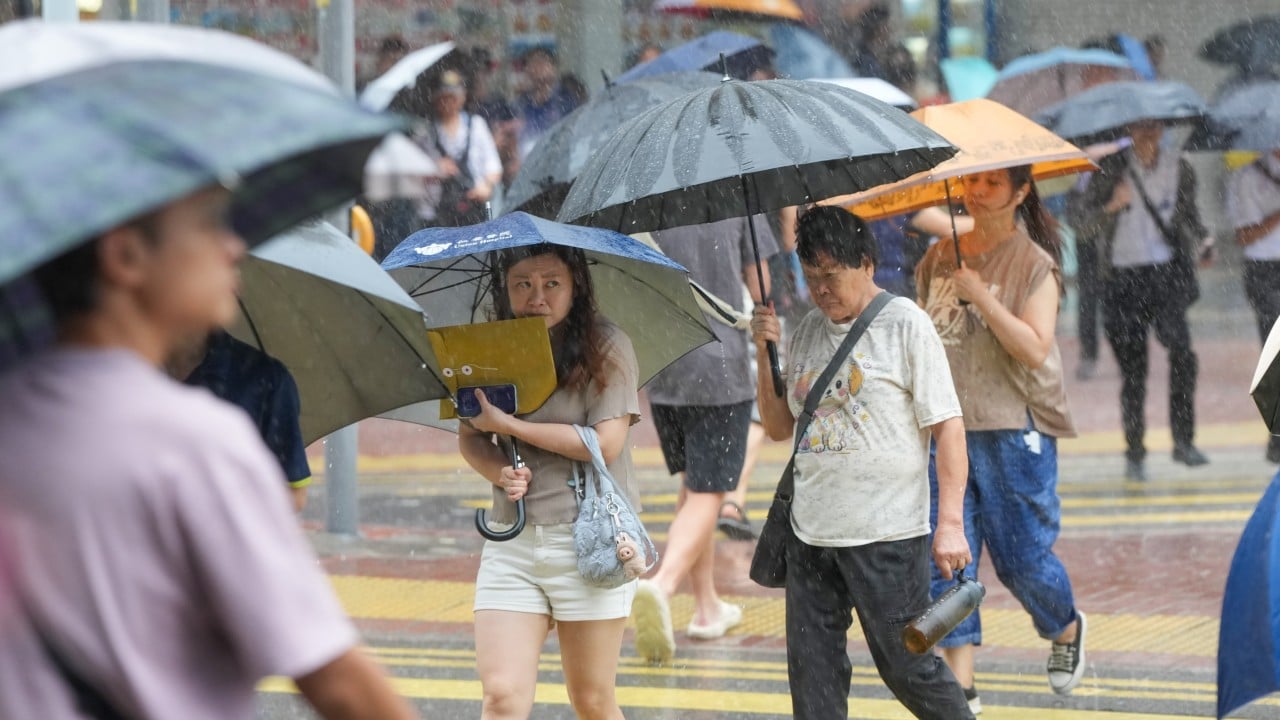
The sky turns leaden over Central, the first fat drops hit the pavement, and right on cue, your phone buzzes. The Hong Kong Observatory has issued an Amber rainstorm warning. The collective response from millions of citizens? A synchronized shrug. Millions of employees keep typing, school children finish their lunch, and life moves on.
This is a systemic failure of public safety masquerading as meteorological precision.
Every time the Observatory pushes an Amber alert, they are participating in a dangerous psychological experiment in habituation. The media frames these alerts as vital public service updates—"More downpours expected, stay vigilant." In reality, the current three-tiered warning system (Amber, Red, Black) is a relic of 1990s bureaucratic thinking that actively misleads the public, creates unnecessary economic friction, and leaves citizens completely unprepared for localized disasters.
We have been conditioned to treat weather alerts like app notifications: swipe away and ignore. When a real flash flood hits a specific hillside in New Territories, the people living there pay the price for a system that prioritizes city-wide generalities over hyper-local reality.
The Flawed Math of the Hourly Average
To understand why the Amber warning is broken, you have to look at how the Observatory triggers it. The official criterion requires heavy rain to have fallen, or to be expected to fall, generally over Hong Kong, exceeding 30 millimeters in an hour.
This metric is a mathematical fiction.
Rain does not fall evenly across Hong Kong's complex topography. You can have a catastrophic cloudburst dumping 70 millimeters of water within forty minutes on a single valley in Lantau Island, while Causeway Bay experiences a light drizzle. Because the system relies on a generalized city-wide expectation or average, the response is inherently throttled.
When the Amber warning is triggered globally, it signals to someone in a dry district that the warning system is crying wolf. Conversely, for the person in the valley experiencing torrential mudslides, an Amber warning is a pathetic understatement. By the time the rainfall averages out across enough telemetry stations to justify upgrading the alert to a Red or Black signal, the structural damage is already done. The current framework treats Hong Kong as a flat, uniform block of concrete. It isn't.
The False Security of the Three-Tiered Trap
The bureaucracy loves color-coded systems because they shift liability from the government to the citizen. Once the Amber warning is live, the state has legally covered its bases.
The underlying premise of this tiered system is flawed. It assumes human risk increases linearly from Amber to Red to Black. Human behavior does not work this way.
I have spent years analyzing how urban populations interact with municipal data during crises. When a population receives an Amber alert, their risk perception drops to near zero because the alert has no regulatory teeth. Schools stay open, offices remain packed, and public transport runs normally. The Amber signal has become synonymous with "business as usual, just bring an umbrella."
This creates a deadly buffer period. When an Amber storm suddenly intensifies into a localized flash flood, thousands of people are caught in transit, navigating steep concrete channels and subterranean walkways that turn into high-velocity sluices within minutes. The true danger of Hong Kong's weather isn't the total volume of water over twenty-four hours; it is the sheer velocity of accumulation in a hyper-dense vertical city. By treating Amber as a minor prelude to Red, the Observatory ensures that citizens are already exposed in the streets when the environment turns lethal.
The Economic Mirage of Centralized Alerts
Corporate risk managers love to point to the Observatory’s guidelines as a triumph of organizational efficiency. They have built rigid corporate playbooks around these colors: if Black, stay home; if Amber, come to work.
This binary approach costs businesses millions in lost productivity and damaged assets while doing nothing to protect workers.
Imagine a scenario where an logistics firm relies strictly on the Amber designation to keep its delivery fleet moving through New Territories. The central telemetry says 32 millimeters per hour across the territory—an acceptable risk according to the manual. But on the ground, a specific drainage channel overflows, trapping three delivery vans and destroying cargo. The company followed the official guideline, yet they suffered a total operational failure.
Relying on a centralized, slow-moving bureaucratic signal to dictate real-time logistics in a modern metropolis is operational madness. Businesses need to stop waiting for the Observatory to change a color on an app. They must invest in localized, private sensor networks and automated risk protocols based on immediate, hyper-local telemetry. If a specific delivery route shows a spike in localized accumulation, the route terminates automatically, regardless of whether the official government website is flashing a comforting shade of amber.
Realism Over Bureaucracy: The Downsides of Decentralization
Amending this system is not without friction. If we abandon territory-wide color codes in favor of hyper-local, street-level risk scoring, we introduce complexity.
Critics will argue that a fragmented warning system will confuse the public. If Mong Kok is under a severe flood flash alert while Tsim Sha Tsui is green, how do commuters plan their transit? It requires a higher level of civic data literacy. It requires people to actively check dynamic maps rather than passively waiting for a siren or a color change.
Yes, decentralizing our response protocols will cause initial confusion. It will break the neat, uniform scheduling that HR departments use to manage office hours. But the alternative is continuing to accept a broken status quo where a meaningless Amber warning gives millions of people a false sense of security while a localized deluge tears through their backyards.
Stop Reading the Color, Watch the Topography
The fix is not to make the Amber warning louder or to send more push notifications. The fix is to change how you, the individual, process environmental risk.
The next time the Observatory issues an Amber rainstorm warning, do not look at your phone. Look at your immediate surroundings.
- Evaluate your elevation: Are you at the base of a slope or near a concrete drainage channel? If yes, your local risk is already at a "Red" equivalent, no matter what the official app says.
- Track accumulation velocity, not hourly averages: If you see standing water rising visibly over a ten-minute span, the infrastructure is already overwhelmed.
- Ignore corporate uniformity: If your commute involves navigating known low-lying flood zones, refuse to travel. Do not let an HR manager use a government-issued Amber status as leverage to force you into a hazardous transit corridor.
The Hong Kong Observatory will continue to use its outdated, city-wide averages because changing a bureaucratic framework takes years of committees and policy reviews. You do not have that luxury when a cloudburst hits your street. Stop letting a 1990s color scheme dictate your situational awareness. Turn off the alerts and look at the water rising around your ankles.