The room was heavy with the scent of expensive lilies and the stifling silence of a thousand unspoken regrets. Arthur sat in the front row, his back as straight as the mahogany pew. He had spent three nights crafting the eulogy for his brother. Every adjective was polished. Every anecdote was timed for a specific cadence of bittersweet laughter. It was, by all academic standards, a masterpiece of rhetoric.
When he stood up to speak, the words flowed like silk. He cited poetry. He used metaphors about oak trees and sunsets. But as he looked out at the faces in the gallery, he saw something terrifying. They were nodding, yes, but their eyes remained dry. His words were bouncing off them like hail on a tin roof. He had brought a dictionary to a moment that required a heartbeat.
Ten minutes later, a woman Arthur didn’t recognize stood up. She wasn't a public speaker. She was trembling so violently she had to grip the podium to keep from falling. She opened her mouth, but nothing came out for a long, agonizing minute. She just looked at the casket, her face contorting with a grief so raw it felt intrusive to watch. Finally, she choked out three jagged, unpolished sentences about a time his brother had bought her a sandwich when she was broke. She started to sob, gave up on her speech, and sat down.
The room broke.
That was the moment the polished prose died. The tears Arthur had been holding back finally crashed through his sophisticated defenses. He realized that for all his preparation, he had been performing. She had been praying.
The Architecture of the Empty Vessel
We are obsessed with the "right" way to communicate, especially when the stakes are spiritual or deeply personal. We buy books on manifestation scripts. We memorize liturgical formulas. We worry about the syntax of our desires as if the universe is a high school English teacher waiting to mark us down for a misplaced comma.
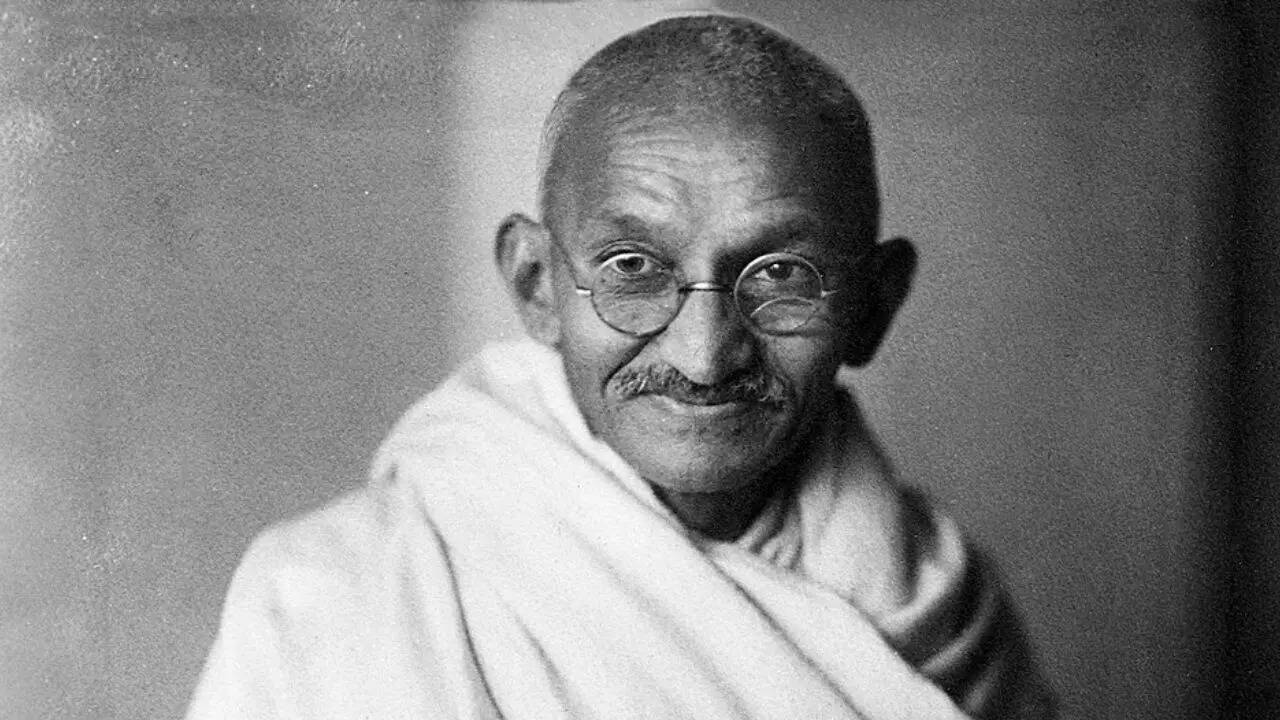
Mahatma Gandhi once suggested that in prayer, it is better to have a heart without words than words without a heart.
This wasn't just a bit of pithy Eastern wisdom designed for a greeting card. It was a diagnostic tool for the human soul. Gandhi lived a life of radical transparency, a man who experimented with truth until it burned away everything superficial. He understood a fundamental psychological truth: language is often a mask. We use it to distance ourselves from the terrifying intensity of our own feelings.
Consider the mechanics of a "perfect" prayer or a "perfect" apology. When you spend twenty minutes rehearsing a speech to a partner or a deity, you are building a fortress. You are deciding which parts of yourself are presentable and which parts must stay in the basement. By the time you speak, the heart—the messy, pulsing, honest center of the issue—has been left behind in favor of a curated transcript.
The result is a hollow echo. You feel it in your chest after a conversation where you said everything "correctly" but left feeling more alone than before you started.
The Biological Cost of the Script
There is a physical reality to this disconnection. When we engage in "words without a heart," we operate almost entirely from the prefrontal cortex. This is the seat of logic, planning, and social masking. It is the part of the brain that calculates how we are being perceived.
However, true connection—the kind that shifts our internal chemistry and lowers our cortisol levels—requires the involvement of the limbic system. This is the ancient, wordless center of emotion and memory. When Gandhi talks about the "heart," he is talking about this non-verbal core.
Imagine a hypothetical scenario where a person, let's call her Sarah, is practicing mindfulness. Sarah spends her sessions repeating affirmations she found on a popular app. "I am at peace. I am flowing with the universe." She says them a hundred times a day. But beneath the mantra, her stomach is knotted with a fear she refuses to acknowledge because it doesn't fit the "script" of her spiritual practice.
The affirmations act as a lid on a boiling pot. Because the heart isn't in the words—because the words are actually being used to silence the heart—the stress remains trapped. She is technically praying, or meditating, or communicating, but she is getting none of the physiological benefits of release.
But what happens when Sarah stops the script? What happens when she sits in the silence and simply feels the knot in her stomach without trying to name it or fix it? That is the heart without words. It is uncomfortable. It is silent. It is also the only place where actual healing begins.
The Fear of the Silence
Why do we cling to the words so tightly?
Because silence is an exposure.
To stand before the absolute—whether you define that as God, Nature, or the vast vacuum of space—and offer nothing but your raw state of being is the most vulnerable act a human can perform. Words are a currency. We feel that if we bring enough of them, we can bargain for what we want. We think that if we explain our pain clearly enough, it will be validated.
But the most profound moments of human existence are almost entirely non-verbal. The way a mother looks at a newborn. The grip of a hand in a hospital room. The awe of standing at the edge of a canyon. In those moments, words don't just fail; they intrude. They shrink the experience to fit the narrow confines of vocabulary.
If you’ve ever sat with a friend who is grieving, you know the pressure to "say the right thing." You scan your brain for a platitude or a piece of advice. You want to fill the air. But the moments that actually matter are the ones where you sit in the heavy silence, offering nothing but your presence. Your heart is there. Your words are absent. That is the only thing that helps.
Reclaiming the Unspoken
If we take the "heart without words" approach seriously, it changes how we move through our days. It suggests that the quality of our internal life isn't measured by how well we can narrate it.
Think about your morning routine. Most of us wake up and immediately begin the verbal narration of our anxieties. I have to do this. I shouldn't have said that. Why am I like this? We are drowning in words.
Contrast this with the practice of "wordless longing." This is a concept found in various mystical traditions, from the "Cloud of Unknowing" in Christian mysticism to the "Zazen" of Zen Buddhism. It is the act of turning the attention toward a sense of "being" rather than "thinking."
It looks like this: instead of telling yourself you are grateful, you allow the physical sensation of warmth to expand in your chest. Instead of asking for help with a problem, you simply hold the problem in your mind’s eye with a sense of openness.
You are dropping the luggage of language at the door.
The Weight of Sincerity
There is a specific kind of exhaustion that comes from a life lived in "words without a heart." It’s the fatigue of the performer. When we use language to bridge the gap between our internal reality and our external presentation, we are constantly translating. And like any translation, things are lost in the process.
We see this in our digital lives more than anywhere else. We post "words" about our experiences—captions, comments, status updates—often while the "heart" of the experience is being neglected. We are more concerned with the report of the event than the event itself.
The person who photographs their meal from six angles to tell the world they are enjoying it is often the one who tastes it the least. The heart is absent. The words (or images) are plenty.
The remedy is a brutal, quiet honesty. It is the willingness to be "dumb" in the original sense of the word—mute.
If you find yourself in a moment of crisis, or a moment of deep desire, try a radical experiment. Stop the internal monologue. Stop trying to explain to yourself why you feel the way you do. Stop trying to justify your needs to the universe.
Just feel the weight of it.
There is a strange power in that weight. When you stop leaking energy into the construction of sentences, that energy stays within the heart. It becomes a concentrated force. It becomes the "groanings too deep for words" that the ancients spoke of.
A heart without words is a full vessel. It is a man standing in the rain, not asking for an umbrella, not cursing the storm, but simply feeling the water hit his skin. He is more "in" the world than the man who is dry but busy writing a poem about the weather.
The next time you find yourself reaching for a clever phrase to smooth over a conflict, or a rehearsed prayer to fix your life, or a polished speech to hide your fear, stop.
Let the words fail.
Let the silence be awkward.
Let the heart be the only thing in the room.
It is better to stand there naked and silent, shivering in the truth of your own existence, than to be wrapped in the finest silks of a language that you don't actually mean. The universe isn't listening for your vocabulary. It is listening for your pulse.