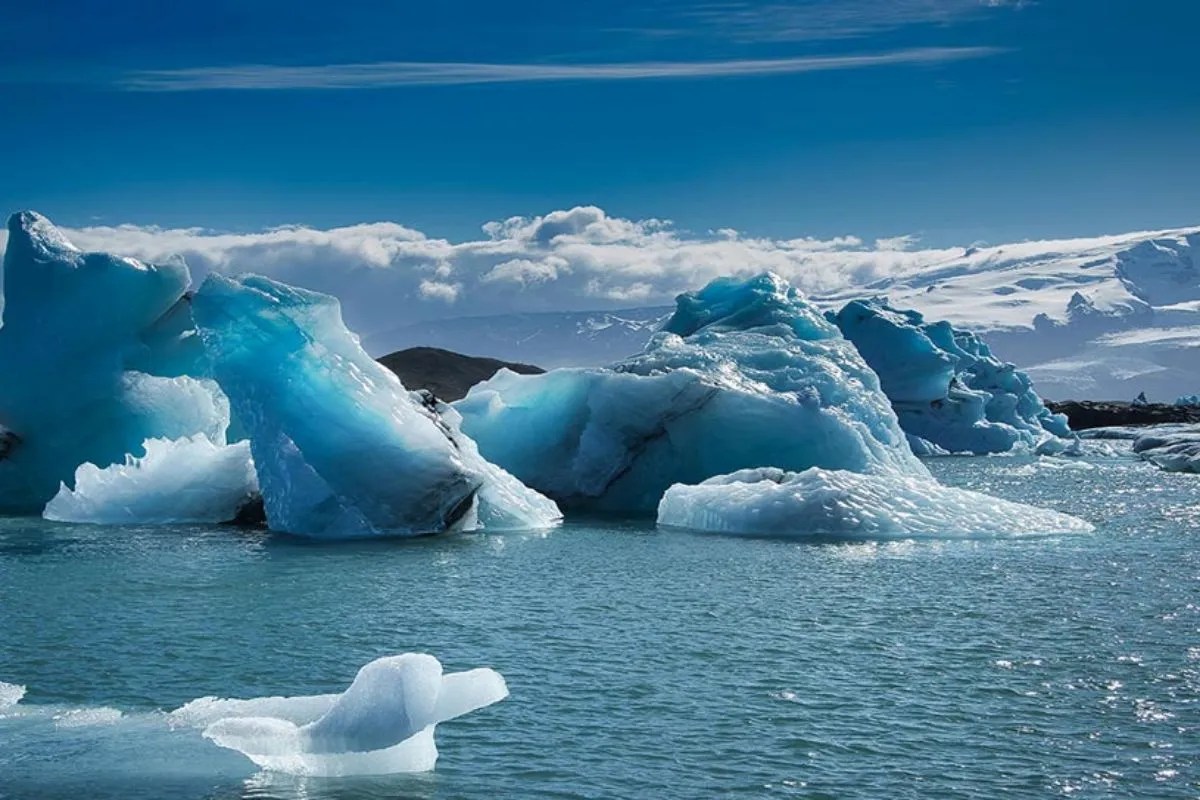
Ice is quietly disappearing from the highest mountains on Earth. It's a massive shift that's changing the physical shape of the planet right before our eyes. We aren't just losing frozen water; we are trading solid ice for thousands of new bodies of water in places that used to be silent, barren rock.
Scientists tracking satellite data and ground measurements are watching a startling transformation. As global temperatures creep upward, mountain glaciers shrink rapidly. The meltwater pools behind natural walls of loose rock and debris, known as moraines. These basins fill up fast. Recent scientific assessments point toward a staggering reality: over fifty-six thousand new glacial lakes could form across high mountain regions.
This isn't just an abstract statistic for researchers to debate in quiet rooms. It's happening now. And it carries heavy risks for millions of people living downstream.
Why disappearing ice creates a sudden flood danger
When you think of a lake, you probably picture a calm place to relax on a weekend. These new high-altitude lakes are entirely different. They are unstable, volatile, and trapped behind fragile natural dams made of boulders, gravel, and ice.
As more ice melts, these basins swell. The rock walls holding them back face immense pressure. When a dam gives way, it triggers a catastrophic event known as a Glacial Lake Outburst Flood, or GLOF. Millions of cubic meters of water rush down narrow mountain valleys without warning.
Bridges get torn away like toothpicks. Whole villages vanish in minutes. Roads, hydropower plants, and agricultural fields disappear under a slurry of mud and boulders.
People living in mountain valleys know this threat all too well. If you talk to locals in the Himalayan region, they'll tell you about the growing anxiety every monsoon season. They watch the color of the river water change. They listen for unusual rumbles echoing down the gorge. The danger isn't hidden anymore.
The numbers behind the melt
Let's look closely at the data. Research published in prominent geoscience journals shows that glacier volume has dropped at an unprecedented rate over the past two decades. We are losing billions of tons of ice every single year.
As glaciers retreat upslope, they leave behind depressions carved by centuries of heavy movement. These depressions become prime catchments for meltwater. Projections suggest that thousands of these new lakes will emerge in high-risk zones where communities have little infrastructure to cope with sudden floods.
It's tempting to think this is a problem only for remote climbers and mountaineers. That's a mistake. Major river systems originating in these high mountains supply fresh water to billions of people downstream for drinking, agriculture, and industry.
When glaciers shrink too fast, the initial phase brings too much water, causing floods. The later phase brings the opposite problem: severe water scarcity. Rivers that used to flow steadily all summer start drying up earlier in the year. Farmers downstream struggle to irrigate their crops when the dry season hits its peak.
What communities and governments must do right now
We can't freeze the glaciers back into place. That ship has sailed. But we can stop sleepwalking through the crisis.
Early warning systems save lives. Installing sensors upstream to monitor water levels and pressure gives downstream villages precious minutes or hours to evacuate before a natural dam bursts. Some regions have already set up sirens and community response drills. These measures need massive scaling up.
Engineering plays a role too. Experts can intentionally siphon water from dangerously swollen lakes to lower the pressure behind fragile moraine walls. It's risky and expensive work, but it beats waiting for a disaster to strike.
Urban planners and policy makers need to stop building critical infrastructure right in the path of potential outburst channels. Zoning laws must account for the changing mountain geography. Ignoring the science won't make the new lakes go away.
The physical landscape of our highest mountain ranges is rewriting itself. Ignoring the signs means waiting for tragedy to strike. Pay attention to what's happening at the roof of the world, because the water flowing down those slopes touches all of us.