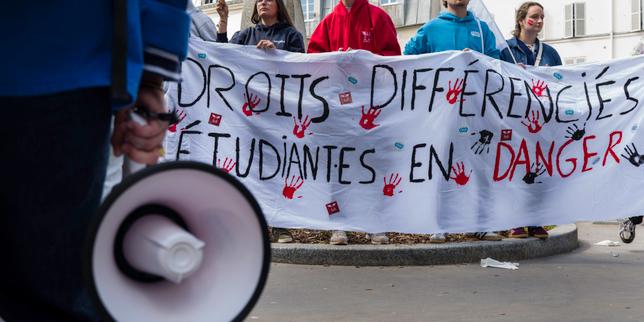
Everybody loves a good sob story. Mention that French universities are hiking registration fees for non-EU students, and watch the comment sections fill with outrage. The lazy consensus writes itself: France is slamming the door on Moroccan youth, neo-colonialism is alive and well, and access to European education is turning into an elitist club for the ultra-rich.
It is a tidy narrative. It is also completely wrong.
Let us drop the performative hand-wringing and look at what is actually happening. I have watched generations of bright minds pack their bags for Hexagone, chasing a romanticized ideal of the Sorbonne, only to find themselves trapped in credential inflation, underfunded lecture halls, and a labor market that treats foreign degrees with quiet suspicion.
The fee hike is not an eviction notice. It is a market correction. And if you know how to read the signals, it is the exact wake-up call Moroccan higher education has desperately needed for decades.
The Myth of the Cheap European Degree
For years, French public universities operated on a subsidy model that made higher education virtually free. To the untrained eye, this looked like an act of supreme generosity toward former protectorates. To anyone who understands institutional economics, it was a funnel for brain drain.
Let us be brutally honest about what a "cheap" education in France actually cost Moroccan families. The low tuition fees were subsidized by French taxpayers. But the real cost was extracted elsewhere:
- Years of living expenses in some of the most expensive cities in Europe.
- Bureaucratic exhaustion navigating a notoriously hostile prefecture system.
- The psychological tax of being treated as a second-class academic citizen in overcrowded amphitheaters where students literally sit on the stairs.
- The ultimate irony: returning home with a generalized humanities or basic science degree that does not match the actual structural demands of the Moroccan economy.
When the French government adjusted its fees, the media shrieked about financial barriers. What they missed is that price signals matter. When something is priced at near-zero, people treat it as having near-zero value. By forcing a higher financial threshold, the French system is inadvertently filtering out casual applicants who treat a student visa as a backdoor migration strategy rather than an academic investment.
The Local Ecosystem is Outperforming the Import Model
If you are still advising top-tier Moroccan high school graduates to default to Paris, Marseille, or Lyon, you are fighting a war from twenty years ago. The landscape of excellence has shifted.
Look at what has been built at home. Institutions like the Mohammed VI Polytechnic University have rewritten the rules of what African higher education looks like. We are talking about state-of-the-art research facilities, venture incubators, direct pipelines to corporate leadership, and curricula designed for the realities of the twenty-first-century African and global economy, not nineteenth-century European bureaucracy.
When a student spends four years grinding through a localized curriculum built around regional realities, they graduate with an active network. They know the players. They understand the regulatory environment. Contrast that with the student who spent those same four years in France scraping by on a part-time delivery job, earning a generic license degree that puts them at the bottom of the pile when they try to enter the Parisian corporate ladder.
Reality Check: The prestige of a foreign stamp on a diploma is evaporating fast. Employers across Casablanca, Rabat, and Tangier no longer bow down to a French university name simply because it sounds exotic. They want execution, problem-solving, and adaptability.
The Brutal Math of Return on Investment
Let us run the numbers. Imagine a scenario where a Moroccan family scrapes together fifty thousand euros over three years to fund a student’s life and studies in France.
Factor in the cost of living in Paris, the blocked paths to official work permits post-graduation, and the sheer saturation of the French entry-level job market. What is the payout? For many, it is an entry-level position that barely covers rent in a Parisian banlieue, coupled with years of bureaucratic precarity tied to annual titre de séjour renewals.
Now, take that exact same capital and emotional energy, and deploy it locally or toward targeted, high-yield international alternatives—like specialized English-language programs or targeted professional certifications. The return on investment completely flips.
The outrage over French tuition hikes assumes that studying in France was a guaranteed golden ticket. It never was. It was a gamble with stacked odds against the foreign student.
Stop Waiting for Paris to Save Your Career
The real tragedy of the tuition fee debate is not that French education is becoming more expensive. It is that it keeps the Moroccan academic imagination trapped in a colonial feedback loop.
Every minute spent complaining about French administrative policies is a minute stolen from building better domestic institutions, fostering local venture creation, and demanding accountability from our own universities.
Stop treating European university doors as the ultimate measure of success. If a higher price tag forces Moroccan students and policymakers to look inward, build superior local infrastructure, and treat education as a high-stakes investment rather than a birthright, then hike the fees higher.
The era of looking across the Mediterranean for validation is over. Build at home or get left behind.