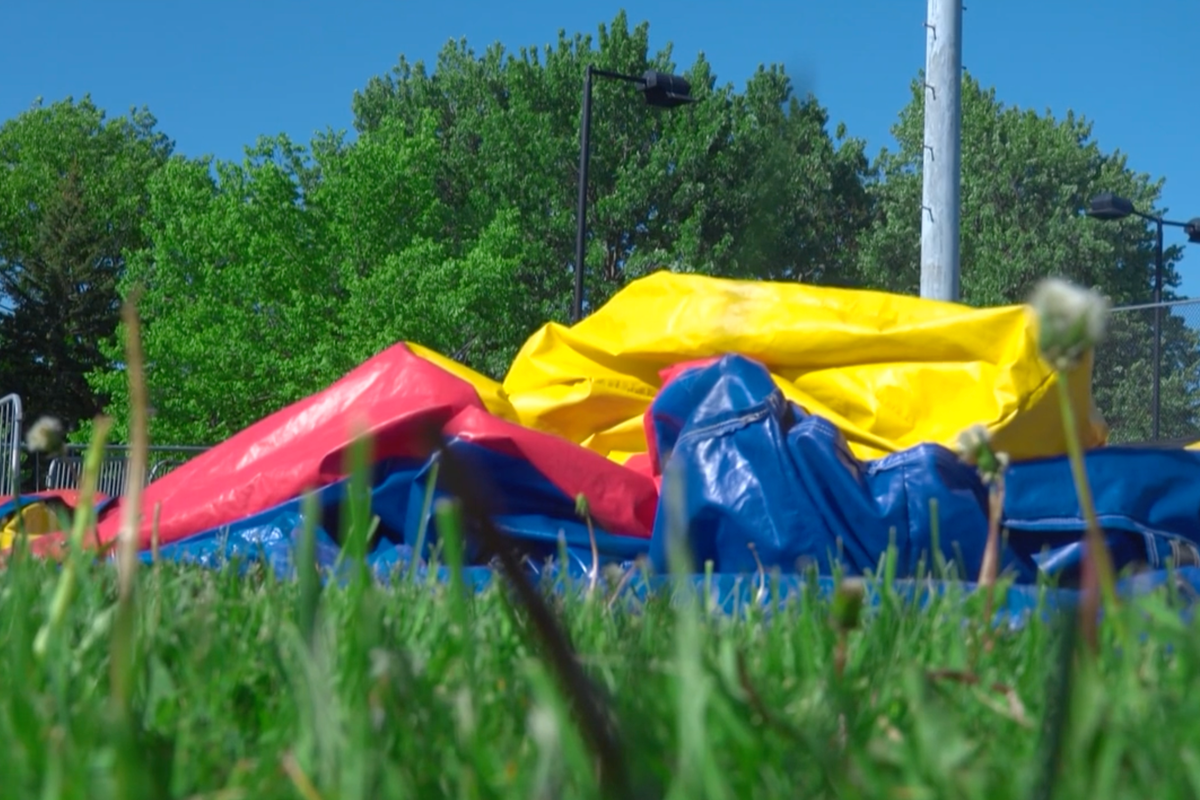
When an inflatable play structure catches the wind and becomes airborne, the results are frequently catastrophic. The tragic death of a three-year-old girl at a recent birthday party highlights a recurring, systemic failure in the leisure industry rather than an isolated freak accident. This investigation reveals that the primary causes of these incidents are inadequate anchoring, lack of regulatory oversight, and a widespread misunderstanding of wind physics by operators and parents alike. While these products are marketed as harmless backyard entertainment, they require strict engineering discipline to operate safely.
The underlying mechanics of these accidents are entirely predictable. An inflatable structure acts as a massive sail, and without proper ballast or ground stakes, even a moderate gust of wind can generate enough lift to launch the structure into the air.
The Physics of a Backyard Sail
Most people look at a bouncy castle and see a soft, forgiving toy. An engineer looks at it and sees a wing. Because these structures have a massive surface area and are filled with pressurized air, they are highly susceptible to aerodynamic lift.
When wind hits the flat vertical wall of an inflatable, it creates a high-pressure zone on the windward side and a low-pressure zone on the leeward side. This pressure differential generates a tremendous amount of force. If the wind gets underneath the structure, the lift capacity multiplies exponentially. A standard commercial bouncy castle can weigh upwards of 100 kilograms, but a 25 mile-per-hour gust of wind can easily exert over half a ton of lifting force on that same structure.
If the anchoring system fails, the laws of physics take over immediately. The structure lifts, flips, and accelerates into the air, carrying anyone inside along with it.
The Myth of the Secure Ground Stake
The most critical point of failure is almost always the anchoring system. Industry guidelines typically require long steel stakes driven deep into the ground at every single anchor point.
- Soil Composition: In dry, loose, or sandy soil, straight stakes provide almost zero holding power under tension.
- Angle of Insertion: Stakes must be driven at a specific angle away from the structure to maximize resistance. Driving them straight down significantly reduces their effectiveness.
- Weight Alternatives: When setup occurs on concrete, operators frequently use sandbags or water weights. However, the total mass required to counteract wind lift is rarely calculated correctly by casual rental companies.
A Fragmented Regulatory System
The inflatable rental market operates in a massive regulatory gray area. In many jurisdictions, there is no centralized government agency responsible for inspecting backyard party rentals.
While heavy amusement park rides face intense scrutiny, annual engineering certifications, and strict state inspections, portable inflatables frequently escape this net. A person can purchase a commercial-grade bouncy castle online, set up a local rental business the next day, and operate for years without a single safety inspection. This lack of oversight creates a race to the bottom, where cut-rate operations compete by skipping safety protocols, hiring untrained temporary staff, and ignoring weather forecasts to avoid losing booking fees.
The Problem with Voluntary Standards
Many regions rely on voluntary compliance organizations or self-regulation frameworks. While engineering standards exist on paper, enforcing them on a Saturday afternoon in a suburban backyard is virtually impossible.
Without mandatory licensing, regular equipment testing, and hefty fines for non-compliance, the responsibility for safety gets shifted entirely onto the consumer. Parents are forced to act as de facto safety inspectors, a role they are completely unequipped to handle.
Recognizing the Warning Signs
Safeguarding children at private events requires a clear understanding of what a safe setup looks like. Relying solely on the rental company's assurances is a distinct safety risk.
Inadequate Anchoring Infrastructure
Walk around the perimeter of the structure before allowing anyone inside. Every single anchor point provided by the manufacturer must be utilized. If you see straps flapping loosely, stakes missing, or ropes tied to flimsy patio furniture instead of heavy-duty ground anchors, the setup is unsafe. On hard surfaces, look for heavy ballast. A few small sandbags are entirely insufficient to hold down a commercial structure against sudden gusts.
Wind Monitoring Neglect
Wind speed cannot be accurately determined by guessing. Professional operators utilize handheld anemometers to monitor wind conditions in real time.
Critical Safety Threshold: Most commercial inflatables are rated for a maximum wind speed of 15 to 20 miles per hour. If the rental company does not check the local meteorological data or carry a wind gauge, they are operating blindly.
Wind speeds can change rapidly, and localized gusts between houses or trees can create wind-tunnel effects that far exceed the reported average speed for the area.
Operational Realities and Necessary Changes
Fixing this systemic vulnerability requires moving past the idea that these incidents are unavoidable tragedies. They are preventable engineering failures.
Sweeping changes must occur across the manufacturing, rental, and regulatory sectors to prevent further loss of life. Manufacturers need to integrate clearer, foolproof anchoring mechanisms directly into the design of the inflatables. Insurance companies must enforce stricter underwriting requirements, demanding proof of operator training and certified weather monitoring tools before issuing policies. Finally, local governments need to close the loopholes that allow commercial rental operations to bypass the safety standards applied to traditional amusement rides.
Until these structural changes take effect, the burden of risk management remains on the individual hosting the event. Awareness of wind conditions, insisting on proper anchoring techniques, and immediately deflating a structure when conditions worsen are the only reliable defenses against a fundamentally unstable design.


