Japan is running out of the specialists required to keep its grandest Shinto traditions alive. While millions of tourists crowd the streets of Kyoto, Takayama, and Karatsu every year to snap photos of towering, centuries-old festival floats known as yamaboko or yatai, the glittering gold leaf and intricate woodwork mask a fragile reality. The human infrastructure behind these UNESCO-recognized celebrations is collapsing under the weight of demographic decline, skyrocketing material costs, and an rigid adherence to tradition that locks out willing volunteers. Without a radical overhaul of how these festivals are funded and staffed, the next generation will inherit museum pieces rather than living history.
The global public sees these events—like Kyoto’s Gion Matsuri or the Takayama Matsuri—as triumphant displays of enduring cultural pride. Local governments heavily promote them to boost tourism revenue. Yet behind the scenes, the neighborhood associations (chonaikai) tasked with maintaining the massive wooden structures are fighting a losing battle.
The Crushing Cost of Devotion
To understand why these festivals are in jeopardy, one must look at the staggering economics of maintaining a centuries-old float. These are not mere parade props; they are mobile Shinto shrines, frequently designated as Important Tangible Folk Cultural Properties. A single wheel for a Kyoto yamaboko, crafted from rare, aged Japanese oak (kashi), can cost upward of $50,000 to replace. The intricate tapestries draping the structures, often historic imports from 16th-century Europe or Ming Dynasty China, require millions of yen for restoration.
Traditionally, these expenses were covered by the residents of the specific merchant districts that owned the floats. That economic model is obsolete.
Japan’s prolonged rural depopulation and urban concentration mean that the historic centers of towns like Takayama or Hida-Furukawa are increasingly populated by elderly residents living on fixed incomes. Commercial properties that once housed prosperous, multi-generational family businesses have been converted into convenience stores, parking lots, or vacation rentals owned by absentee corporations.
Consequently, the tax base and donation pool for individual floats have plummeted. Corporate sponsorships help fill the gap in major metropolitan areas, but this money comes with strings attached. It commercializes a sacred ritual, transforming a communal act of devotion into a marketing asset, which frequently alienates the traditionalist elders who hold the keys to the festival committees.
The Exclusionary Rules Defeating Survival
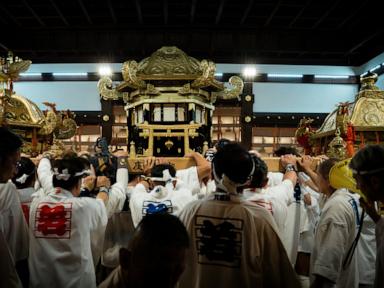
Money is only half the problem. The more critical shortage is human capital. Pulling a three-ton, double-decker wooden float through narrow, historic streets requires sheer physical power, precise coordination, and specialized musicianship.
For centuries, strict patriarchal and geographic rules governed who could participate. Only males born within the specific boundaries of the float-owning district were permitted to touch the ropes, play the bamboo flutes, or climb onto the roof to guide the structure past low-hanging power lines.
Many districts still enforce these rules, even as their active population drops into the single digits.
+-----------------------------------------------------------------------+
|                       THE ACCELERATING CRISIS                         |
+-----------------------------------------------------------------------+
|  Demographic Deficit   -->  Fewer local youth to inherit traditions.  |
|  Traditional Exclusion -->  Women and outsiders barred from roles.     |
|  Material Scarcity     -->  Shortage of old-growth timber and hemp.   |
|  Economic Strain       -->  Skyrocketing restoration costs per float. |
+-----------------------------------------------------------------------+
Some progressive neighborhoods have broken with tradition by allowing women to pull the ropes or play in the festival orchestra (hayashi). Others have begun recruiting university students and corporate volunteers from outside the municipality.
Predictably, these moves have ignited fierce internal conflicts. Traditionalists argue that altering the demographic makeup of the participants dilutes the spiritual efficacy of the ritual, which is fundamentally designed to appease local Shinto deities (kami) and protect the specific neighborhood from pestilence.
This ideological divide creates a paralyzing gridlock. Neighborhoods would rather see a float remain in a storehouse (kura) for a year than allow outsiders or women to pull it. This is not a hypothetical threat. In various regional festivals across Niigata, Shiga, and Tohoku, floats are quietly being retired from active service, permanently parked inside concrete museums because there are simply not enough hands to guide them down the road safely.
The Disappearing Art of the Miyadaiku
Even if a community possesses both the funds and the manpower to stage a festival, they face an existential supply-chain bottleneck, specifically the catastrophic decline of master carpenters, or miyadaiku.
Unlike standard construction workers, miyadaiku specialize in traditional joinery, assembling massive structures without the use of a single metal nail or bolt. This flexibility allows a festival float to sway and absorb the immense kinetic energy generated when turning a multi-ton vehicle ninety degrees on a cobblestone street.
A Dying Lineage
The training of a miyadaiku takes decades, relying on an informal apprenticeship system that holds little appeal for modern Japanese youth. The work is physically demanding, poorly compensated during the early years, and concentrated in rural areas.
Material Starvation
The crisis extends to the raw materials themselves. The specific old-growth Japanese cypress (hinoki) and cedar (sugi) required to repair structural beams are increasingly scarce due to poor forest management over the past half-century. The hemp ropes used to bind the timbers together—which must be replaced frequently for safety reasons—must be spun from specific, high-quality domestic hemp strains that face tight domestic cultivation restrictions.
The Tourism Double-Edged Sword
Faced with these internal pressures, local governments have leaned heavily into international tourism as a financial savior. This strategy frequently backfires, creating a hostile environment for the very locals who keep the tradition alive.
When a festival is designated a UNESCO Intangible Cultural Heritage asset, foreign and domestic tourists flood the town. While this generates hotel and restaurant revenue, very little of that money trickles back down to the specific neighborhood associations responsible for the floats. Instead, the local residents find their sacred spaces commodified.
Spectators crowd the narrow streets, blocking the pathways of the floats and ignoring safety barriers. The physical danger is real. A runaway festival float can easily crush a bystander or destroy a historic storefront. When the atmosphere shifts from a local religious rite to an uncontrolled tourist spectacle, the community's intrinsic motivation to endure the grueling, year-round preparation vanishes. They feel like unpaid actors in a theme park rather than keepers of an ancestral flame.
Tourist Influx -> Increased Security/Trash Costs -> Strained Local Budgets -> Less Funding for Float Repair
Redefining Stewardship for the Next Century
If Japan’s festival floats are to survive outside of a glass museum display, the framework of ownership must change. The reliance on hyper-local, insular neighborhood associations is unsustainable in a country with a shrinking population.
The solution requires a delicate decoupling of the festival's spiritual core from its physical execution. Municipalities must establish regional preservation trusts that pool financial resources and distribute them based on structural need, rather than the wealth of a specific street corner.
More importantly, the gatekeepers of Shinto traditions must accept that inclusivity is the only path to preservation. Embracing outsiders, women, and the broader global community not as passive spectators, but as active stakeholders and physical participants, is not a corruption of the ritual. It is the ultimate expression of its resilience. The gods of the Shinto pantheon were always reinvented to survive shifting eras; their earthly vehicles must be allowed to do the same.