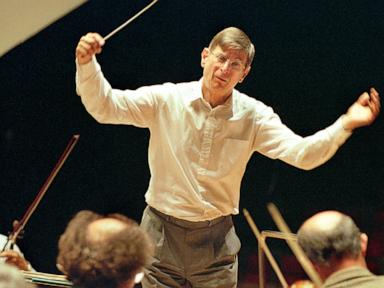
Herbert Blomstedt died on November 4, 2026, at age 99. Most conductors fade into memory decades before reaching that mark. He didn't.
If you only know Herbert Blomstedt as the man who led the San Francisco Symphony from 1985 to 1995, you're missing half the story. That decade put San Francisco on the international recording and touring map, sure, yet his life stretched across seven decades of music-making from Scandinavia to Germany and back to California. Even at 98, in May 2026, he stepped onto the stage at Davies Symphony Hall to conduct Mahler's Ninth Symphony before a series of health setbacks forced him to step back.
A basic wire obituary will give you the dates, the cities, and a tidy list of orchestras. Honestly, that misses why players and listeners kept coming back to him for seventy years. He wasn't a podium tyrant chasing drama or applause. He treated the score like a sacred text and the musicians like colleagues who already knew how to play.
How Herbert Blomstedt Reshaped the San Francisco Symphony
When Blomstedt took over as music director of the San Francisco Symphony in 1985, the orchestra already had talent, but it didn't yet carry the global recording weight it gained over the next ten years. Under his direction, the sound got cleaner, sharper, and less flashy. No theatrical swooning. Just structural clarity and long, breathing phrases.
During his 1985–1995 tenure, the orchestra toured Europe and Asia regularly and built a major catalog with London/Decca. Those aren't just nice resume lines. Touring and recording force an ensemble to tighten its ensemble intonation, balance, and stamina night after night. Critics and listeners heard the difference immediately in his interpretations of Carl Nielsen, Paul Hindemith, Johannes Brahms, and Carl Orff.
Look at the hardware from that era:
- A 1991 Gramophone Award for Carl Nielsen's Symphonies Nos. 2 and 3 with the San Francisco Symphony.
- A Grammy Award for Best Choral Performance in 1993 for Carl Orff's Carmina Burana alongside the San Francisco Boys Chorus and San Francisco Girls Chorus.
- A second Grammy Award for Best Choral Performance in 1996 for Brahms's Ein Deutsches Requiem.
What surprises people looking back is how un-showy his method was. Many American orchestras in the 1980s were accustomed to larger-than-life personalities on the podium. Blomstedt brought a quiet, almost scholarly calm shaped by his upbringing and deep faith. He didn't bully players into loudness; he listened, shaped the pulse, and let the music speak without underlining every climax in red ink.
A Seven-Decade Career Built on Listening, Not Ego
Born on July 11, 1927, in Springfield, Massachusetts, to Swedish parents—his father a Seventh-day Adventist missionary and his mother a pianist—Blomstedt grew up moving between Europe and North America before settling in Gothenburg, Sweden. His training wasn't narrow either. He studied violin and organ at the Stockholm Royal College of Music, musicology at Uppsala University, Baroque music with Paul Sacher in Basel, contemporary repertoire in Darmstadt, and conducting at Juilliard and Tanglewood with figures like Igor Markevitch, Jean Morel, and Leonard Bernstein.
Before and after San Francisco, he held major posts across Europe's toughest orchestral traditions:
- Scandinavia first: He led the Norrköping Symphony Orchestra (1954–1962), Oslo Philharmonic (1962–1968), Danish Radio Symphony (1967–1977), and Swedish Radio Symphony (1977–1982), establishing himself as a premier voice in Carl Nielsen and Nordic repertoire.
- Dresden and Leipzig: He served as principal conductor of the Staatskapelle Dresden (1975–1985), later returned to lead the NDR Symphony Orchestra (1996–1998), and became music director of the Leipzig Gewandhaus Orchestra (1998–2005), recording complete cycles of Beethoven and Bruckner along the way.
- Late-life laurels: In his 80s and 90s, he racked up major honors—including the Léonie Sonning Music Prize in 2016, the Rolf Schock Prize in 2014, Opus Klassik for life's work in 2023, and Japan's Praemium Imperiale in 2026.
There's a common misconception that longevity at the podium is just a matter of good genes or stubbornness. Blomstedt had both—he even joked about feeling like a "hopeless youngster" because he stayed curious about different things—yet his real secret was humility toward the composer. In his last interview for the 2026 Praemium Imperiale, he pointed to Johann Sebastian Bach's Mass in B minor as the work he wanted to return to again and again. When you're trying to serve Bach, Beethoven, or Bruckner rather than your own ego, the work stays fresh even after seventy years.
And he wasn't just a score geek locked in a rehearsal room. Blomstedt accumulated an extraordinary personal library—around 35,000 volumes spanning music, literature, art, and history—which he passed on to the Gothenburg University Library. He didn't start collecting books as a trophy hobby; he bought works like Søren Kierkegaard's writings when he moved to Denmark so he could understand the culture around him. That kind of intellectual curiosity shows up in how a conductor phrases a slow movement.
Why His Final Appearances Sparked Honest Debate
Not every late-career appearance by an aging legend is universally cheered, and pretending otherwise isn't honest. In May 2026, at age 98, Blomstedt conducted Mahler's Ninth Symphony with the San Francisco Symphony at Davies Symphony Hall. Having suffered falls in 2022 and 2023 and an ear infection in 2025, he had already been conducting seated and dealing with physical fragility.
Reactions to that final concert were split. Some listeners and reviewers found the performance deeply moving—a fragile, human encounter with a symphony about farewell, carried by an orchestra devoted to him. Others were uncomfortable watching a 98-year-old labor through a grueling 80-plus-minute score, arguing over pacing and physical strain. He was given a seat with armrests during the program, resumed playing, and didn't complete the full run of dates as health concerns caught up with him.
That tension is real in classical music. When does an artist's devotion to the music become inspiring, and when does the physical toll worry onlookers? There's no neat formula. What's undeniable is that Blomstedt didn't cling to the stage out of vanity. As he put it in interviews over the years, standing before an orchestra made a spark catch again, and he loved the music too much to walk away while he could still give it.
What Listeners and Musicians Can Take From His Legacy
You don't need to be a symphony conductor to learn something practical from Blomstedt's example. His career offers a few clear takeaways you can put to use right away:
- Listen to his San Francisco Nielsen and Brahms recordings with headphones: Pay attention to how cleanly the inner voices move without artificial shouting. Notice how steady the pulse feels even when the music swells.
- Read around your craft: Just as Blomstedt read Kierkegaard to understand Denmark, explore the history, literature, and cultural context behind whatever you're studying or creating. Context turns flat execution into real interpretation.
- Favor depth over spectacle: Whether you're leading a team, teaching a class, or practicing an instrument, calm preparation and genuine respect for other people's skill usually outlast loud theatrics.
- Explore his archival library and tributes: Check out resources from the Gothenburg University Library and the Staatskapelle Dresden to trace how his work bridged American, Scandinavian, and German musical worlds.
Start with a single recording—his Grammy-winning Brahms Ein Deutsches Requiem or his Nielsen symphonies with the San Francisco Symphony—and let a full movement play straight through without skipping ahead.