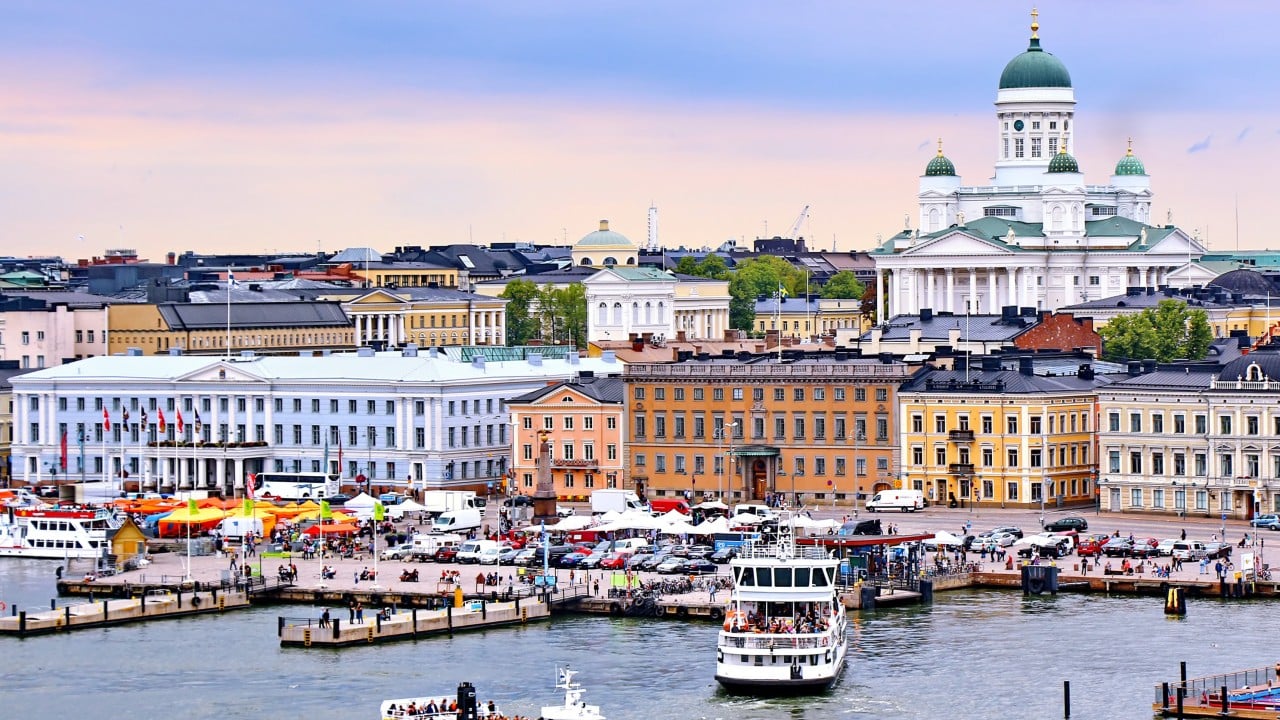
Waking up to air raid alerts isn't something people in Finland expect. Yet, early in the morning on May 15, 2026, around 1.8 million residents in the Uusimaa region, which includes Helsinki, received an emergency text telling them to stay indoors.
The cause wasn't an incoming missile strike, but a suspected military drone drifting toward the capital. Within minutes, Helsinki-Vantaa Airport shut down completely. Ground operations froze. The Finnish Air Force scrambled F/A-18 Hornet fighter jets into the pre-dawn sky, while naval vessels and military helicopters deployed across the Gulf of Finland.
It lasted three hours. By 7:00 AM, the airspace reopened, and authorities announced the immediate threat had passed. No military drone actually crashed into a residential block, and nobody was hurt. But treating this as a false alarm misses the point entirely. The Helsinki drone scare exposes a massive, systemic vulnerability in European civil aviation. It proves that the spillover from the war in Ukraine is no longer just a border issue. It's hitting major Western transport hubs.
The Morning Helsinki Airport Froze
If you look at the flight boards from Friday morning, you get a quick sense of the chaos. The 3:49 AM emergency alert caught the aviation sector at its most vulnerable moment: the prime arrival window for long-haul flights coming from Asia.
A Finnair Airbus A350 flying from Seoul, South Korea, had been in the air for nearly 13 hours. Just as it prepared to descend into Helsinki, the crew got word that the airport was closed. The massive widebody jet had to divert across the gulf to Tallinn, Estonia. Once the all-clear came through, that same plane had to fly a comical, frustrating 16-minute hop across the water to finally reach its destination.
Other flights didn't get off that easy. Aircraft were scattered across northern Europe, diverting to Stockholm and even up to Rovaniemi in Lapland. Finavia, the Finnish airport operator, reported that about 10% of the day's scheduled flights faced outright cancellation. Dozens more carried residual delays well into the evening.
Why the extreme reaction? Finnish defense officials tracked the trajectory of what they believed to be a large, military-grade drone. The suspected flight path tracked directly between Helsinki and Porvoo. If you know the geography of Finland's southern coast, that specific zone raises immediate red flags. Porvoo is home to highly critical infrastructure, including Neste Oyj’s massive oil refinery. In modern warfare, those are exactly the types of industrial targets that attract long-range explosive drones.
The Stray Drone Problem is Escalating
This isn't an isolated incident. The Baltic region is dealing with a severe case of collateral airspace pollution.
In the hours leading up to the Helsinki alert, Ukraine launched a massive wave of overnight drone strikes against Russian energy infrastructure. The Russian Ministry of Defense claimed to have shot down 355 Ukrainian unmanned aerial vehicles (UAVs) across multiple regions. Some of these strikes targeted assets in Russia's Leningrad Oblast near St. Petersburg, as well as Baltic ports like Primorsk and Ust-Luga.
When you launch hundreds of long-range drones packed with electronic countermeasures, things go wrong. GPS jamming and active electronic warfare from the Russian side routinely blind these drones. They lose their telemetry, drift off course, and fly blindly until their fuel runs out.
Look at what happened in the region during the exact same hours. Latvia issued its own emergency drone warning in its eastern territory. The political fallout there was so severe that the Latvian government coalition collapsed following internal infighting over how a previous drone incident was handled.
Until now, these stray drones usually stayed near the isolated eastern frontiers. The Helsinki incident changes the equation because the drone traveled nearly 100 kilometers inland, straight toward a capital city.
Kari Nisula, the operations chief for the Finnish Defense Forces, noted that the military eventually found no concrete evidence that a drone breached Finnish soil. The craft either turned back or crashed into the sea. But the military can't afford to guess. When a multi-meter wide aircraft with an unknown payload flies toward an oil refinery and a major international airport, you scramble the jets.
Why Current Anti-Drone Tech is Failing Commercial Airports
The reality is that commercial aviation is remarkably defenseless against military-grade UAVs. Most people think of airport drone disruptions and picture a hobbyist flying a quadcopter near the runway to get cool footage. That is a completely different problem.
Major hubs like London Heathrow and Paris Charles de Gaulle use advanced holographic radar systems, like those built by Aveillant, which track small consumer drones up to 5 kilometers away. These systems are great for spotting a careless tourist. They are useless against a military drone cruising at high altitudes with a massive radar cross-section, moving at speed, and potentially carrying electronic cloaking tech.
Worse, you can't just shoot a drone down over a city. If a fighter jet fires a missile at a stray drone over the Uusimaa region, the falling debris from both the drone and the missile poses a massive threat to the population below. That's exactly why the rescue department ordered nearly two million people to stay inside. The danger isn't just the drone hitting something; it's the kinetic cleanup operation.
How to Protect Your Travel Plans in the New Airspace Reality
If you fly frequently through northern or eastern Europe, you need to accept that airspace closures are becoming a structural risk, not a rare anomaly. Munich, Oslo, and Copenhagen airports have all suffered sudden shutdowns over the past year due to unidentified drone activity.
You can't control geopolitical drone drift, but you can change how you travel to avoid getting stranded.
- Avoid the tight connection: If you're booking a flight that connects through Helsinki, Warsaw, or the Baltic hubs, stop booking 45-minute layovers. If a drone scare closes an airport for three hours, you will miss your connection, and your luggage will end up in a different country. Give yourself at least a three-hour window.
- Monitor local media over official alerts: As some local residents pointed out during the Helsinki scare, the official government emergency system was quick to issue the indoor warning but notoriously slow to broadcast the all-clear. If you find yourself caught in an airport freeze, check local news outlets like Yle, Iltalehti, or Ilta-Sanomat for real-time operational updates before relying on delayed airline apps.
- Keep essential electronics in your cabin baggage: When flights divert to places like Tallinn or Rovaniemi, passengers often sit on the tarmac for hours while airlines sort out regional customs and refueling. Never pack your laptops, chargers, or vital medications in checked luggage. Assume your plane might land 500 miles away from your intended destination.
The drone scare in Finland ended quietly this time. The interior minister, Mari Rantanen, confirmed that citizens could safely return to work and school. But the vulnerability remains wide open. As long as long-range drone warfare dominates eastern Europe, the skies over the rest of the continent will remain unpredictable. This is the new normal for global aviation, and the industry is still figuring out how to handle it.