Silence.
That is the first thing that happens when a supersonic fighter jet loses thrust at low altitude over the quiet fields outside Belgrade—not an explosion, not a cinematic roar of tearing metal, just the sudden, terrifying vacuum where the scream of two Klimov RD-33 afterburning turbofans used to be, leaving a pilot alone with the whistle of wind against a pressurized canopy and three seconds to decide between his own life and the roofs of the village below.
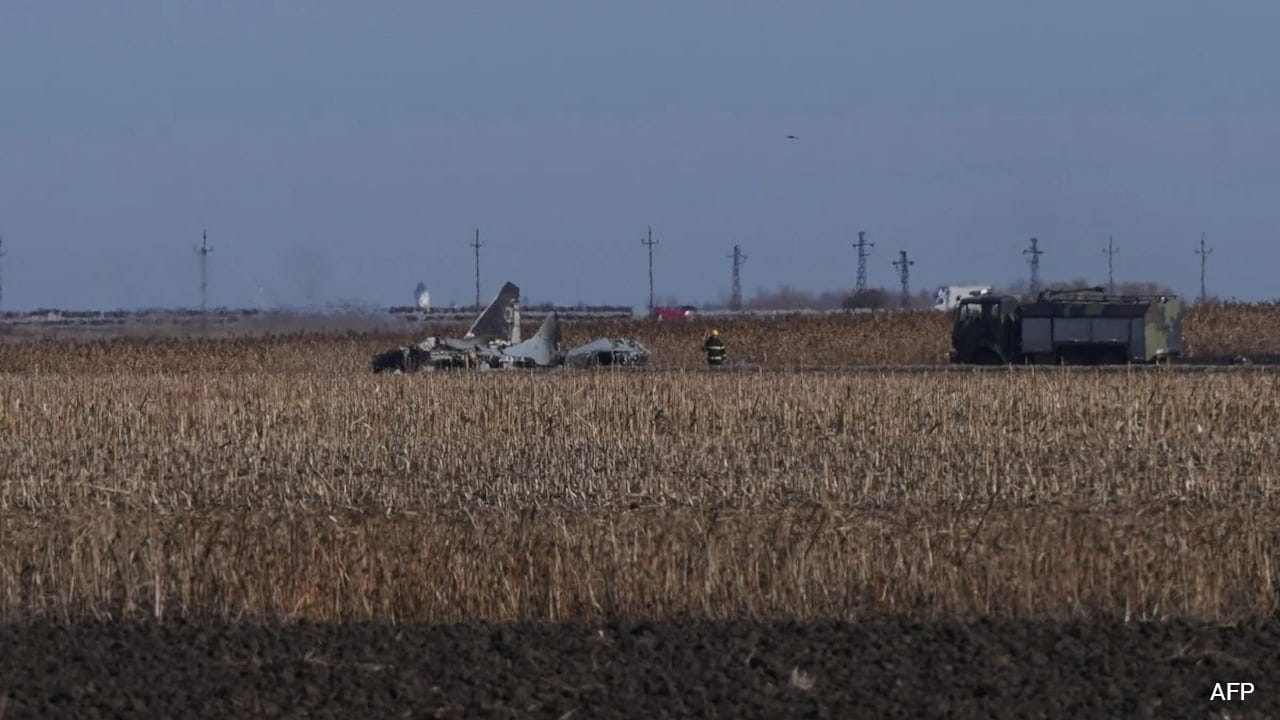
When news broke that a Serbian Air Force MiG-29 had crashed near the capital, killing the pilot on board, the headlines read like an obituary written by a machine. A brief dispatch. A sterile confirmation from the Ministry of Defense. A mention of an investigation committee. Within twenty-four hours, the digital tide washed over the story, burying a human life beneath the noise of newer crises and louder scandals.
We treat military aviation accidents like weather reports—unfortunate, inevitable, and fundamentally distant. Yet if you stand at the edge of the runway at Batajnica Air Base just northwest of Belgrade, watching the heat shimmer off the asphalt while ground crews coax thirty-five-year-old Soviet airframes into the morning light, you realize there is nothing abstract about what happened in that sky. Every flight is a negotiation with history, metal fatigue, and geopolitical pride.
The Weight of the Canopy
To understand what a pilot faces when things go wrong in a fourth-generation interceptor, set aside the Hollywood mythology of effortless swagger and invincibility. Think instead of sitting inside a narrow aluminum tube strapped to forty thousand pounds of thrust, fuel, and high-explosive ordnance, hurtling toward the earth at five hundred miles an hour.
Consider a hypothetical scenario based on standard MiG-29 flight profiles over central Serbia. Imagine a routine training sortie on a crisp morning—the kind of clear visibility that makes flying feel like an act of pure grace. Let us call our pilot Major Marko, a veteran with over a thousand flight hours, a man who knows the specific vibration of his control stick the way a cellist knows the grain of his instrument. He has flown this exact sector north of Belgrade dozens of times, banking over the flat patchwork of farmland where the Danube and Sava rivers converge.
At four thousand feet, during a high-G turn designed to simulate air-policing maneuvers, a warning tone pierces his headset. A hydraulic pressure drop. Or perhaps a compressor stall—an aerodynamic disruption inside the engine that starves the turbines of smooth airflow, causing violent backfires and an immediate loss of power.
In a modern fly-by-wire aircraft, digital computers compensate milliseconds before the human brain registers the anomaly. In a legacy MiG-29, originally engineered in the late 1970s and early 1980s, the pilot is fighting raw physics through mechanical linkages and aging analog backups. The nose pitches downward. The horizon spins.
Marko has the Zvezda K-36DM ejection seat beneath him—widely regarded by aviation engineers as one of the finest escape systems ever built, capable of saving a pilot even at zero altitude and zero airspeed. All he has to do is pull the twin handles between his knees. One sharp tug, and explosive bolts blow the canopy away while rocket motors blast him clear of the dying machine.
Why don't they always pull the handle in time?
Because pilots are trained from their very first solo flight never to abandon a controllable aircraft over populated terrain. Looking down through the curved glass, Marko doesn't see an empty map grid; he sees red-tiled farmhouses, a schoolyard, a local road with morning commuters. Every second he spends wrestling the stick to steer the failing twenty-ton dart toward an empty plowed field is a second stolen from his own survival envelope. By the time the nose clears the last house and points toward uninhabited dirt, the sink rate is too steep, the angle too extreme, and the ground rises up faster than rocket motors can fire.
That is not a mechanical failure alone. That is a moral choice made at four hundred knots.
Ghosts of Batajnica
You cannot separate a crash near Belgrade from the turbulent, fractured history of the aircraft themselves. I remember standing near the perimeter fence of Batajnica years ago, watching a pair of MiG-29s taxi past—sleek, twin-tailed predators with that unmistakable downward droop of the nose that gave the Fulcrum its menacing silhouette. Even from a distance, you could smell the unburned kerosene and feel the low-frequency thrum in your ribcage. To people who grew up in the Balkans, that sound carries a heavy, complicated nostalgia.
When the Socialist Federal Republic of Yugoslavia purchased sixteen MiG-29s from the Soviet Union in 1987, they were the crown jewels of European air power. Belgrade was the first foreign customer in Europe to receive the type, an emblem of technological prestige and non-aligned strength.
Then came the 1990s, and with them, disintegration, international sanctions, and a decade of isolation that starved the fleet of spare parts and factory-certified overhauls.
By the spring of 1999, when NATO launched Operation Allied Force, Serbia’s pilots were ordered into the air against an overwhelming coalition force in jets whose radar systems, navigation suites, and weapons computers were already failing before takeoff. Some pilots flew into combat knowing their radar could not lock onto a target, relying on ground controllers shouting vectors over jammed radio frequencies. Six MiG-29s were shot down in aerial engagements; others were destroyed on the ground in hardened shelters at Batajnica and Ponikve.
When the smoke cleared in June 1999, only a handful of battered airframes remained.
For nearly two decades afterward, Serbia’s fighter aviation survived on sheer stubbornness. There were years when only one or two MiG-29s were airworthy at any given time—barely enough to maintain basic air-policing duties, let alone train a new generation of young pilots. Mechanics cannibalized retired hulls for bolts and wiring harnesses. Pilots logged dangerously low annual flight hours, far below the NATO standard of 180 to 200 hours per year required to keep combat reflexes razor-sharp.
When a nation finally begins rebuilding a hollowed-out air force—acquiring second-hand airframes from Russia and Belarus, upgrading avionics, extending service lives to forty years—the scars of those lean decades do not vanish overnight. You can bolt a new radar screen into an old cockpit, and you can repaint the tactical gray camouflage until it gleams in the sun, yet beneath the skin, the airframe still remembers every hard landing, every corrosive winter, and every year spent waiting for parts that never arrived.
The Invisible Ledger of Air Policing
People often ask why a small Balkan nation, surrounded by neighbors and facing pressing domestic economic needs, insists on maintaining supersonic fighter jets at all. Why take the financial burden? Why accept the human risk?
The answer lies in an invisible legal reality known as sovereign air policing.
Under international aviation law, specifically the Chicago Convention, every nation is responsible for monitoring and securing its own airspace. If a commercial airliner loses radio contact over Belgrade, or deviates inexplicably from its flight path toward central Europe, someone has to scramble within minutes, pull alongside the cockpit window, visually inspect the pilots, and escort the plane to safety.
If a country cannot police its own skies, it must pay another nation to do it—just as Slovenia pays Italy, and Montenegro relies on allied patrols. For Serbia, a country defined by its policy of military neutrality, outsourcing the defense of its skies to a foreign power is politically unthinkable. Sovereignty, in Belgrade’s calculus, requires wings of its own.
Yet maintaining that sovereignty comes with a quiet, unforgiving tax paid in both currency and courage. Operating legacy twin-engine fighters is astronomically expensive. Every hour a MiG-29 spends in the air requires dozens of hours of grueling maintenance on the ground. Technicians inspect turbine blades with borescopes, test hydraulic seals for microscopic leaks, and recalibrate analog gauges that require the patience of a watchmaker.
Even with meticulous care, aviation operates on the unforgiving mathematics of probability. Complex machines built in the Cold War era do not fail gracefully; they fail suddenly, violently, and at the worst possible moment.
And when a crash occurs near a major city like Belgrade—a metropolis of nearly two million people sprawling outward into former agricultural districts—the margin for catastrophe narrows to nothing. What used to be wide-open buffer zones around military airfields in the 1980s are now dotted with suburban homes, warehouses, and highways. The sky has stayed the same size, while the ground beneath it has filled with life.
What Happens in the Dark After the Sirens Fade
When a military jet goes down, the public sees the perimeter tape, the black smoke rising against a pale sky, and the formal statements promising a thorough investigation. What the public rarely sees is the quiet devastation inside the squadron.
Fighter squadrons in smaller air forces are not sprawling bureaucracies; they are tight-knit families where everyone knows everyone else’s children, where mechanics pat the fuselage for luck before pulling the wheel chocks, and where every pilot has stood at the funeral of a mentor or a classmate.
I have spoken with retired Balkan aviators who still carry the exact dates of every lost squadron mate in their heads like birthdates. They talk about the strange, heavy silence in the ready room the morning after a crash—the way a flight suit still hangs in an empty locker, the way the surviving pilots have to climb back into identical cockpits forty-eight hours later because the air-policing alert schedule does not pause for grief.
To fly under those conditions requires a specific kind of compartmentalization. You trust the technician who signed the maintenance log. You trust the engineers who certified the life-extension program. Most of all, you trust your own hands to react faster than fear when a red master-warning light flashes in your eyes.
Sometimes, that trust is not enough.
It is unsettling to admit how much uncertainty remains even after the black boxes—the flight data and cockpit voice recorders—are pulled from the wreckage. Investigations into military crashes can take months, sometimes years, and their full technical findings are frequently classified under national security protocols. Was it a sudden bird strike—an ever-present hazard along the river valleys near Belgrade? Was it an abrupt failure of an aging fuel pump? Or was it spatial disorientation during a low-altitude maneuver, where the inner ear lies to the brain and convinces a pilot that flying straight into the earth feels like climbing?
The public rarely gets the full, unvarnished engineering truth. Instead, we are left with a name, a rank, a grieving family, and a scorched scar in a Serbian field.
The Transition Every Sky Must Face
Belgrade has already recognized that the era of the Cold War MiG is drawing to a close. Plans to acquire modern Western multirole fighters—aircraft built with digital fly-by-wire controls, advanced composite materials, and automated collision-avoidance systems—represent an acknowledgment that bravery cannot indefinitely compensate for aging metallurgy.
Modern avionics do not make flying safe; nothing makes strapping yourself to controlled explosions completely safe. What modern systems do is buy a pilot precious fractions of a second. They turn an unrecoverable spin into a recoverable warning. They give a human being the breathing room needed to steer away from a village and still make it home for dinner.
Until those new wings finally arrive on the tarmac at Batajnica, however, the men and women of Serbia’s 101st Fighter Aviation Squadron continue to walk out to the flight line every morning, strap themselves into machines born in another century, and climb into the haze above the Danube.
Next time you hear the distant, metallic rumble of a fighter jet cutting through the clouds above a city, pause for a second before going back to your screen. Look up at the faint white contrail fading against the blue. Up there, inside a cramped cockpit rattling at the edge of the sound barrier, someone is holding twenty tons of history in their bare hands, praying the engines hold until the wheels touch concrete.