The human body keeps a cruel, unforgiving calendar.
Cristiano Ronaldo is forty-one years old. In the sweltering, suffocating heat of the North American summer of 2026, every sprint demands a toll. The muscles do not fire with the same effortless violence they did in Madrid a decade ago. The recovery takes longer. The air feels heavier. The critics, waiting with bated breath for the inevitable collapse of a titan, are louder.
He is not just fighting the opposing defenders. He is fighting biology. He is fighting time.
And thousands of miles away, sitting in a bedroom illuminated by the harsh, unnatural glow of LED strip lights and dual monitors, Darren Watkins Jr. is fighting something else entirely.
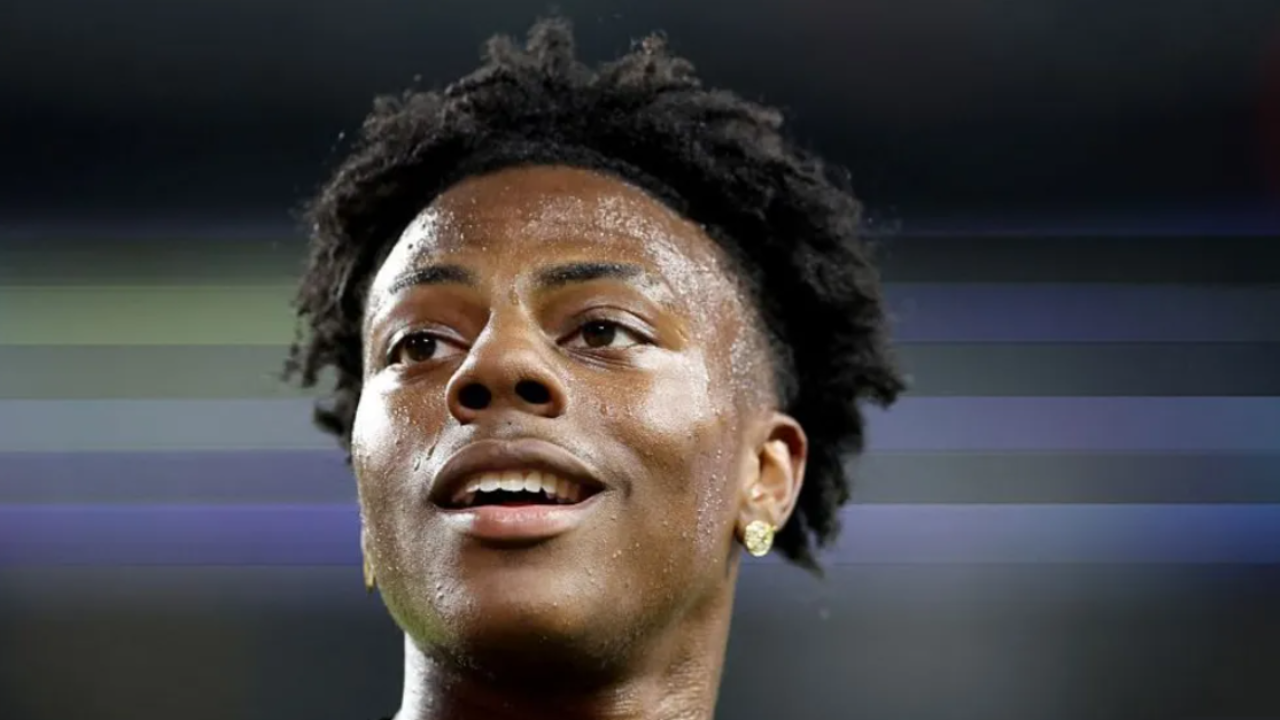
Watkins, known to millions across the globe as the YouTube streamer IShowSpeed, is fighting the overwhelming, terrifying weight of caring too much.
We live in an era of detached irony. It is incredibly easy to care a little bit about everything and care deeply about absolutely nothing. We scroll, we exhale sharply through our noses, we like, we move on. But true fandom—the kind that makes your hands shake, the kind that ties your emotional equilibrium to the unpredictable movements of a spherical ball on a patch of grass—is an entirely different beast. It is vulnerable. It is exhausting.
I have never screamed at a computer monitor until my vocal cords bled. Perhaps you haven’t either. Sitting in the quiet dignity of a living room, it is remarkably easy to pass judgment on the frantic, performative hysteria of modern internet culture. We watch teenagers bark at webcams and we dismiss it as noise. We call it a grift. We call it a desperate plea for algorithmic attention.
But sometimes, the irony burns away. Sometimes, what is left behind is an exposed nerve.
The Architecture of Hysteria
To understand the explosion, you have to understand the pressure cooker.
Why is a kid from Ohio so inexplicably tied to a Portuguese billionaire? It began, as most things do on the modern internet, as a joke. Speed’s initial obsession with Ronaldo was a loud, chaotic caricature of an American trying to force his way into the world’s most popular sport. He butchered the pronunciation of names. He barked. He wore counterfeit jerseys.
The internet laughed. The viewership skyrocketed.
But a strange thing happens when you pretend to love something with every ounce of your being for thousands of hours on end. The line between performance and reality blurs, and eventually, it snaps completely. The joke became a pilgrimage. Speed traveled the world. He waited outside stadiums in the freezing rain. He cried when he missed his idol by mere feet. He eventually met him, a viral collision of two wildly different stratospheres of fame.
By the summer of 2026, the joke is dead. What remains is a pure, unadulterated parasocial devotion.
Let us construct a hypothetical scenario to understand this dynamic. Imagine you are tasked with holding a glass of water. For a minute, it is light. For an hour, your arm aches. For five years, the glass feels heavier than a boulder. Speed has been holding this glass under the scrutiny of millions. He has tied his entire public identity to the success of an aging athlete who is statistically past his expiration date. Every missed shot by Ronaldo is a personal indictment of Speed’s faith. Every victory is a vindication of his chaotic religion.
This is, to use an explicit metaphor, an emotional stock market crash waiting to happen. The fan invests all his capital in a depreciating physical asset.
The Anticipation of the End
June 2026. The World Cup.
The context of this tournament cannot be ignored. This is the final bow. There will be no 2030 for Cristiano Ronaldo. The greatest goalscorer in the history of the sport is taking his final steps on the ultimate stage. The gravity of this reality hangs over every touch of the ball, heavy and suffocating.
The whistle blows. The match begins.
Portugal moves the ball with a methodical, cautious rhythm. The opponents sit deep, a wall of youthful endurance designed specifically to frustrate the aging king.
In his bedroom, Speed is not sitting. He has not sat for twenty minutes.
He paces. He mutters to himself. His eyes are wide, reflecting the bright green of the broadcast. The microphone attached to his headset is already clipping, picking up the frantic, heavy breathing of a boy who has forgotten that he is broadcasting to an audience of millions. He is no longer an entertainer. He is a hostage to the game.
The digital delay between the live event and the streaming broadcast creates a fascinating psychological torture. Speed knows, deep down, that the events he is watching have already happened. The ball is already in the net, or it has already been cleared. He is living in a delayed reality, helpless to affect the outcome, yet entirely consumed by it.
The Strike
Seventy minutes in.
The legs are heavy. The heat is radiating off the pitch in visible, shimmering waves.
A momentary lapse in the defense. A slight miscalculation by a center-back who was born after Ronaldo made his professional debut. The ball breaks loose at the edge of the penalty area.
Time stutters.
Ronaldo steps into the space. The mechanics of the movement are ingrained in his skeletal structure. Millions of repetitions. Millions of hours in empty gyms and dark training grounds. He does not need to think. The body remembers what the mind can barely process in the fraction of a second allowed.
He strikes the ball.
It is a violent, beautiful collision of physics and desperation. The ball leaves his boot, cutting through the humid air with a vicious, dipping trajectory.
The stadium inhales.
The goalkeeper dives, a desperate, stretching attempt to rewrite the inevitable. His fingertips brush empty air. The ball strikes the back of the net, tearing into the white mesh with a satisfying, definitive snap.
The Detonation
The split-screen reality of the modern world activates.
In the stadium, eighty thousand people erupt into a deafening, unified roar. Ronaldo sprints toward the corner flag, his face a contorted mask of pure, unadulterated relief. The heavy burden of the final tournament, the whispers of his decline, the suffocating pressure of his own legacy—it all shatters in the space of a single heartbeat. He leaps. He spins. The roar shakes the concrete.
Thousands of miles away, the bedroom in America detonates.
There is no gradual build-up. There is only an immediate, catastrophic loss of control.
Speed does not cheer. He does not clap. He explodes.
He screams. It is a primal, guttural sound that tears at the vocal cords, a sound that belongs more to a battlefield than a suburban bedroom. The gaming chair is violently shoved backward, crashing into the wall. The headset is ripped off and thrown against the desk.
He falls to his knees. He beats his chest. He barks, a manic, breathless staccato of noise. He runs out of the frame, the camera capturing only an empty chair and a shaking room. The microphone, lying bruised on the desk, picks up the sounds of a house being structurally tested by human joy.
He reappears seconds later, his shirt torn open, his eyes red and leaking. He collapses back into the chair, clutching his head, hyperventilating.
"He’s back!" he screams, over and over, his voice cracking, devolving into a breathless sob. "He’s still him! He’s still him!"
It is a terrifying thing to watch. It is chaotic. It is loud. It defies every convention of social acceptability.
And it is absolutely mesmerizing.
The Empathy of the Void
Why do we care?
Why does a video of a teenager having a total psychological meltdown over a soccer goal garner tens of millions of views within hours?
It is incredibly tempting to cynically dismiss it as algorithmic slop. To say that people are just laughing at the court jester. But that analysis is lazy. It misses the deeper, more profound truth of our current isolation.
We watch Speed lose his mind because, in the deepest, quietest parts of ourselves, we are begging for a reason to lose ours.
Modern life is heavily sanitized. Our interactions are curated. Our emotions are managed, processed, and packaged neatly into acceptable social parameters. We are taught to regulate. Keep your voice down. Don't cause a scene. Be rational.
Speed is the rejection of rationality.
He is the physical manifestation of what happens when you stop pretending that you don't care. When Ronaldo scores, Speed isn't just celebrating a point in a group stage match. He is experiencing a profound, existential catharsis. He is watching his hero—a man who has been written off, mocked, and told he is too old—prove the world wrong.
In that frantic, screaming, weeping meltdown, Speed channels the collective, repressed desire of millions. We want to believe that the heroes we chose when we were young can still perform miracles. We want to believe that loyalty is rewarded. We want to believe that, against all odds, the aging king still has enough magic left in his bones to stop time, even if only for ninety minutes.
The camera shakes on its mount. The chat on the side of his screen moves so fast it is a solid blur of text, a river of digital consciousness pouring into the room. Millions of people, sitting alone in their own dark rooms, typing frantically to share in a moment of manufactured, beautiful hysteria.
The broadcast eventually ends. The adrenaline fades. The internet moves on to the next trend, the next meme, the next outrage.
But the documentation remains. A digital fossil of a Tuesday in June, where a forty-one-year-old man kicked a ball across a line, and a teenager an ocean away shattered the quiet.
The screen eventually cuts to black. The red recording light stops pulsing. And in the sudden, ringing silence of the empty bedroom, a boy catches his breath in the dark, reminding us that for one brief, brilliant second, the hardest thing in the world is simply being quiet.