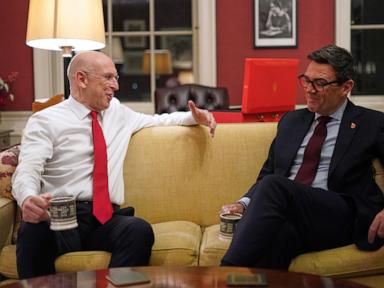
The red leather box is scuffed at the corners, heavier than it looks, and smells faintly of beeswax and old anxiety.
When a British Chancellor of the Exchequer holds it aloft outside Number 11 Downing Street, the cameras click with a frantic, rhythmic hunger. To the casual observer watching on a muted pub television in Leeds or a commuter train rolling into Manchester Piccadilly, it is pure Westminster theatre. A politician in a sharp suit smiles for the lens, raises a battered wooden case covered in faded scarlet leather, and then disappears behind a heavy black door to deliver a speech packed with percentages, fiscal rules, and borrowing forecasts. Recently making waves recently: Inside Rwanda’s Milk Bars and the Quiet Battle for East Africa’s Dairy Economy.
Listen closely, though. Beneath the roar of the press pack, you can almost hear the quiet scrape of a chair being pulled back from a kitchen table three hundred miles north.
Meet Sarah. She is a composite of a million real people living between the Mersey and the Tyne, a hypothetical figure drawn from the cold ledger of current UK economic data, yet painfully familiar to anyone who has ever stared at a direct debit statement at two in the morning. Sarah runs a small precision-engineering supplier outside Bolton. She employs fourteen people. For the past three years, she has absorbed surging energy bills, higher National Insurance contributions, and interest rates that turned a manageable business overdraft into a slow-bleeding wound. Further information on this are detailed by The Wall Street Journal.
Sarah does not care about the bond markets. She does not follow the arcane squabbles over fiscal headroom. What Sarah cares about is whether she can afford to keep her youngest apprentice on the payroll past April, and why the promise of national renewal always seems to arrive on a train that terminates somewhere around Watford.
Now, enter a new political reality. With Andy Burnham installed in Downing Street, the gravitational pull of British politics has shifted sharply northward, carrying with it a mountain of expectation. Burnham built his reputation as the "King of the North," a leader who fought Whitehall over bus franchises, pandemic support, and regional investment. His premiership represents an explicit promise that the peripheral towns of Britain will no longer be treated as an afterthought to the Square Mile.
Yet promises do not balance a ledger. As his Treasury chief steps up to the dispatch box to deliver the first budget of this new administration, the applause of the party faithful fades quickly into a cold, hard accounting. The Chancellor is walking into a gale.
The Arithmetic of Hope
To understand the bind gripping the Treasury right now, forget macroeconomics for a moment and picture a household credit card that was maxed out during a series of emergencies, only for the bank to triple the minimum monthly payment.
That is the British public finances. For nearly two decades—stretching from the 2008 financial crash through the pandemic lockdowns and the subsequent energy price shock—successive governments borrowed to shield the public from immediate catastrophe. Debt-to-GDP now hovers near 100 percent, a level not seen outside wartime since the early 1960s. Every single year, more than £100 billion of taxpayer money vanishes into debt interest payments alone. That is money that cannot build a single mile of electrified track between Liverpool and Hull. It cannot fund a single extra nurse on an overstretched ward in Oldham.
I remember sitting in a cramped Treasury briefing room during a previous fiscal crisis, watching an official trace a red line across a projection chart with the tip of a fountain pen. The air in the room was stale, smelling of lukewarm filter coffee and damp wool coats. "People think the Chancellor has a magic cheque-book," the official muttered, rubbing his temples. "What we actually have is a set of handcuffs forged by the gilt market."
He was right. Bond investors—the pension funds, insurance companies, and sovereign wealth managers who buy UK government debt—do not vote in British elections, yet they hold an absolute veto over British budgets. Everyone remembers what happened in September 2022 when a government announced tens of billions in unfunded tax cuts without showing how the books would balance. The pound plummeted. Mortgage rates spiked overnight. Pension funds teetered on the brink of collapse.
That ghost still haunts the corridors of Horse Guards Road. Burnham’s new Chancellor knows that if he loosens the purse strings too wildly to satisfy the impatient demands of newly empowered northern MPs, the bond vigilantes will punish the country before the speech has even finished. Borrowing costs would surge, wiping out the very investment he wants to fund.
The Trap Between Two Promises
So what happens when an unstoppable political promise meets an immovable financial wall?
Tension. Raw, suffocating tension.
Consider the sheer scale of the competing demands landing on the Chancellor’s desk this week. On one side stands the Prime Minister’s core mission: rebalancing a lopsided economy. For decades, London and the South East have generated a disproportionate share of the nation’s wealth, sucking in talent, venture capital, and infrastructure spending while post-industrial towns were left to make do with patched-up Victorian railways and hollowed-out high streets. Fixing that requires upfront capital. It demands tens of billions for regional transport networks, technical colleges, social housing, and local mayors who actually control their own budgets.
On the other side sits a bruised electorate that was promised no return to austerity, alongside strict pledges not to hike the headline rates of income tax, National Insurance, or VAT on working people.
Stop and do the math. If you cannot borrow freely because the bond markets will revolt, and you cannot raise the big three taxes that bring in the lion’s share of Treasury revenue, where on earth do you find the money?
This is the riddle that has broken more than one Chancellor. It forces the Treasury into the dark arts of fiscal engineering—tweaking capital gains thresholds, raiding pension tax reliefs, freezing income tax bands so inflation quietly drags millions of ordinary earners into higher brackets, or hunting down corporate loopholes that yield far less cash on Tuesday than they look like on Monday morning.
Let us return to Sarah in Bolton. Suppose the Chancellor decides to spare income tax, protecting her personal paycheque, while quietly raising employer taxes or tightening reliefs on business investment to plug a £20 billion hole in the public finances. On paper, the manifesto pledge holds. In the real world, Sarah looks at her spreadsheet on Wednesday evening, closes her laptop with a quiet sigh, and cancels her order for a new CNC milling machine. Growth stalls before it even starts.
Why Growth Remains the Elusive Cure
Every politician in Westminster utters the word "growth" like a sacred incantation, as if repeating it three times at the dispatch box will summon productivity out of thin air.
Yet Britain’s productivity puzzle is stubborn, deeply rooted, and entirely immune to slogans. Since 2008, output per hour worked in the UK has flatlined compared to its historical trend, trailing peers like Germany, France, and the United States. The reasons are depressingly tangible: chronic underinvestment by both the public and private sectors, a planning system that can take seven years to approve a wind farm or a warehouse, and a skills gap that leaves factories crying out for engineers while young people struggle to find viable vocational routes.
Think of the UK economy like an ageing delivery van that has skipped its last four services. You can paint the bodywork a fresh, optimistic colour. You can put a passionate new driver behind the wheel who knows every back road in the country. None of that fixes a worn-out transmission. Until you replace the underlying parts—energy grid capacity, commuter rail links, housing near job centres—the engine will keep overheating every time you try to accelerate.
Burnham understands this intuitively. His years running Greater Manchester taught him that local leaders often spend money faster and smarter than Whitehall mandarins sitting in SW1. Devolving power—handing block grants to regional mayors and letting them integrate buses, trams, and skills training—is the clearest route to unlocking dormant potential outside London.
The catch is time. Infrastructure takes years to pour concrete and lay steel. Political patience, especially in an era of volatile social media outrage and restless backbenchers, lasts about six weeks.
The Invisible Cost of Caution
There is a quieter danger lurking beneath the headline tax-and-spend rows, one that rarely makes the front pages of the morning tabloids. It is the cost of hesitation.
When businesses do not know what the tax regime will look like next autumn, they sit on their cash. When local councils do not know whether their funding settlement covers basic adult social care, they board up libraries and turn off streetlamps to avoid declaring effective bankruptcy. When young families cannot afford a deposit on a starter home because interest rates remain stubbornly above their post-2008 lows, they delay having children, shrinking the workforce of the 2040s.
I have spoken with dozens of small business owners across the North West over the past year, and the emotion they express most isn't anger. It is exhaustion. They are tired of white papers, tired of taskforces, and deeply sceptical of grand announcements that dissolve into small print three months later.
One pub landlord in Wigan put it to me bluntly over a pint of bitter: "Every Chancellor stands up and says they're backing the strivers. Then my business rates go up, my energy standing charge doubles, and the bloke down the road shuts his shop. I don't need a strategy document. I need my costs to stop climbing faster than my till."
That is the human reality pressing against the doors of Number 11. The Treasury chief is not merely managing a spreadsheet; he is managing the fragile remaining trust between the British state and the people who pay for it.
Navigating the Storm Without Capsizing
Can he pull it off? Honestly, the margin for error is razor-thin, and anyone claiming certainty is selling snake oil.
To survive this first budget and set the Burnham administration on a credible path, the Chancellor has to execute a delicate three-part manoeuvre that satisfies three audiences who fundamentally distrust one another.
First, he must prove fiscal discipline to the markets without strangling public investment. One viable route—already hotly debated among economists—is changing how debt is measured so borrowing to build long-term productive assets like railways, grid connections, and social housing is treated differently from borrowing to pay day-to-day running costs. Markets will accept investment borrowing if, and only if, it is policed by an independent watchdog like the Office for Budget Responsibility and tied to projects with proven economic returns.
Second, he must fix the planning bottleneck that costs the Treasury nothing in upfront cash yet acts as a massive handbrake on private capital. If a pension fund wants to spend £2 billion building a life sciences hub in Manchester or an offshore wind assembly plant on Teesside, the state should be rolling out a red carpet, not burying the application under four thousand pages of environmental judicial reviews.
Third, he has to be brutally honest with the public about trade-offs. Voters are far more resilient than politicians give them credit for when treated like adults. Pretending that world-class public services can be funded on Scandinavian levels with American-style tax rates is a fairy tale that always ends in broken promises and soaring cynicism.
The Weight of the Red Box
Watch the footage again when the Chancellor steps out onto Downing Street. Look past the rehearsed smile and the choreographed wave for the photographers.
Inside that scuffed leather box sits a stack of typewritten pages that will decide whether a council in Bradford keeps its youth clubs open, whether a biotech start-up in Cambridge expands in Britain or relocates to Boston, and whether a retired couple in Sunderland turns their heating up by two degrees this January.
Back in Bolton, Sarah will switch off the evening news around half past six, rinse her mug in the sink, and walk back into her study to look over next quarter’s order book. The speeches in Westminster will echo through the night, dissected by pundits, cheered by loyalists, and torn apart by the opposition. By morning, all the rhetoric will have evaporated. Only the numbers on her screen will remain.



