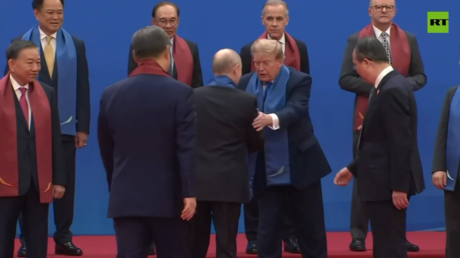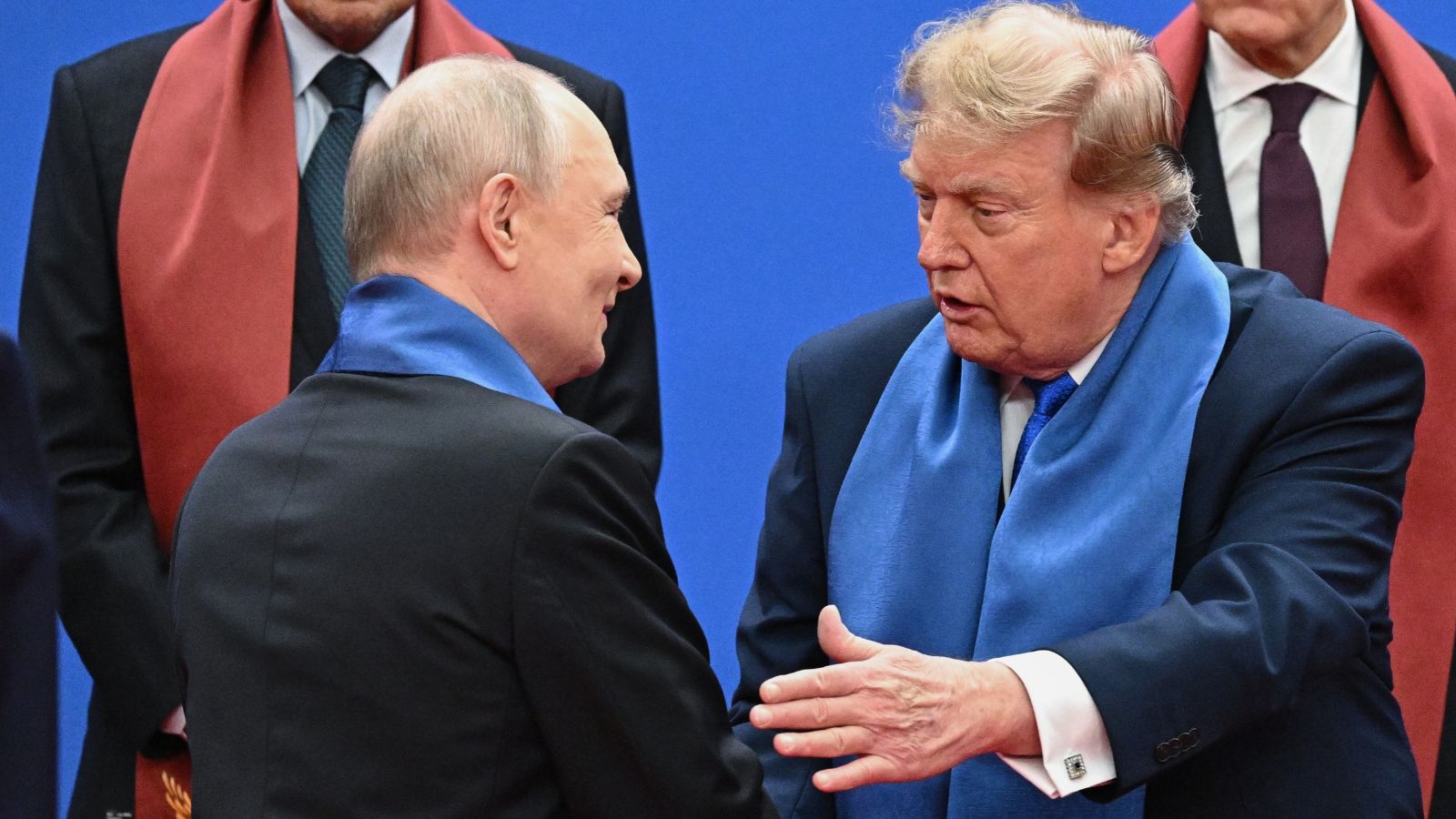
When President Donald Trump and Russian President Vladimir Putin crossed paths at the Asia-Pacific Economic Cooperation (APEC) summit, Trump told reporters that "wonderful things can come out of this — or at least start." That brief remark immediately dominated news cycles, yet it reveals far more about diplomatic signaling than about any finalized bilateral agreement. While live updates from the summit floor focused on the optics of two leaders sharing a stage amid ongoing geopolitical friction, the real story lies in the structural constraints, economic pressures, and domestic calculations dictating what either man can actually deliver.
The Anatomy of a Pull-Aside
Summit diplomacy rarely produces binding treaties in a single afternoon. Instead, leaders rely on informal encounters—often called "pull-asides"—to test whether formal negotiations are worth the political capital. If you found value in this article, you should check out: this related article.
At APEC, the primary mandate is economic integration across the Pacific Rim, covering trade liberalization, supply chain resilience, and digital commerce among 21 member economies. Because APEC operates on consensus and non-binding commitments, it provides a lower-stakes venue than a formal bilateral summit. Neither Washington nor Moscow has to produce a signed communiqué to justify attendance.
Historically, brief encounters between U.S. and Russian presidents on the sidelines of multilateral gatherings have served as pressure valves. During the 2017 APEC summit in Da Nang, Vietnam, Trump and Putin issued a joint statement on Syria after a series of brief hallway conversations, even though no formal sit-down occurred. Those interactions allow leaders to bypass layers of diplomatic bureaucracy and gauge personal chemistry directly. For another look on this development, refer to the recent coverage from NPR.
Yet chemistry does not erase policy divergence. The distance between a cordial greeting in front of cameras and a workable framework on sanctions, energy markets, or regional security remains vast.
What Washington Wants From the Room
For the Trump administration, engaging Putin at APEC aligns with a transactional approach to foreign policy that favors direct leader-to-leader bargaining over multilateral consensus building. By framing the encounter around the possibility that "wonderful things" could start, Trump signals to domestic audiences and foreign allies alike that he views personal diplomacy as a tool to break entrenched deadlocks.
Several strategic drivers sit behind this posture:
- Energy Market Stability: Global oil and gas prices remain sensitive to geopolitical disruptions and sanctions enforcement. Any perceived thaw between Washington and Moscow immediately registers in commodity markets, affecting inflation expectations in the United States.
- Strategic Burden Shifting: The White House has consistently pressed European and Asian allies to shoulder a greater share of their own defense costs. Opening a direct channel with Moscow creates leverage in those conversations, reminding partners that Washington retains independent diplomatic options.
- China Policy Calibration: APEC is fundamentally an Indo-Pacific forum where competition with Beijing shapes nearly every agenda item. Engaging Russia directly allows Washington to test the durability of the Moscow-Beijing alignment without necessarily conceding core U.S. interests in the Pacific.
Critics within the U.S. foreign policy establishment argue that high-profile warmth toward Putin risks legitimizing Russian foreign policy actions without securing tangible concessions in return. Former national security officials frequently point out that Moscow excels at using the process of dialogue itself to delay coordinated Western responses.
Moscow's Calculation in the Pacific
From the Kremlin's perspective, simply appearing alongside the U.S. president on a major international stage delivers immediate value. For years, Russian diplomacy has worked to counter Western efforts at diplomatic isolation by deepening ties across Asia, the Middle East, and the Global South.
Russia's participation in APEC underscores its self-image as both a European and an Asian power. Vladivostok, Russia's primary Pacific port, sits directly on the Sea of Japan, and Moscow has long sought foreign investment to develop its Far East regions. However, comprehensive Western financial sanctions and export controls have severely restricted capital flows and technology transfers into those territories.
Putin's willingness to engage in brief, optimistic exchanges with Trump serves three distinct objectives for Moscow:
- Demonstrating Diplomatic Relevance: Visual evidence of direct dialogue with the American president counters narratives that Russia has been sidelined from global decision-making.
- Testing Sanctions Flexibility: Even subtle shifts in rhetoric from Washington can create hesitation among third-country banks and shipping firms enforcing secondary sanctions, easing operational friction for Russian exporters.
- Managing Asymmetry with Beijing: While China has become Russia's most critical economic lifeline, Moscow historically prefers to avoid total dependence on a single partner. Keeping a line open to Washington provides a modest counterweight in Russia's broader diplomatic portfolio.
Still, Russian officials remain deeply skeptical that personal rapport at a summit can overcome institutional resistance in Washington. Congressional sanctions regimes, defense department planning, and intelligence assessments operate on timelines and legal frameworks that a single executive cannot dismantle overnight.
Why Live Coverage Misses the Structural Reality
Breaking news coverage of summits naturally gravitates toward body language, off-the-cuff quotes, and fleeting interactions between world leaders. Cameras capture the handshake, reporters transcribe the soundbite, and markets twitch for an hour.
What disappears in that rapid cycle is the machinery required to turn a five-minute conversation into policy. When Trump says something "can at least start," he is describing the very beginning of a bureaucratic grind that often stalls before reaching public view.
Consider how bilateral agreements actually materialize. After two leaders express general interest in cooperation, the file passes to sherpas, deputy ministers, and interagency working groups. Each side drafts position papers detailing red lines—territorial integrity, arms control verification, tariff schedules, or asset freezes. If the gap between those opening positions is too wide, the process quietly dies in committee, regardless of how warmly the presidents spoke in front of the press pool.
Furthermore, third-party reactions heavily constrain bilateral momentum. Allies in Europe and the Indo-Pacific monitor every syllable uttered during U.S.-Russia encounters. If Tokyo, Seoul, or Brussels perceives that Washington is contemplating unilateral concessions that undermine regional security architectures, diplomatic pushback begins within hours. That feedback loop forces the White House to clarify, walk back, or contextualize the president's initial optimism.
The Economic Subtext of APEC
It is easy to forget that APEC was built to talk about tariffs, customs procedures, and trade facilitation rather than superpower rivalry. Yet economics and security have become inseparable across the Pacific Rim.
Supply chains for semiconductors, critical minerals, and clean energy components run directly through APEC member economies. Both the United States and Russia view resource access and trade corridors as instruments of national power.
For the U.S., APEC is an opportunity to reassure Southeast Asian nations—such as Vietnam, Indonesia, and Malaysia—that American economic engagement in the region remains durable despite domestic debates over tariffs and industrial policy. Many of these middle powers refuse to choose exclusively between Washington and Beijing, and they view any reduction in U.S.-Russia hostility as beneficial for global trade stability.
Russia, meanwhile, uses the forum to promote alternative transport routes, including the Northern Sea Route along its Arctic coast, pitching it as a faster maritime link between Asian manufacturing hubs and European markets. Without Western maritime insurance, ice-class vessels, and financing, however, those ambitions face steep logistical hurdles.
Historical Precedent and the Limits of Personal Diplomacy
History offers sobering lessons about summit optimism. In June 2001, President George W. Bush met Putin for the first time in Slovenia and famously remarked that he had looked the Russian leader in the eye and gotten a sense of his soul. Within a few years, bilateral relations deteriorated sharply over NATO expansion, missile defense, and regional conflicts.
In 2009, the Obama administration launched its "reset" with Moscow, symbolized by a physical red button presented to Foreign Minister Sergey Lavrov. That effort yielded the New START nuclear arms treaty and transit agreements for Afghanistan, yet it collapsed entirely by 2014 following Russia's annexation of Crimea.
The pattern across different U.S. administrations—spanning both political parties—is consistent. Presidents enter office believing that fresh personal engagement or a recalibrated tone can unlock cooperation with the Kremlin. Early meetings generate hopeful headlines. Then, fundamental clashes over spheres of influence, alliance commitments, and domestic political systems reassert themselves.
Trump's style differs from his predecessors in its overt informality and willingness to praise counterparts publicly before negotiations begin. Supporters argue this lowers defensive barriers and creates space for unconventional deals. Detractors contend it surrenders leverage upfront without securing verifiable commitments.
What Actually Signals Real Movement
If a summit handshake is mostly theater, how can observers tell when genuine diplomatic movement is underway? Veteran diplomats look past the podium quotes and watch for specific, technical indicators in the weeks following a summit:
- Resumption of Working-Level Dialogues: Watch for announcements that Deputy Secretary of State or National Security Council officials are meeting with their Russian counterparts in neutral venues like Geneva, Vienna, or Muscat. Without mid-level diplomats hashing out technical language, leader-level optimism goes nowhere.
- Embassy Staffing Adjustments: Over the past decade, tit-for-tat expulsions have gutted diplomatic missions in both Washington and Moscow, leaving embassies unable to process visas or maintain basic communication channels. Restoring consular staff is a reliable early sign that both sides want functional channels open.
- Targeted Humanitarian or Prisoner Exchanges: Quiet agreements on detained nationals often serve as confidence-building measures before broader strategic issues are touched.
- Silence from the Podium: Ironically, when serious negotiations are actually happening, public statements usually become more guarded and repetitive. Leaders stop ad-libbing to reporters because loose language can derail delicate text being negotiated behind closed doors.
Reading the Moment Without the Hype
The coverage surrounding Trump and Putin at APEC illustrates a recurring trap in political journalism: mistaking an opening line for a final outcome. Saying that wonderful things "can" happen is a statement of possibility, not a policy announcement.
For the 21 economies gathered at APEC, the immediate priority remains navigating slower global growth, shifting tariff walls, and technological competition. A brief bilateral encounter between Washington and Moscow captures the spotlight because nuclear-armed powers always command attention. Yet until technical negotiators sit across a table with authority to trade concrete concessions, the handshake remains just that—a fleeting moment on a crowded diplomatic floor.