The long-standing security architecture of South Asia is disintegrating. What started as skirmishes along the Durand Line has metastasized into a volatile confrontation between Pakistan and the Taliban-led government in Afghanistan. This is not merely a border dispute; it is the total breakdown of a forty-year strategy. For decades, Islamabad viewed a friendly regime in Kabul as "strategic depth" against India. Instead, they have inherited a defiant neighbor that provides sanctuary to the Tehrik-i-Taliban Pakistan (TTP), an insurgent group dedicated to dismantling the Pakistani state. As the exchange of fire becomes a weekly occurrence, the regional heavyweights—Russia, China, and Iran—are moving from the sidelines to the center, desperate to prevent a regional firestorm that could incinerate their own economic and security interests.
The crisis is rooted in a fundamental miscalculation. Pakistan expected the Taliban to function as a client state. They didn’t. The Taliban, now in possession of billions of dollars in abandoned Western military hardware, have rediscovered their nationalist streaks. They refuse to recognize the Durand Line, the 2,640-kilometer border drawn by the British in 1893, which splits the Pashtun heartland in two. When Pakistan conducts airstrikes against TTP hideouts inside Afghan territory, Kabul responds with heavy artillery. This is a cycle of escalation that neither side can afford, yet neither side can afford to quit. If you liked this article, you might want to look at: this related article.
The Failed Logic of Strategic Depth
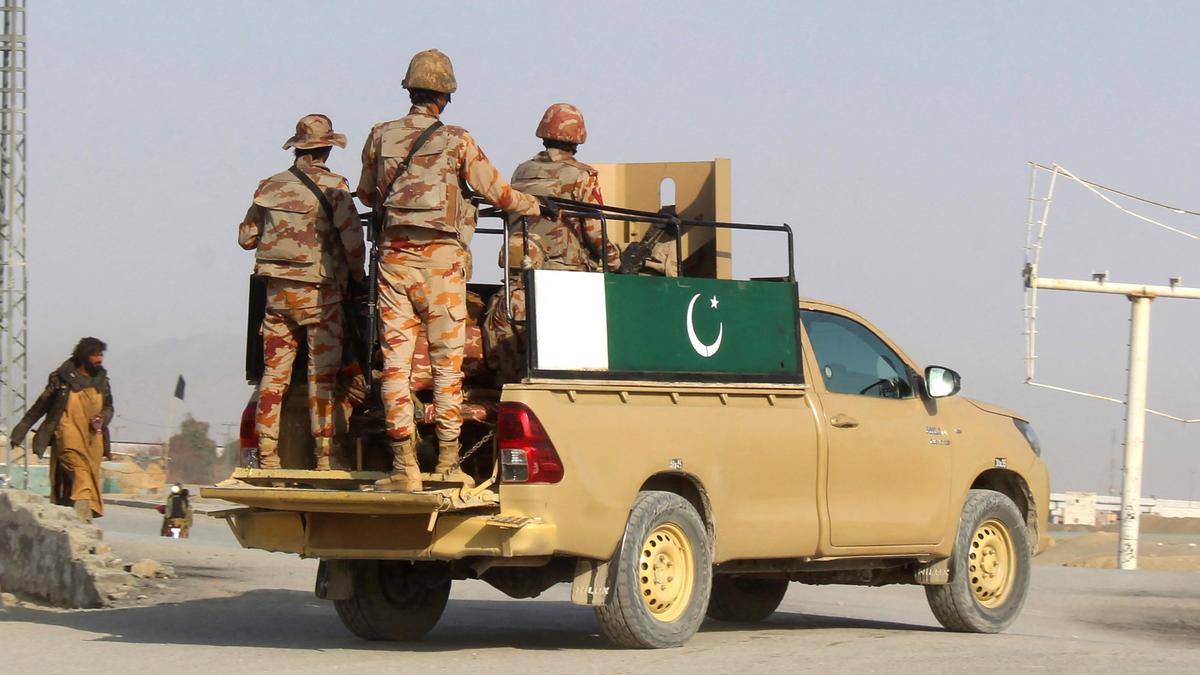
For the Pakistani military establishment, the return of the Taliban in August 2021 was initially celebrated as a masterstroke. It was supposed to end Indian influence in Afghanistan and secure the western flank. That celebration was short-lived. The TTP, which shares an ideological and tribal DNA with the Afghan Taliban, has since unleashed a wave of terror across Pakistan, specifically targeting security forces in Khyber Pakhtunkhwa and Balochistan.
Islamabad’s leverage has evaporated. During the US occupation, Pakistan could pressure the Taliban by restricting supply lines or arresting leaders living on its soil. Now, the Taliban hold the keys to the kingdom. They are no longer a non-state actor hiding in the mountains; they are a government with an army. When Pakistan demands the extradition of TTP militants, the Taliban respond with requests for evidence or outright denials. This diplomatic stonewalling has forced Pakistan into a corner, leading to the "Azm-i-Istehkam" military operation and a policy of mass deportation for Afghan refugees. For another perspective on this development, refer to the latest coverage from The Guardian.
The human cost is staggering. Millions of Afghans who have lived in Pakistan for generations are being uprooted, used as pawns in a geopolitical chess match. This mass expulsion has not only created a humanitarian disaster but has also fueled anti-Pakistan sentiment within Afghanistan, giving the Taliban a convenient nationalist rallying cry to distract from their own internal economic failures.
The Triad of Nervous Neighbors
While Pakistan and Afghanistan trade blows, a trio of external powers is watching with increasing alarm. Moscow, Beijing, and Tehran are not acting out of altruism. They are terrified of a vacuum.
Russia views the region through the lens of Central Asian stability. If the Taliban cannot control their own borders, the risk of "spillover"—the migration of radicalism into Tajikistan, Uzbekistan, and Kyrgyzstan—becomes a direct threat to the Russian Federation’s "near abroad." Moscow has maintained a pragmatic relationship with the Taliban, even considering removing them from their list of terrorist organizations, but that pragmatism is predicated on the Taliban’s ability to act as a bulwark against ISIS-K. A border war with Pakistan weakens that bulwark.
China has a different set of anxieties. The China-Pakistan Economic Corridor (CPEC) is the crown jewel of the Belt and Road Initiative. It represents over $60 billion in planned investment. However, Chinese workers in Pakistan have become frequent targets for insurgents. Beijing’s logic is simple: you cannot build a Silk Road through a war zone. China has attempted to mediate, hosting trilaterals and offering economic incentives, but they are finding that the "all-weather friendship" with Pakistan does not translate into influence over the Taliban’s ideological commitments.
Iran shares a long, porous border with both nations. Tehran is currently managing its own "Afghan problem," including water rights disputes over the Helmand River and a massive influx of refugees. Iran has historically played both sides, supporting certain Taliban factions to spite the US while maintaining ties with ethnic minorities in Afghanistan. Now, with the threat of ISIS-K looming on their eastern flank, the Iranians are desperate for a stable border. They see a Pakistan-Afghanistan war as a gift to extremist groups that would love to see the Shia power distracted.
The TTP Factor and the Myth of Control
The Tehrik-i-Taliban Pakistan is the ghost in the machine. To understand the current conflict, one must understand that the TTP is not a separate entity from the Afghan Taliban in any meaningful way. They fought together against the Americans. They share a vision of an Islamic Caliphate.
When Pakistan conducts "intelligence-based operations" across the border, they are attacking the Afghan Taliban’s brothers-in-arms. This creates an impossible situation for the Taliban leadership in Kabul. If they hand over the TTP, they lose credibility with their own hardline fighters. If they don't, they face continued military strikes and economic strangulation from Pakistan.
The Taliban have chosen the latter. They are betting that Pakistan’s internal political instability and economic fragility will prevent a full-scale invasion. It is a high-stakes gamble. Pakistan’s economy is on life support, sustained by IMF loans and bailouts from Gulf allies. A prolonged conflict on the border drains resources that Islamabad simply does not have.
The Weaponization of Trade
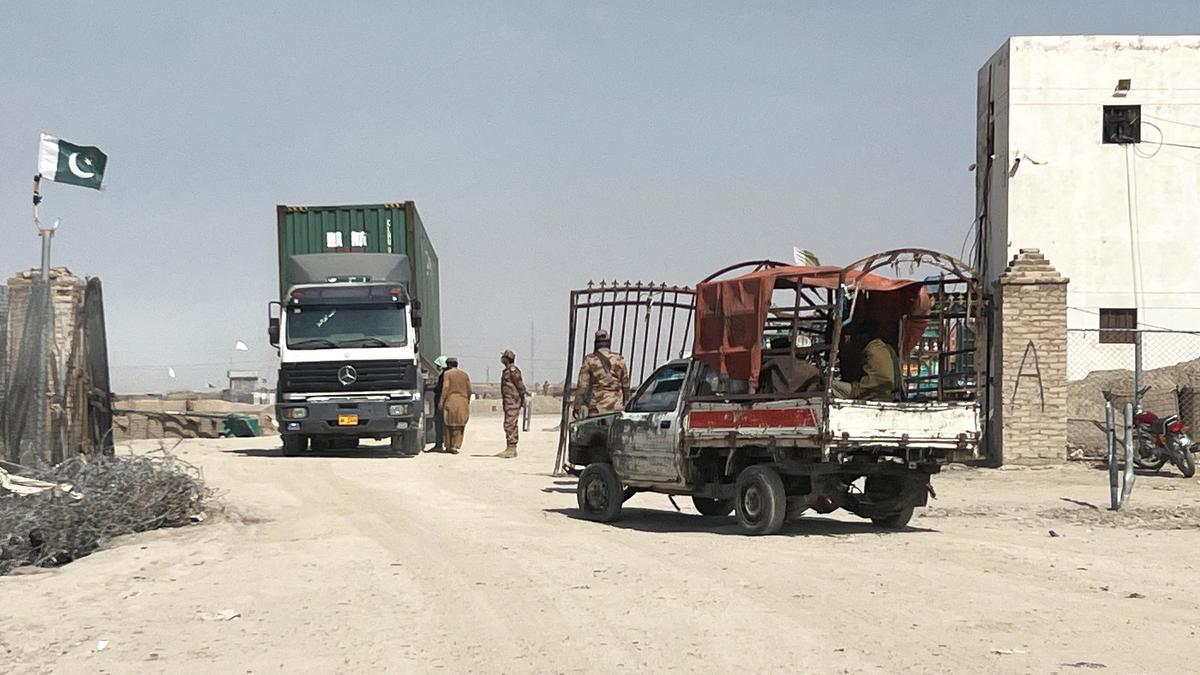
Trade has become a theater of war. The Torkham and Chaman border crossings, the primary arteries for Afghan goods to reach international markets, are frequently shut down by Pakistan as a punitive measure. These closures do more than just hurt the Afghan economy; they destroy the livelihoods of traders on both sides of the line.
- Perishable Goods: Thousands of trucks carrying fruit and vegetables rot in the heat during these standoffs.
- Transit Trade: Pakistan has tightened rules on the Afghan Transit Trade Agreement (ATTA), claiming it is used for smuggling that guts Pakistani industry.
- Customs Revenue: Both governments rely on these duties, yet they continue to use them as a blunt force instrument of foreign policy.
This economic warfare is driving Afghanistan further into the arms of other regional players. The Taliban are actively seeking alternative trade routes through Iran’s Chabahar port, aiming to reduce their dependency on Karachi. This shift, if successful, would permanently diminish Pakistan's leverage over Kabul, marking a tectonic shift in the region's geopolitical alignment.
The Failure of Regional Mediation
Russia, China, and Iran have all offered to mediate. They have held conferences in Moscow, Beijing, and Tehran. They produce joint statements calling for "inclusive government" and "counter-terrorism cooperation."
These efforts are failing because they ignore the underlying reality: the Taliban do not want to be mediated. They view their victory over the United States as a divine mandate. They are not interested in power-sharing with the remnants of the old republic, nor are they particularly concerned with international recognition. The Taliban are building a 14th-century emirate with 21st-century weapons.
Mediation also assumes that Pakistan is a monolith. In reality, there are significant divisions within the Pakistani state. The military remains the final arbiter of national security policy, while the civilian government is tasked with managing the economic fallout. This dual-track governance creates a confused and often contradictory approach to dealing with the Taliban, one that vacillates between olive branches and airstrikes.
The Rise of the Resistance
Inside Afghanistan, the Taliban face their own threats. The National Resistance Front (NRF) and other armed groups continue to challenge the regime from the Panjshir Valley and beyond. While they are currently a minor military threat, they represent a significant ideological challenge to the Taliban’s claim of absolute control.
The border war with Pakistan complicates the internal security picture for the Taliban. Every resource diverted to the Durand Line is a resource taken away from their domestic counter-insurgency efforts. If the Taliban cannot maintain order, the specter of a civil war within Afghanistan—a repeat of the 1990s—becomes a terrifying possibility for the entire region.
Beyond the Rhetoric of Dialogue
The call for dialogue by Russia, China, and Iran is a placeholder for a real strategy. It is easy to offer mediation; it is much harder to enforce a ceasefire between two states that do not agree on where their border actually lies.
Pakistan is now at a crossroads. They can continue to launch cross-border strikes, which only further radicalizes the Taliban and bolsters the TTP, or they can find a way to live with a hostile neighbor. The era of "strategic depth" is dead. The new reality is a state of perpetual tension, a "forever border war" that threatens to destabilize the nuclear-armed heart of South Asia.
As the snow melts in the Hindu Kush and the traditional fighting season begins, the world's attention is focused on Ukraine and the Middle East. But the true fault line of the 21st century may well be this 2,640-kilometer stretch of dirt and blood. The failure to contain this conflict will not just be a failure for Pakistan and Afghanistan; it will be a failure for the entire Eurasian project.
The path forward requires more than just trilaterals and empty statements from Moscow or Beijing. It requires a fundamental shift in how both Kabul and Islamabad perceive their own security. Until then, the Durand Line will remain a bleeding wound, a monument to a century of failed colonial and post-colonial engineering that shows no signs of healing.
The geopolitical landscape of the region has shifted fundamentally, leaving no room for the old illusions of control.
Would you like me to analyze the specific economic impact of the border closures on the regional transit trade agreements?