Washington is obsessed with a script that hasn't changed since 2016. The narrative is comfortable, predictable, and fundamentally broken. It posits that the U.S. holds all the cards in a high-stakes poker game involving fentanyl precursors and rare earth elements, and that a "tougher" stance at the next summit will finally force Beijing to blink.
This isn't a poker game. It’s a complex chemical and geological dependency that a few tariffs and sternly worded press releases cannot fix. If you believe the headlines, the upcoming summit is about "holding China accountable." In reality, it’s a desperate attempt to manage a systemic failure of Western industrial policy that has been decades in the making.
The Fentanyl Fallacy: Why Enforcement is a Ghost Pursuit
The prevailing wisdom suggests that if Trump can just get Xi Jinping to "crack down" on chemical exporters in Wuhan or Hebei, the American opioid crisis will vanish. This is a dangerous oversimplification that ignores the basic laws of chemistry and global trade.
Fentanyl is not a single product; it is a moving target. When China regulated specific precursors under international pressure in 2019, the market didn't collapse. It mutated. Production shifted to "pre-precursors"—chemicals that have legitimate uses in everything from perfume to pesticide.
The logic of "border enforcement" fails because of the Potency-to-Volume Ratio. A single suitcase of pure fentanyl contains enough doses to kill a medium-sized city. Attempting to stop this at the port of entry is like trying to catch every grain of sand in a hurricane with a tennis racket.
- The Diversion Tactic: Mexican cartels have already internalized the "China Problem." They are no longer just buying finished powders; they are importing the raw technical knowledge and laboratory equipment.
- The Economic Reality: For a Chinese chemical manufacturer, the profit margins on these precursors are astronomical compared to selling industrial-grade cleaners. No amount of CCP oversight can fully stifle the profit motive in a fragmented, multi-billion dollar chemical sector.
If the U.S. wants to solve the fentanyl crisis, it needs to stop pretending the solution lies in a Beijing boardroom. It lies in domestic demand and the utter failure of the American healthcare system to provide non-opioid pain management. Blaming China is a convenient political shield that prevents us from looking in the mirror.
Rare Earths: The Monopoly That Isn't Actually Rare
The "Rare Earth Lock" is the most misunderstood weapon in the modern geopolitical arsenal. Pundits talk about Neodymium and Dysprosium as if they are vibranium—mystical elements found only in the soil of Inner Mongolia.
Here is the cold, hard truth: Rare earth elements are not rare. They are abundant globally. The United States has massive deposits. Australia has them. Vietnam has them. The "lock" China holds is not on the minerals themselves, but on the dirty, low-margin, high-pollution processing that the West decided it was too "refined" to handle thirty years ago.
When Trump threatens to tax Chinese imports, and China counters by threatening to throttle rare earth exports, they are both playing a game with no winners.
- The Processing Gap: Even if the U.S. mines every ounce of ore at Mountain Pass, California, we currently lack the industrial infrastructure to separate those ores into high-purity oxides without sending them back to China.
- The Environmental NIMBY-ism: Building a domestic supply chain requires environmental permits that take a decade to clear. You cannot demand "green energy" (which requires these magnets) while simultaneously banning the mining and refining processes needed to build them.
I have seen companies dump millions into "alternative" motor designs to avoid rare earths, only to realize the physics don't work. You can't outrun the periodic table. China’s advantage isn't a secret stash of dirt; it’s a thirty-year head start in chemical engineering and a total lack of concern for the environmental cost of heavy metal leaching.
The Myth of the "Tough Negotiator"
The "Art of the Deal" approach assumes that trade is a zero-sum game where one side’s tariff is the other side’s ruin. This ignores the Circular Supply Chain.
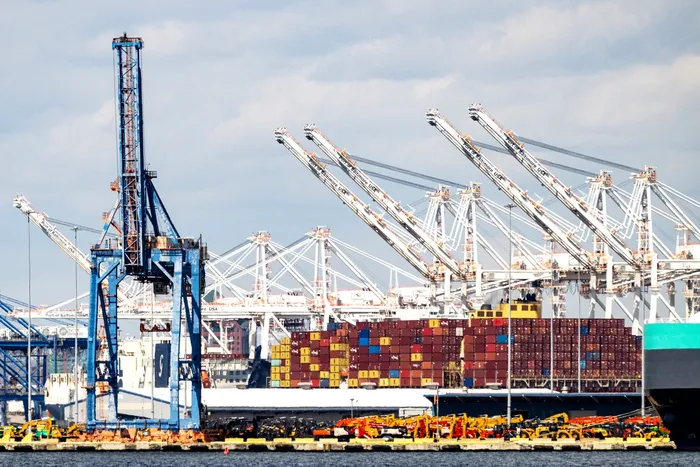
American tech firms rely on Chinese assembly. Chinese firms rely on American semiconductors. This isn't a "dependency"; it's an ecosystem. When the U.S. imposes a 60% tariff on Chinese goods, it isn't "taxing China." It is taxing the American consumer and the American manufacturer who uses Chinese components to build a finished product.
The idea that we can "re-shore" manufacturing overnight is a fantasy sold to voters in the Rust Belt. We don't just lack the factories; we lack the middle-management and specialized labor required to run them at scale. A factory isn't just four walls and some robots; it’s a culture of incremental engineering that China has spent decades perfecting.
Why the Summit is a Distraction
While the media focuses on the optics of the handshake, the real shift is happening in the "Global South." China is already diversifying away from the U.S. market. They are building the "Belt and Road" 2.0, focusing on digital infrastructure and resource dominance in Africa and South America.
While we argue about fentanyl and magnets, Beijing is busy ensuring that the next billion consumers in the developing world are locked into a Chinese-standard ecosystem.
Stop asking if the U.S. will "win" the trade war. The question is whether the U.S. can even remain relevant in an economy where the dollar is no longer the only game in town.
The Uncomfortable Solution
If the U.S. actually wants to break the "lock" China has on these sectors, it requires a move that neither party has the stomach for: Massive, state-directed industrial policy.
- Subsidize the Waste: The government must pick up the tab for the environmental cleanup of rare earth processing. If it’s a national security priority, treat it like one. Don't leave it to the "free market" which will always choose the cheapest (Chinese) option.
- Decriminalize and Treat: Treat the drug crisis as a public health catastrophe, not a trade dispute. As long as there is a billion-dollar demand for synthetic opioids, someone will supply them. If not China, then India. If not India, then a lab in a Brazilian favela.
- Accept Higher Prices: You cannot have $15 plastic toys and $800 iPhones while simultaneously "decoupling" from the world's largest manufacturing hub.
The summit won't fix this. No summit can fix a structural deficit of will. We have traded our industrial base for cheap consumer goods and a service economy, and now we are surprised that the people who actually make things have the power.
The era of American hegemony through consumption is over. We either build the capacity to process our own resources and solve our own social ills, or we continue to play-act at "toughness" while our leverage evaporates in real-time.
Pick your poison. You're already addicted to both.