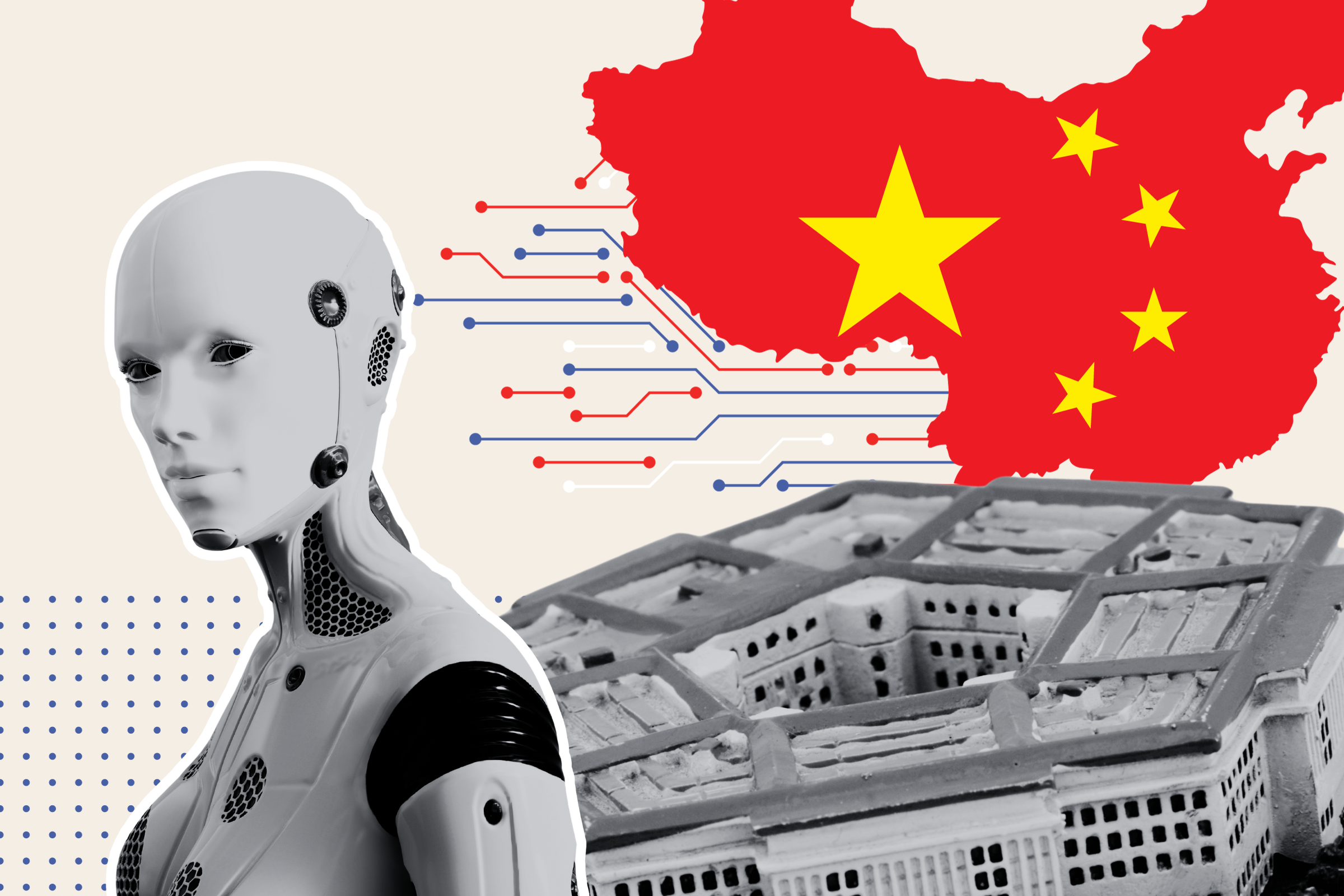
The memo is out. The sirens are blaring. Washington is gripped by a fever dream of "mass AI theft" by Chinese firms. It is the perfect narrative for a bureaucratic machine that loves a boogeyman more than it loves a breakthrough. If you believe the headlines, American genius is being siphoned off through digital straws, leaving our tech giants hollowed out and defenseless.
It is a lie. Not because the espionage doesn't exist—it does—but because it doesn't matter nearly as much as the C-suite wants you to think.
The "theft" narrative is a convenient shield for domestic stagnation. It is the ultimate get-out-of-jail-free card for executives who overpromised on AGI and underdelivered on actual utility. If China "steals" a model, they haven't stolen the crown jewels. They’ve stolen a snapshot of a moving target. In the world of neural networks, the code is the easy part. The infrastructure, the data hygiene, and the cultural agility to implement are the real moats. And right now, we are more at risk of drowning in our own red tape than being outpaced by a copycat.
The Myth of the Stolen Algorithm
Stop treating weights and biases like the formula for Coca-Cola. In the legacy manufacturing world, stealing a blueprint meant you could build the same widget. In AI, a model architecture is barely a starting point.
When a firm "acquires" a model through illicit means, they inherit a black box. They don't inherit the thousands of failed experiments that led to that specific configuration. They don't have the "dark matter" of the development process—the proprietary datasets, the specific RLHF (Reinforcement Learning from Human Feedback) pipelines, or the hardware-level optimizations that make the model viable at scale.
I have watched companies burn $50 million trying to replicate an open-source paper because they didn't understand the underlying data distribution. Stealing a model without the data stack is like stealing a Ferrari without knowing how to refine gasoline. You have a beautiful, expensive paperweight.
The real value isn't in the $W$ (weights) or the $b$ (biases) found in the standard linear layer equation:
$$y = xW^T + b$$
The value is in the gradient descent—the iterative, agonizing process of finding those values. You cannot steal a process. You can only steal a result. And in a field moving this fast, a six-month-old result is an antique.
Why China is Winning (And It Isn't Theft)
The White House memo obsesses over intellectual property. It ignores the boring reality of industrial capacity.
While we argue about ethics committees and guardrails that prevent a chatbot from saying a naughty word, Chinese firms are integrating AI into the physical world at a pace that should terrify you. They aren't winning because they stole a Transformer architecture—which, by the way, was published openly by Google researchers in 2017. They are winning because they have a shorter feedback loop between digital intelligence and physical manufacturing.
- Data Sovereignty: They have access to massive, centralized datasets that Western firms can't touch due to fragmented privacy laws and platform silos.
- Hardware Integration: They don't just write software; they build the chips and the sensors in the same zip code.
- Regulatory Speed: When a Chinese firm wants to test an autonomous logistics fleet, they do it. When an American firm wants to do it, they spend three years in litigation with a local municipality.
We are complaining about "theft" while we voluntarily tie our own shoelaces together. The obsession with IP protection is a distraction from the fact that our deployment velocity is pathetic.
The Open Source Irony
The most hilarious part of the "mass theft" panic? The best AI models in the world are increasingly moving toward open weights.
Meta’s Llama series is the gold standard for many developers. Mistral is crushing it from France. We are screaming about China stealing secrets that we are literally uploading to GitHub and Hugging Face every Tuesday.
This isn't a security breach; it’s a shift in the fundamental economics of software. The "secret sauce" is dead. If your business model relies on keeping a neural network hidden in a vault, you've already lost. The winners will be the ones who can compute the most efficiently and integrate the most deeply.
The Security Theater of Export Controls
Washington loves export controls. They make politicians feel like they are "doing something."
Restricting H100s and B200s to certain regions is the digital equivalent of the Maginot Line. It assumes the enemy will only attack where you are strongest. In reality, these constraints just force innovation in efficiency. If you can't use 10,000 GPUs, you figure out how to get the same performance out of 1,000.
By limiting hardware access, we are inadvertently subsidizing the development of high-efficiency, small-language models (SLMs) in rival territories. We are teaching our competitors how to be lean while we remain bloated on massive compute budgets.
The Talent War is the Only War
If you want to actually "protect" American AI, stop looking at server logs and start looking at visa applications.
The greatest threat to Western AI dominance isn't a state-sponsored hacker in Shanghai; it’s a brilliant engineer who can’t get a green card in Palo Alto. We educate the brightest minds from across the globe and then practically escort them to the airport the moment they graduate.
The White House memo should have been one sentence: "We are making it too hard for geniuses to stay here."
Your Strategy is Outdated
If you are a leader at a tech firm and your primary concern is "IP leakage," you are focused on the wrong century.
- Stop Hoarding, Start Shipping: If your model can be "stolen" and used to beat you, your model wasn't that good to begin with. Your moat must be your operational data loop.
- Infrastructure is the New IP: Invest in the specialized compute environments and proprietary data pipelines that can't be zipped up and sent over a VPN.
- Ignore the Memo: The government's job is to create friction. Your job is to ignore the noise and realize that the "stolen" AI of today is the commodity of tomorrow.
The theft narrative is for losers. It’s for the companies that peaked in 2021 and are looking for someone to blame for their shrinking margins. Innovation is a treadmill. If you stop to yell at the guy behind you for "copying your stride," you’re the one who’s going to fall off.
Build faster. Everything else is just noise.