Geopolitical analysts love a good scoreboard, especially when they can use it to declare the end of an empire.
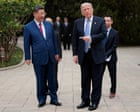
The media is currently obsessing over a fresh Pew Research Center poll showing that global favorability has flipped. For the first time in two decades, China and Xi Jinping are viewed more positively than the United States and Donald Trump in 25 out of 36 countries surveyed. Canada, Mexico, and major European powers have apparently decided they prefer Beijing's brand of stability over Washington's unpredictable chaos.
The immediate, lazy consensus? America is losing the global popularity contest, and therefore, it is losing the world.
It is a dramatic narrative. It is also entirely wrong.
These popularity polls do not measure power. They measure vibes. In the real world, geopolitics is not a high school popularity contest, and global influence is built on structural dependencies that do not care about your feelings. Treating a favorability survey as a proxy for actual geopolitical dominance is a fundamental misunderstanding of how the world works.
The Illusion of the Popularity Premium
Let us look at the numbers behind the panic.
In Canada, positive views of the U.S. crashed from 57% in 2023 to a dismal 33% after a barrage of trade disputes and rhetorical sparring. Meanwhile, Canadian approval of China ticked up to 44%. In Europe, countries like France, Germany, and the Netherlands logged similar shifts.
This makes for great headlines, but it ignores a basic reality of international relations: foreign policy is not driven by public opinion polls. Consider the mechanics of global trade and security. Canada might tell a pollster they prefer Beijing's predictable diplomacy over Washington's tariff threats. Yet, Canada's economy is structurally fused to the United States. Over 75% of Canadian exports go directly south of the border. Canada relies entirely on the U.S. security umbrella via NORAD and NATO.
Do you think a Canadian Prime Minister is going to pivot their security apparatus toward Beijing because 44% of their citizens expressed a mild, temporary preference for Xi Jinping over Trump? Of course not.
I have watched corporate boards and political strategists make this exact mistake for years. They mistake public relations for structural leverage. A country's "brand" can suffer a catastrophic hit while its actual grip on global systems remains entirely unchanged.
Why Soft Power is a Depreciating Asset
The core flaw in the "China is winning" narrative is the overvaluation of soft power.
Soft power is cheap. It is easily swayed by a bad news cycle, a controversial military action, or an aggressive tariff threat. When the United States and Israel launched military operations earlier this year, global disapproval of Washington soared. It was a classic public relations crisis.
But public relations crises have a remarkably short half-life.
When you strip away the temporary noise of the poll, you find that hard power remains the only currency that consistently clears the market. Hard power is not soft or friendly. It is built on three unyielding pillars:
- Financial Hegemony: The U.S. dollar still sits on one side of nearly 90% of all foreign exchange transactions. Central banks do not hold reserves in Renminbi out of affection; they hold dollars because of deep, liquid, and rule-of-law-backed capital markets.
- Security Dependencies: When regional crises erupt, allies do not call Beijing to deploy peacekeeping forces. They rely on the logistics, intelligence, and raw military capacity of the United States.
- Technology Monopolies: The global digital infrastructure—from operating systems and cloud computing to advanced semiconductor design—remains overwhelmingly American or tied to strict U.S. allied supply chains.
Imagine a scenario where a European nation decides to fully embrace China based on these favorability trends. They would have to decouple from the SWIFT banking system, replace their entire defensive infrastructure, and swap out their technology stack. The transactional cost is prohibitively high.
Affection is a luxury of peacetime stability. When the geopolitical temperature rises, countries align with the entity that controls their defense and their currency, regardless of how much they dislike the leader in the White House.
The Asymmetry of Global Scrutiny
There is also a profound asymmetry in how global citizens grade these two superpowers.
The United States operates as an open book. Its political battles, internal divisions, and foreign policy missteps are broadcast in high-definition across every screen on earth. Every tariff, military action, and controversial tweet is analyzed, criticized, and debated. This constant exposure makes the U.S. an easy target for public dissatisfaction.
China, conversely, operates behind an information firewall. Its domestic crackdowns, economic structural weaknesses, and localized foreign debt traps in developing nations are far less visible to the average citizen in Toronto or Berlin.
When a pollster asks a respondent in Sweden about China, they are often reacting to an abstract idea of "reliability" and "stability." When they are asked about the United States, they are reacting to the daily, noisy circus of Western domestic politics.
Comparing the two is a category error. One is an active, messy democracy whose flaws are deliberately publicized; the other is a closed system that carefully curates its global projection.
The Real Crisis is Domestic, Not Diplomatic
This does not mean the United States is invulnerable. But the threat is not that European or Canadian citizens prefer Xi Jinping.
The real danger is domestic stagnation.
The true test of a superpower's longevity is its ability to maintain its internal engines of innovation, sustain institutional trust, and manage its sovereign debt. If the United States falters, it will not be because it lost a popularity poll in Europe. It will be because it failed to address its own crumbling infrastructure, political polarization, and fiscal imbalances.
Focusing on international popularity is a dangerous distraction. It leads to bad policy decisions—like water-carrying public relations campaigns or desperate diplomatic concessions—aimed at fixing "image" problems rather than structural ones.
Leaders who chase global favorability are playing a losing game. Geopolitical authority is not maintained by being liked. It is maintained by being indispensable.
As long as the rest of the world has no viable alternative to the dollar, no alternative to Western consumer markets, and no alternative security umbrella, they can complain to pollsters all they want. They will still fall in line when the invoice comes due.