Silence.
That is the sound of 15 billion miles. It is not the quiet of a locked room or a snowy midnight in the mountains, because those places still hum with air, gravity, and the faint pulse of living things. Out where Voyager 1 drifts through the ink between stars, there is nothing to carry a whisper, yet for forty-nine years, a machine built with less computing power than the key fob in your pocket has refused to stop talking to us.
Most headlines treat NASA’s latest Voyager 1 milestone like a box score from a Tuesday night baseball game. They tell you the spacecraft hit a new distance mark—crossing the historic threshold where a radio signal traveling at the speed of light takes a full 24 hours to travel one way from Earth—or that engineers successfully swapped a clogged thruster after nearly five decades in the deep freeze. Read the standard press release and you might nod, admire the math for three seconds, and scroll straight to a video of a golden retriever falling off a couch.
That reaction makes sense. Numbers past a billion turn into static in the human brain. When someone tells you a probe launched in 1977 is now one light-day away from our front door, the figure feels abstract, cold, and disconnected from the groceries you need to buy or the mortgage due on the first of the month.
But look closer at the people sitting in a dim control room at the Jet Propulsion Laboratory in Pasadena, California, waiting forty-eight hours just to find out if a single line of code arrived intact. Look at the gray hair of engineers who were learning long division when Voyager lifted off from Cape Canaveral. Once you strip away the sterile aerospace jargon, this milestone is not really about hardware surviving the vacuum of space. It is about human stubbornness outliving its own creators.
A Postcard Thrown Into an Ocean Without Shores
To feel the weight of what just happened in the outer dark, picture a hypothetical scene on a much smaller scale. Imagine standing on a pier in Lisbon during the summer of 1977 and tossing a sealed glass bottle into the Atlantic Ocean, equipped with a tiny battery-powered walkie-talkie. Now imagine walking away, graduating from college, getting married, raising children, watching empires rise and collapse, and retiring—all while checking a radio receiver on your kitchen counter every morning. Decades later, decades after the manufacturer went out of business and the original blueprints turned yellow in a basement filing cabinet, the speaker crackles to life with a clear, steady tone from somewhere past the horizon.
That metaphor gets close, though reality is far stranger.
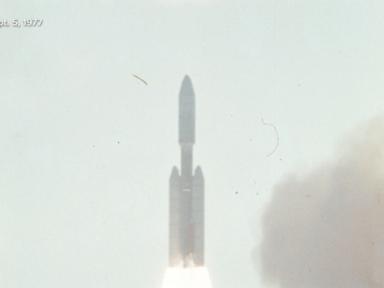
When Voyager 1 left Earth on September 5, 1977, Jimmy Carter was in the White House, Star Wars was packing movie theaters, and the Apple II computer had been on sale for less than three months. The spacecraft was never designed to become an interstellar pioneer. Its primary mission was a four-year sprint past Jupiter and Saturn, snapping close-up portraits of swirling storms and icy moons before gravity flung it outward toward nowhere in particular. Nobody budgeted for fifty years of operation. Nobody wrote a manual for troubleshooting a computer in 2026 using programming languages born in the 1970s.
Yet here we are. As of late 2026, Voyager 1 has pushed past 15.1 billion miles—roughly 163 times the distance between the Earth and the Sun—entering a regime where light itself needs an entire day to bridge the gap between sender and receiver. When a flight controller in Pasadena hits Enter on a command today, they go home, eat dinner, sleep through the night, commute back to work the next morning, and still have to wait until the following day to learn whether the spacecraft heard them.
Think about the psychological toll of that lag. Modern life has trained us to expect instant feedback. If a webpage takes four seconds to load, we hit refresh. If a text message sits on Delivered for twenty minutes without turning to Read, anxiety creeps in. Now imagine your job depends on diagnosing a life-or-death hardware failure on an irreplaceable antique hurtling through interstellar space at 38,000 miles per hour, where every question takes twenty-four hours to ask and twenty-four hours to answer.
One wrong command does not trigger an error pop-up. It blinds the spacecraft forever.
The Night the Telemetry Turned to Gibberish
I still remember the quiet dread that settled over spaceflight circles when Voyager 1 nearly died not long ago. For months, the spacecraft stopped sending readable science and engineering data back to Earth. Instead of crisp packets of information detailing magnetic fields and plasma waves, the Deep Space Network antennas in California, Spain, and Australia pulled down an endless, repeating string of ones and zeros that meant nothing at all.
The spacecraft was alive. Its transmitter was still humming, locked onto Earth like a compass needle pointing north. But its mind had fractured.
If you have ever watched a brilliant elderly relative struggle to find the right words—knowing their memories are still locked inside, intact and sharp, even as the pathways to speak them fail—you understand the exact heartbreak engineers felt staring at those monitors. Voyager 1 was still measuring the invisible boundary where the Sun’s influence gives way to the raw wind of other stars. It just couldn't tell us what it saw.
Fixing it required detective work that bordered on archaeology. The team had to dig through boxes of faded paper documents, handwritten notes, and schematics drafted by engineers who had retired—or passed away—years earlier. Because the probe’s onboard memory is minuscule—roughly 69 kilobytes total, less than a single low-resolution smartphone photo—there was no room for a simple patch. A single chip inside the flight data subsystem had degraded after nearly half a century of cosmic radiation bombardment.
To save the mission, engineers had to chop the affected code into tiny fragments, stash those pieces into unused corners of healthy memory scattered across the computer, and rewrite the instructions so the machine knew how to stitch its own thoughts back together.
They beamed the fix across the void. Then they waited.
Two days later, the signal returned. The gibberish vanished. Clean, coherent numbers scrolled across the screens in Pasadena, reporting the temperature, voltage, and interstellar whispers from a place no human hand will touch for millennia. Grown adults who spend their lives calculating orbital mechanics stood around a conference room fighting back tears.
Why a Dying Battery Matters to People Who Never Look Up
Critics love to ask why any of this matters. Why spend precious engineering hours nursing a failing spacecraft that carries instruments from the disco era when there are wildfires, housing shortages, and broken supply chains right here on Earth? It is a fair question, and pretending otherwise insults everyone paying taxes to keep the antennas running.
The honest answer is not about immediate financial return. Voyager 1 will not cure a disease, lower grocery prices, or build a bridge. Its three radioisotope thermoelectric generators—powered by decaying plutonium-238—are losing roughly four watts of electrical power every single year. To keep the spacecraft warm enough that its fuel lines do not freeze solid in the minus-450-degree chill of deep space, engineers have already shut down heaters, turned off cameras decades ago, and powered down instruments one by one like closing rooms in an old house for winter. By the early 2030s, the power will drop too low to run even a single transmitter. Voyager 1 will go dark, drifting silently through the Milky Way for billions of years, long after Earth’s oceans have boiled away under an expanding Sun.
So why fight so hard for a few extra years of whispers?
Consider what happens when a civilization stops doing difficult things simply to know what lies beyond the hill. Every leap in modern technology—from the miniaturized sensors inside your phone’s camera to the error-correcting algorithms that keep global banking networks from collapsing when solar storms rattle our satellites—traces its DNA back to problems first solved when engineers tried to talk to machines across impossible distances. When you have to squeeze every drop of performance out of a 23-watt radio transmitter—roughly the power of a refrigerator lightbulb—sending data across 15 billion miles, you invent ways of compressing, filtering, and protecting information that change life back home.
More than that, Voyager 1 serves as an antidote to our modern obsession with disposable everything. We live in an economy built on planned obsolescence, where a three-year-old laptop feels sluggish and a five-year-old phone stops receiving security updates. Against that backdrop of throwaway culture stands a machine bolted together with gold foil, aluminum, and 1970s integrated circuits, engineered with such care and foresight that three generations of humans have kept it breathing across the void.
The Golden Record Riding in the Dark
Bolted to the side of Voyager 1 is a twelve-inch gold-plated copper phonograph record, encased in an aluminum jacket alongside a cartridge and needle. Carl Sagan and his team assembled it in the summer of 1977 as a cosmic bottle note for whatever intelligence might stumble across the wreckage of our solar system millions of years from now.
On that disc are greetings in fifty-five languages. There is the sound of surf crashing on a beach, a mother’s kiss, a heartbeat, Chuck Berry’s Johnny B. Goode, Bach’s Brandenburg Concerto, and 115 analog-encoded photographs showing everything from a nursing mother to a crowded rush-hour highway and the molecular structure of DNA. Etched onto the cover are instructions using the hyperfine transition of a hydrogen atom—the most abundant element in the universe—to show any alien finder how to play the record and how to triangulate the location of Earth using fourteen pulsars.
When Sagan helped design that cover, nobody fully grasped how lonely our corner of the galaxy would feel fifty years later. Back then, astronomers assumed planets around other stars might be rare, or perhaps teeming with noisy neighbors. Today, we know the Milky Way holds hundreds of billions of worlds, yet our radio telescopes still hear nothing but static.
That silence changes what Voyager 1 represents. It is no longer just a scientific instrument measuring cosmic rays and interstellar magnetic fields outside the heliosphere—the protective magnetic bubble blown by our Sun. It has become our sole physical ambassador in the deep between stars, carrying proof that on a small blue rock third from a yellow dwarf, creatures made of carbon and water once looked up at the night sky, wondered what was out there, and loved music enough to plate it in gold.
How You Actually Hear a Whisper From 15 Billion Miles Away
To appreciate the sheer improbability of this latest milestone, consider the physics of catching Voyager’s voice today.
By the time the spacecraft’s 23-watt radio signal spreads out across 15 billion miles of space, the energy hitting Earth is absurdly tiny—roughly one-billionth of one-billionth of a watt. To put that in human terms, the total power collected by NASA’s massive 70-meter dish antennas during an entire year of listening to Voyager is less than the energy required to lift a single snowflake one inch off the ground.
Catching that signal requires cryogenic receivers cooled to just a few degrees above absolute zero so the random thermal jiggling of atoms inside the metal doesn't drown out the message from the stars. Three antenna complexes spaced roughly 120 degrees apart around the globe—Goldstone in California’s Mojave Desert, Madrid in Spain, and Canberra in Australia—pass the baton smoothly as the Earth rotates, ensuring that as one dish dips below the horizon, another locks onto the exact patch of sky in the constellation Ophiuchus where Voyager 1 sails away.
Sometimes, even that isn't enough. When NASA needs extra sensitivity to pull down faint diagnostic data from a failing subsystem, engineers link multiple antennas together in an array, combining their collecting area like a giant electronic ear pressed against the night.
And the people running those antennas are no longer the grey-bearded veterans of the Apollo and Voyager launches. Many of the current flight controllers were born in the 1990s and 2000s. They grew up on touchscreens and cloud computing, yet they voluntarily spend their twenties and thirties learning assembly language from the Carter administration because they refuse to let the mission end on their watch.
The Strange Comfort of Long Distances
I used to find space exploration intimidating, weighed down by equations I couldn't solve and scales of time that made a human lifespan look like a spark jumping off a campfire. Watching Voyager 1 cross this latest threshold flipped that feeling upside down.
There is something deeply calming about a project that refuses to be hurried. Everything else in our world screams for immediate validation—quarterly earnings, viral metrics, breaking alerts every ninety seconds. Voyager 1 moves at its own unbothered pace, coasting through interstellar space on momentum gifted to it by Jupiter and Saturn nearly fifty years ago, burning zero fuel except tiny millisecond puffs from thrusters the size of a thumb to keep its dish pointed home.
Even its malfunctions move in slow motion. When a thruster clogs with silicon dioxide residue after decades of tiny pulses—a problem engineers recently solved by carefully switching back to a set of heaters and thrusters that hadn't been fired since 2004—nobody panics in real time. You model the thermal behavior, double-check the math, send the command across twenty-four light-hours of emptiness, and trust the work done by people who cared enough to get the details right half a century ago.
Eventually, the plutonium will cool too much. A command sent from California will travel twenty-five or twenty-six hours into the dark, arrive at a silent hull of aluminum and gold foil, and meet no answering pulse. The Deep Space Network antennas will pivot away toward newer probes orbiting moons of Jupiter or mapping distant exoplanets, and Voyager 1 will slip off the telemetry screens for good.
Yet even then, the journey barely begins. In roughly forty thousand years, Voyager 1 will pass within 1.6 light-years of a red dwarf star named Gliese 445 in the constellation Camelopardalis. By then, coastlines on Earth will have shifted, languages spoken today will be forgotten by everyone except historians, and the cities where engineers wrote the code to save it may be dust.
Still, out in the cold between the stars, a battered machine built by human hands will keep flying forward, carrying a golden disc etched with the sound of rain falling on a planet it can never return to.