The fluorescent lights in a windowless Manhattan conference room at 2:00 AM have a specific, sour hum. I know that sound well. Years ago, during a cross-border tech offering that nearly imploded forty-eight hours before the opening bell, I sat at a table littered with cold takeout boxes and redlined S-1 drafts, watching three securities lawyers argue over a single footnote.
They weren't arguing about revenue. They weren't arguing about user growth. They were arguing about a shadow.
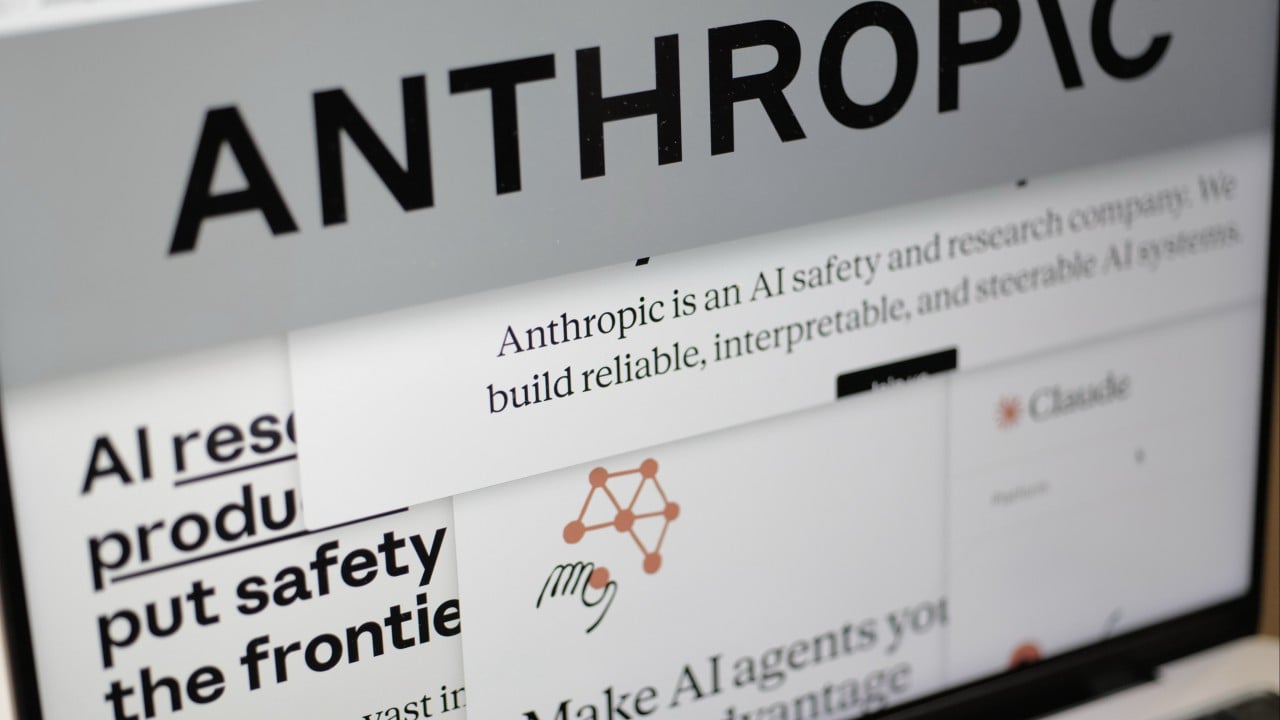
That same shadow is stretching across a conference table in San Francisco right now. As Anthropic prepares the paperwork for what Wall Street expects to be one of the most consequential initial public offerings in artificial intelligence history, the engineers are celebrating benchmark scores while the lawyers are sweating over a section buried deep in the middle of the filing.
It is called "Risk Factors." On paper, it reads like dry, boilerplate legalese designed to insulate executives from shareholder lawsuits. In reality, it is the place where geopolitical anxiety gets translated into cold financial math. And right now, the math surrounding China is keeping institutional investors awake at night.
The Architecture of a Splintered World
To understand why a laboratory founded on AI safety in California is suddenly vulnerable to policy shifts in Beijing, you have to strip away the Silicon Valley mythology. We like to think of software as weightless, floating effortlessly across borders through fiber-optic cables.
It isn't. Modern artificial intelligence is heavy. It is made of sand, copper, rare earth minerals, and massive concrete warehouses consuming enough electricity to power mid-sized cities.
Consider a hypothetical institutional portfolio manager—let’s call her Elena—sitting in Boston, deciding whether to allocate half a billion dollars of pension fund money into Anthropic’s public debut. Elena loves the company's enterprise traction. She sees Fortune 500 companies weaving Claude into their daily operations, driving recurring revenue that makes traditional software companies look sluggish.
Then she turns to the risk disclosures.
Suddenly, the clean, predictable trajectory of a software company collides with the messy reality of a Cold War over compute. To train its frontier models, Anthropic relies on tens of thousands of advanced graphics processing units designed by Nvidia and fabricated almost exclusively by TSMC in Taiwan. That supply chain runs directly through the narrow, contested waters of the Taiwan Strait.
If Beijing imposes export controls on raw materials like gallium and germanium—minerals essential for semiconductor manufacturing—production slows. If military posturing escalates into a blockade, the hardware pipeline doesn't just tighten; it snaps. Elena isn't just buying shares in an AI research lab anymore. She is buying a leveraged bet on East Asian geopolitical stability.
The Invisible Hand on the Scale
Wall Street hates uncertainty far more than it hates bad news. Bad news can be priced into a stock; uncertainty rots the valuation from the inside out.
When a company files to go public with the Securities and Exchange Commission, the Risk Factors section serves as a mandatory confession booth. The company must disclose every plausible scenario that could crater its business. Historically, tech IPOs listed familiar boogeymen: intense competition, shifting consumer tastes, or the departure of key executives.
Anthropic’s filing carries a heavier burden. Because the company sits at the bleeding edge of national security infrastructure—having secured major defense and intelligence partnerships—it has become a primary target for state-sponsored espionage and regulatory crossfire.
Think of a frontier AI model like a newly minted vault containing the blueprints for next-generation logistics, code, and scientific synthesis. Anthropic spends hundreds of millions of dollars building thicker steel walls around that vault. Yet, the company’s own disclosures must acknowledge an uncomfortable truth: determined state actors are constantly probing the perimeter.
If a Beijing-backed cyber unit successfully exfiltrates model weights—the core mathematical parameters that make Claude intelligent—Anthropic loses its competitive moat overnight. Worse, if those stolen weights are replicated and released as free, open-source alternatives by Chinese tech giants, the pricing power that justifies Anthropic's multi-billion-dollar valuation evaporates.
The Illusion of Isolation
"Why does China matter if Anthropic doesn't even sell its products there?"
I hear this question constantly from retail investors who view the global economy as a collection of neat, walled gardens. Anthropic explicitly restricts access to its services in mainland China, Hong Kong, and Macau. On a balance sheet, Anthropic's direct revenue exposure to the Chinese market is effectively zero.
That zero is an illusion.
In the global technology ecosystem, you do not need to sell to a rival to be wounded by them. Consider the open-source tsunami. Over the past two years, Chinese AI labs—operating with massive state backing and fewer regulatory constraints—have flooded the global market with remarkably capable open-weight models. Companies like DeepSeek, Alibaba’s Qwen, and Moonshot AI have demonstrated that they can achieve near-frontier performance at a fraction of the training cost.
Let's return to Elena, our hypothetical fund manager in Boston. She looks at Anthropic’s enterprise pricing tiers, then looks at a mid-sized European logistics firm that just canceled its proprietary AI contract because a free, Chinese-developed open-weight model hosted on local servers does eighty percent of the job for ten percent of the price.
Anthropic doesn't do business in Shanghai. It doesn't have to. The deflationary pressure radiating out of China's AI sector reaches into every boardroom in London, New York, and Tokyo where a Chief Information Officer is trying to trim their software budget. In an IPO prospectus, that dynamic translates into a chilling risk factor: margin compression driven by foreign competitors who do not play by the same economic rules.
The Compliance Minefield
There is also the matter of who owns the money.
Before going public, Anthropic raised billions of dollars through complex venture rounds, special purpose vehicles, and secondary market transactions. In the frantic rush to fund the compute arms race, capital flowed through tangled global syndicates. Now, as the company prepares for the blinding spotlight of public markets, every single dollar of historical investment is being scrubbed under a microscope by the Committee on Foreign Investment in the United States, known as CFIUS.
We have seen how this plays out before. A single limited partner buried three layers deep inside a venture fund turns out to have ties to a state-affiliated entity in Shenzhen. Suddenly, a routine regulatory review turns into a six-month moratorium. The IPO window slams shut. Market sentiment sours.
Furthermore, the Biden and subsequent administrations have tightened outbound investment restrictions, targeting American capital flowing into Chinese tech while simultaneously scrutinizing inbound influence. Anthropic has proactively turned away funding from entities linked to adversarial nations, a move that signals alignment with Washington. Yet, in the unforgiving world of securities law, good intentions do not insulate a company from compliance nightmares. If a major institutional investor in Anthropic’s public offering is later flagged by the Treasury Department, the resulting forced divestiture could trigger a violent sell-off, punishing everyday shareholders who had no idea how the plumbing of international finance worked.
The Cost of Conscience
What makes Anthropic’s position uniquely precarious is its founding ethos.
Unlike rivals that chased growth at any cost, Anthropic was born out of a schism over safety. Its leaders walked away from OpenAI because they believed artificial intelligence required strict guardrails, constitutional principles, and measured deployment. That caution is Anthropic's greatest brand asset. It is why conservative industries like healthcare, finance, and government trust Claude with sensitive data.
Yet, in a geopolitical race, caution looks suspiciously like friction.
When an American AI lab pauses to run extensive red-teaming evaluations—testing whether its model can help a bad actor synthesize a pathogen or cripple a power grid—it loses weeks or months of market momentum. Meanwhile, competitors operating under Beijing’s strategic directives treat rapid deployment as a national imperative.
For an IPO investor, this creates a profound tension. You are buying into a company whose moral architecture requires it to occasionally tap the brakes, while its fiercest global rivals have welded the accelerator to the floor. In the Risk Factors section, this existential dilemma is sanitized into dry prose about "regulatory compliance costs" and "delayed product release cycles." Beneath the jargon lies a terrifying question: Can a company committed to restraint survive a war of attrition against an ecosystem built for relentless speed?
The Weight of the Unsaid
I think back to that Manhattan conference room at 2:00 AM, watching the lawyers argue over a footnote. The reason they were so terrified wasn't because they knew something bad was going to happen. They were terrified because they knew the SEC demands perfection in hindsight.
If Anthropic goes public and its stock drops forty percent because a new round of export controls chokes off its chip supply, shareholder attorneys will immediately comb through the S-1 filing. If the warning wasn't explicit enough—if the risk factor didn't paint the exact shade of disaster that materialized—the lawsuits will fly before the closing bell even rings.
This is why the China risk factors in Anthropic’s upcoming filing will read like an apocalyptic thriller disguised as an accounting document. The company must warn investors about everything from submarine cable sabotage in the Pacific to sudden shifts in rare earth tariffs, from talent poaching to the weaponization of open-source models.
It is easy to dismiss these warnings as standard legal cover-your-bases theater. Investors do it all the time, skimming past the dread to stare at the charts showing hockey-stick revenue growth.
That is a mistake.
The Risk Factors section is the only place in the entire IPO roadshow where the hype machine is legally required to stop spinning. There are no visionary keynote speeches there. No slick product demos. Just a stark, unadorned inventory of all the ways a brilliant idea can be broken by a fractured world.
When Anthropic finally rings the bell on Wall Street, the headlines will celebrate the valuation, the billionaire founders, and the triumph of American innovation. They will talk about the future being written in lines of code. They won't mention the quiet paragraphs buried on page forty-two of the prospectus—the ones reminding us that even the smartest machines on earth are still tethered to the oldest, most dangerous conflicts human beings know how to wage.