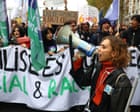
The smell of burning rubber always hits the back of your throat before you actually see the smoke.
If you stood near the Place de la République in Paris during the winter of 2024 or the turbulent autumn of 2025, you knew that acrid, chemical tang intimately. It was the scent of shattered paving stones, tear gas canisters cooling on wet asphalt, and a nation violently rejecting a math problem it could no longer solve. Politicians in tailored coats stood behind reinforced glass, trying to explain to millions of furious citizens why the state could no longer pay for the promises it had spent decades making. France’s public debt had swelled past 110 percent of its Gross Domestic Product, its budget deficit was hemorrhaging well beyond European Union limits, and the bill for decades of generous state spending had finally arrived on the doorstep.
Twelve thousand miles away, in the sunlit suburbs of Melbourne, Brisbane, and Sydney, the air smells like eucalyptus, sea salt, and flat whites. There are no burning barricades on George Street. Nobody is overturning police vans outside Parliament House in Canberra.
Yet.
Look closely at the spreadsheets humming inside the Australian Treasury, and you will see the exact same shadow falling across the southern hemisphere. The chaos tearing through France is not a quirky European melodrama caused by a cultural fondness for strikes and baguettes. It is a structural warning flare fired directly over Australia’s bow. When a wealthy, modern democracy becomes addicted to public spending while its cost of living spirals out of control, the bill does not disappear. It merely waits until the political system fractures under its own weight.
The Arithmetic of a Slow-Motion Trainwreck
To understand why Paris is burning while Canberra sweats, you have to strip away the flags and the accents and look at the cold, merciless plumbing of national budgets.
Consider a hypothetical Australian couple—let’s call them Sarah and Liam—living in Western Sydney. Sarah works as a pediatric nurse; Liam manages logistics for a mid-sized freight company. On paper, they are doing everything right. They earn a combined income that would have made their parents feel wealthy twenty years ago. Yet every Tuesday night, after their two kids are asleep, Sarah sits at the dining table with a calculator and a knot in her stomach. Their mortgage repayments have jumped by nearly two thousand dollars a month since the post-pandemic rate hikes. Their electricity bill arrived yesterday with a twenty percent surcharge. Even a routine trip to the grocery store feels like a minor mugging.
When people like Sarah and Liam hurt, governments naturally want to be the hero. It is the oldest political reflex in human history: hand out subsidies, expand public services, freeze energy bills, and hire more bureaucrats to manage the handouts.
In Australia, that reflex has gone into overdrive. Between federal and state budgets, total public spending has surged toward levels rarely seen outside of wartime or global financial collapses. According to data from the Australian Bureau of Statistics and the International Monetary Fund, combined government expenditure in Australia has climbed relentlessly toward 38 percent of GDP. While that is still lower than France’s staggering 57 percent—the highest in the developed world—it is the trajectory that terrifies economists.
Australia is sprinting down the exact road France walked thirty years ago.
Think of a national economy like a household credit card with an unusually polite bank manager. For years, the manager smiles, raises your limit, and never asks for the principal back because your house keeps going up in value. In Australia’s case, that "house" was an unprecedented twenty-year mining boom and a surge in population growth that masked underlying rot. Every time state or federal governments ran out of money for new infrastructure, bloated public sector payrolls, or sprawling entitlement programs like the National Disability Insurance Scheme—whose annual costs have rocketed past forty billion dollars and continue to grow faster than the economy itself—iron ore royalties or bracket creep bailed them out.
France had no mining boom, so it hit the wall first. When credit rating agencies like Fitch and S&P began downgrading France’s sovereign debt, borrowing costs spiked. Suddenly, Paris was spending tens of billions of euros every single year just to pay the interest on past promises—money that couldn't buy a single hospital bed, repave a single road, or train a single teacher. When the French government finally tried to raise the retirement age from 62 to 64 and trim tens of billions in spending to stop the bleeding, the streets exploded.
Why Subsidies Are Gasoline on an Inflation Fire
Here is the cruelest irony that neither French voters nor Australian taxpayers want to hear: when a government borrows money to shield citizens from rising costs, it actively makes those costs worse.
Imagine standing in a crowded theater where someone yells "Fire!" and the management responds by handing everyone a megaphone so they can shout louder. That is precisely what happens when governments pump tens of billions of dollars in "cost-of-living relief" into an economy already choking on inflation.
Throughout 2024 and 2025, Australian federal and state governments rolled out billions in energy rebates, fee-free training schemes, and public infrastructure blitzes. On the surface, a three-hundred-dollar credit on your power bill feels like a lifeline. In reality, it is an economic illusion. When the government injects borrowed or newly printed cash into the economy, total demand stays artificially high. Businesses see that consumers still have money to spend, so they keep raising prices.
And who sits across the table watching this fiscal sugar rush? The Reserve Bank of Australia.
While politicians hand out lollies with one hand, the central bank has to swing a baseball bat with the other. To stop inflation from eating the currency alive, the RBA was forced to keep interest rates higher for longer than Australian households could comfortably bear. Every billion dollars a state premier spends on a vanity tunnel project or an election-year cash splash forces mortgage holders like Sarah and Liam to pay higher interest rates for another six months.
I remember talking to a small-business owner in Adelaide—a third-generation baker whose family survived the 1991 recession—who summed it up better than any central banker ever could. He stood beside ovens he could barely afford to run, staring at a government energy rebate letter on his desk. "They're charging me an extra four thousand dollars a month on my business loan because inflation won't die," he told me, his hands dusted white with flour, "and then they send me a cheque for three hundred bucks and ask me to clap."
That anger is quiet right now in Australia. It mutters at backyard barbecues and simmers in comment sections. In France, that exact anger boiled over into something ungovernable.
The Trap of the Untouchable Budget
Once a society gets hooked on state spending, kicking the habit becomes politically suicidal. Economists call this "fiscal rigidity"—the terrifying moment when almost every dollar a government collects is already spoken for before the treasurer even opens their briefcase.
Look at where Australia’s money actually goes:
- Healthcare and Aged Care: An aging population means hospital admissions and nursing home subsidies are expanding automatically every year.
- The NDIS: Originally pitched as a modest safety net for Australians with severe and permanent disabilities, it has morphed into a massive, uncapped financial engine consuming more federal money than Medicare in several budget cycles.
- Defense and Security: In an increasingly volatile Indo-Pacific, commitments like the AUKUS submarine deal require hundreds of billions of dollars over the coming decades.
- Debt Interest: Because both state and federal governments racked up historic debts during the pandemic—Victoria alone saw its net debt barrel toward 180 billion dollars, earning it the lowest credit rating of any Australian state—interest payments are now one of the fastest-growing items in the budget.
Add those four pillars together, and you realize a chilling truth: Australian politicians have almost no room left to maneuver.
This is the precise trap that paralyzed Paris. When French Prime Minister Michel Barnier attempted to pass a budget in late 2024 that combined sixty billion euros in spending cuts and tax hikes to stave off a bond market crisis, the political center evaporated. The far-left and the far-right—ideological enemies who agree on almost nothing—joined forces to topple the government in a historic vote of no confidence. France was left rudderless, without a functioning budget, staring down the barrel of rising borrowing costs and paralyzed institutions.
Australia’s mandatory voting and preferential system have historically protected it from that kind of parliamentary breakdown. Australians tend to shrug off political drama with a cynical roll of the eyes rather than a general strike. Yet political stability is not a permanent force of nature; it is a byproduct of rising living standards. For thirty years, Australians tolerated mediocre leadership because their houses got richer and their wages bought more.
Break that unspoken contract, and the Australian temperament can turn ugly remarkably fast.
The Invisible Tax on the Young
Walk through the inner suburbs of Sydney or Melbourne on a Saturday morning, and you will see the real casualties of this fiscal recklessness—though they aren't throwing cobblestones. They are twenty-somethings paying sixty percent of their take-home pay to rent a damp bedroom in a share house, knowing they will likely never own the dirt they stand on.
When governments refuse to rein in public spending and instead rely on income taxes and debt to fund bloated budgets, they are quietly transferring wealth from the young to the old.
In Australia, personal income tax still does the heavy lifting for federal revenue, far more than in almost any other developed economy. Because tax brackets rarely keep pace with inflation, every modest pay rise pushes young workers into higher tax tiers—a stealth tax known as bracket creep. Meanwhile, massive public infrastructure projects—built at astronomical cost due to unionized labor bottlenecks and poor project management—soak up concrete, steel, and engineers, making it even more expensive to build basic residential housing.
It is a closed loop of dysfunction. Public spending drives up construction costs; high construction costs choke off housing supply; scarce housing drives up rents; high rents force the government to hand out more rental assistance; and the debt piles higher.
In France, young people looked at a system where taxes were astronomical, job creation was sluggish, and state pensions were sacred, and they responded by either rioting in the streets or packing their bags for London, Montreal, and Zurich. Australia is beginning to see the early tremors of that same generational disillusionment. Why work overtime, why start a business, why take a risk when the tax office takes nearly half of every extra dollar you earn just to pay down the state’s credit card?
What Stepping Back From the Cliff Actually Looks Like
If the trajectory is so obvious, why don't leaders simply hit the brakes?
Because hitting the brakes hurts. Telling voters that the government cannot afford a new rail line, that entitlement programs must be strictly audited, or that public sector hiring has to freeze is a guaranteed way to lose an election. Politicians are wired to survive the next three years, not the next thirty.
Yet history offers proof that nations can pull back before the bond markets force their hand. Australia itself did it in the 1980s and 1990s. Facing ballooning deficits, double-digit inflation, and a currency that global investors treated like Monopoly money, leaders from both sides of politics made brutal, unpopular choices. They floated the dollar, dismantled tariffs, reined in public spending, and forced the economy to compete on merit rather than subsidies. It caused short-term pain, sparked fierce protests, and cost politicians their jobs—and it laid the foundation for three decades of uninterrupted prosperity.
Canada walked through a similar fire in the mid-1990s. When the Wall Street Journal famously labeled Canada an "honorary member of the Third World" because of its spiraling debt and deficits, Ottawa didn't hand out energy rebates. It slashed federal spending by nearly twenty percent over three years, reformed entitlements, and balanced its budget, ushering in a decade of booming growth and falling interest rates.
For Australia to avoid France’s fate, the script isn't mysterious; it just requires a spine:
- Cap the runaway spending engines. Programs like the NDIS must return to their original purpose—supporting those with profound disabilities—rather than acting as an open-ended subsidy for every developmental delay or routine therapy.
- Stop fighting inflation with cash handouts. Every dollar spent on broad cost-of-living rebates prolongs the agony of high interest rates. True relief comes from bringing inflation down permanently, not masking it with borrowed money.
- Audit state infrastructure splurges. Taxpayers cannot afford mega-projects whose budgets routinely double before a single tunnel boring machine hits rock.
- Reward productivity instead of bureaucracy. Over the past few years, the vast majority of new jobs created in Australia have been in the "non-market" sector—healthcare, social assistance, and public administration funded directly or indirectly by taxpayers. An economy cannot prosper forever by paying people with borrowed money to regulate each other.
The Choice at the Kitchen Table
Nobody in Canberra wants to see tear gas drifting past the War Memorial. Nobody in Melbourne wants to wake up to credit downgrades and paralyzed parliaments.
Yet the laws of economics do not care about national charm, sunny weather, or how laid-back a culture claims to be. Debt compounds whether you are speaking French or English. Inflation erodes paychecks with the exact same ruthlessness on the banks of the Yarra as it does along the Seine.
Late at night in Western Sydney, Sarah closes her notebook, turns off the kitchen light, and walks down the hallway past her sleeping children. She isn't thinking about French bond yields or European parliamentary collapses. She is just wondering how she will afford school shoes next term if interest rates don't drop.
Right now, the people running her country have a choice. They can tell her the truth, take the medicine, and stop spending money Australia doesn't have—or they can keep handing out borrowed cash until the day the bank manager finally says no, and the smoke begins to rise.


