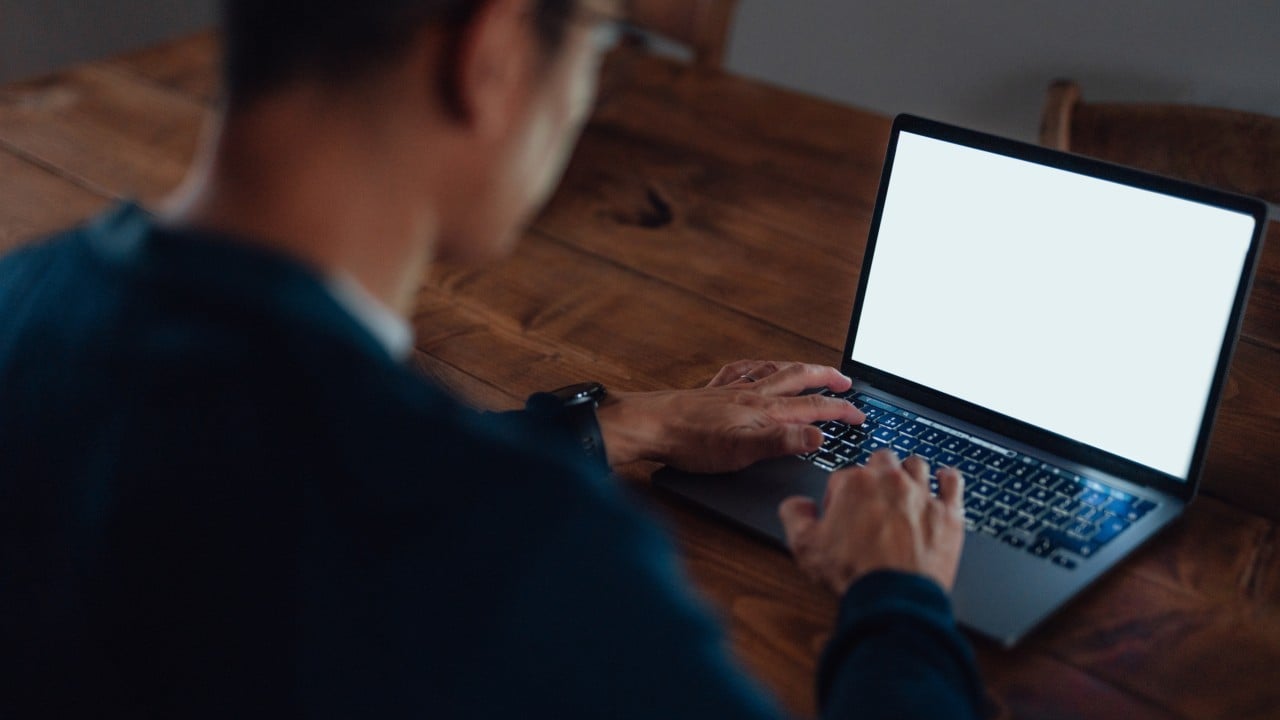
David sat at his mahogany desk, the same desk where he had spent twenty years refining the art of the legal brief. He was a master of the nuance, a man who could find the one swinging gate in a fence of iron-clad contracts. But that morning, the gate was locked. He watched a cursor blink on his screen, a rhythmic, taunting heartbeat. He had fed his complex case notes into a new linguistic model—a "tool," they called it—and within four seconds, it produced a summary so lucid, so mathematically perfect, that his own draft looked like a child’s finger painting.
He felt a cold hollow in his chest. It wasn't just fear for his paycheck. It was the sudden, sharp realization that the thing he defined himself by—his intellect, his analytical rigor—had been commodified into a utility, like electricity or running water.
This is the silent crisis of our era. We are moving past the age of "How do I do this?" and into the much more terrifying age of "Why do I matter?"
For decades, we tethered our sense of worth to our utility. We were the calculators. We were the organizers. We were the synthesizers of data. We built a civilization that rewarded the "Left Brain" above all else, turning human beings into highly efficient processing units. Now, the units have been outmatched. If your value is based on how fast you can summarize a document, write a basic script, or organize a schedule, you are effectively competing against an entity that doesn't sleep, doesn't eat, and has read the entire history of human thought twice before you finished your morning coffee.
But the real problem lies elsewhere. It isn't that the machines are becoming human. It’s that we spent the last century becoming machines.
Consider the assembly line worker of the 1920s. Their humanity was a bug, not a feature. Their fatigue, their need for bathroom breaks, and their wandering minds were inefficiencies that the industrial complex sought to iron out. We brought that same logic into the white-collar world. We trained ourselves to be "productive," to "optimize," and to "streamline." We spent our lives trying to be predictable. Now, we are shocked to find that predictability is the exact quality that makes us easy to replace.
The machine is a mirror. It shows us exactly what we are not.
Think of a hypothetical baker named Elena. Elena uses an automated oven that controls temperature to the thousandth of a degree. She uses a mixer that ensures the gluten structure is scientifically ideal. A machine could easily replicate her sourdough recipe. In fact, a factory in the next town over produces ten thousand loaves a day that are more "perfect" than hers.
Yet, people line up around the block for Elena’s bread. They don't go there for the caloric density or the mathematical symmetry of the crust. They go there because Elena once told them about the salt she sources from a specific cliffside in her ancestral village. They go there because she remembers that Mrs. Higgins likes the slightly burnt ends. They go there because there is a narrative tension in a handmade loaf—the risk of failure, the touch of a hand, the breath of a person.
Elena has figured out what David, the lawyer, is still struggling to grasp. The value isn't in the output. It’s in the presence.
We are entering a "Human Premium" economy. In this world, the "correct" answer is cheap. In fact, the correct answer is free. What remains expensive is judgment. What remains priceless is empathy. You can ask an AI to write a eulogy for a friend, and it will produce something poetic, grammatically flawless, and deeply moving. But if you stand at the pulpit and read those words knowing they were generated by a processor, the words turn to ash in the air. They are meaningless because they cost the sender nothing. There was no grief in the creation, so there is no comfort in the reception.
Meaning is a product of struggle.
Statistical models operate on probability. They predict the next most likely word, the next most likely note in a song, the next most likely brushstroke in a digital painting. They are, by definition, an echo of what has already been done. They represent the "average" of human history.
If you live your life by the "most likely" path, you are now redundant.
True human worth is found in the improbable. It’s found in the radical deviation from the mean. It’s the doctor who looks at a patient’s chart, sees the "correct" diagnosis, but pauses because something in the way the patient shifted their weight suggests a different, hidden pain. It’s the teacher who ignores the curriculum for a day because the sunlight hitting the desks created a moment of curiosity that was more important than the lesson plan.
These are not "skills" you can list on a LinkedIn profile. They are states of being.
The shift is uncomfortable because it requires us to reclaim the parts of ourselves we were told to suppress in the name of professionalism. We were told to be objective. We were told to keep our emotions out of the boardroom. We were told to follow the data. But the data is now the domain of the silicon. To survive, we have to be subjective. We have to be messy. We have to be opinionated.
We have to be difficult to summarize.
I remember talking to a graphic designer who was devastated by the rise of image generators. She felt like a ghost. "I spent ten years learning how to shade a sphere," she told me, her voice trembling. I asked her why she started drawing in the first place. She didn't say it was to shade spheres perfectly. She said it was because she wanted to capture the specific way her mother looked when she was angry—a mix of sharp eyes and a soft mouth.
The machine can shade the sphere. It can't know her mother.
The "Experience" gap is the final fortress of the human spirit. An AI can describe the taste of a peach using every sensory adjective in the English language, but it has never felt the juice run down its chin on a hot July afternoon. It has never felt the sting of a bee or the crushing weight of a first heartbreak. It has the map, but it has never walked the territory.
Our worth is the territory.
As we move forward, the divide between "work" and "contribution" will widen. Work is what can be automated. Contribution is what requires a soul. We are being forced into a massive, global career change—from being the "doers" to being the "deciders."
This requires a new kind of courage. It is much easier to follow a process than it is to take responsibility for a choice. When the machine gives you ten different options for a marketing campaign, the "work" of creating those options is gone. Your new job is the terrifying task of picking one and standing by it. Your value is your taste. Your value is your willingness to be wrong.
But what happens to the people who don't want to be "creatives" or "leaders"? What about the Davids of the world who just want to do their jobs well?
The answer is both harsh and liberating. We are being stripped of our masks. For a long time, we used our technical skills as a shield to avoid the vulnerability of human connection. "I'm busy," we would say, buried in spreadsheets. "I have reports to finish." Now, the reports are finished by a background process. The shield is gone. We are left standing in front of each other, forced to actually talk, to listen, and to co-create.
We are being evicted from the factory and forced back into the garden.
It is a return to a more ancient form of value. Before the industrial revolution, a person’s worth was often tied to their place in the community—their reputation, their character, their specific way of telling a story or mending a fence. We are circling back to that village resonance, only now the village is global.
We will see a resurgence of the "artisanal" in every field. We will see a craving for the "imperfect" because imperfection is the digital watermark of a human soul. We will see people paying more for a lawyer who will sit and have a whiskey with them while discussing their fears, even if the AI did the heavy lifting on the contract.
This isn't a loss of status. It is a promotion to a more profound level of existence.
David eventually shut his laptop. He didn't send the AI-generated brief. Instead, he picked up the phone. He called his client, not to talk about the swinging gate in the contract, but to ask how his daughter’s surgery went. He spent forty-five minutes just listening.
When he finally got back to the brief, he didn't try to compete with the machine’s logic. He used the machine’s summary as a foundation, then added a single paragraph at the end. It was a paragraph about the human cost of the litigation, about the sleepless nights the opposing party was likely facing, and a radical suggestion for a settlement that leaned on grace rather than law.
The machine could never have written that paragraph. It didn't know how to be graceful. It only knew how to be right.
We are not the masters of the machine, nor are we its slaves. We are its purpose. Without us, the machine is just a trillion transistors humming in a cold room, processing data that no one cares about, solving problems that no one felt. We are the ones who feel. We are the ones who care. We are the ones who decide that a sunset is beautiful or that a law is unjust.
The advance of technology is not a countdown to our obsolescence. It is an invitation to our awakening. It is the universe nudging us, perhaps a bit rudely, and reminding us that we were never meant to be tools.
We were meant to be the ones holding them.
The cursor continues to blink. The screen remains bright. But outside the window, the world is loud, chaotic, and wonderfully unpredictable. There is a breeze catching the leaves of an oak tree, a dog barking at a passing car, and the smell of rain on hot asphalt. None of it is optimized. All of it is beautiful.
Step away from the mahogany desk. Look in the mirror. The person staring back is not a collection of skills or a bundle of data points. They are a story that is still being written, a narrative so complex and so deeply felt that no algorithm could ever hope to predict the ending.
That is your worth. It always was.