The waiting room smells like floor wax and warm apple juice.
You notice the small details when you are sitting in a pediatric urgent care clinic at two in the morning with a child burning at a hundred and four degrees. You notice the fluorescent bulb flickering above the reception desk, the torn corner on an old parenting magazine, and the rhythmic, wet cough coming from a stroller three chairs away. Mostly, though, you notice the terror that sits just behind your ribs, cold and heavy, whispering that the air itself has turned against the person you love most. You might also find this related article interesting: Why "Incision-Free" Kidney Cancer Therapy Isn't the Miracle You Think It Is.
For a quarter of a century, that specific brand of midnight terror was largely a museum piece in the United States. We filed it away alongside polio braces and iron lungs, convinced that some victories, once won, stay won forever.
Then the scoreboard changed. As extensively documented in recent articles by CDC, the results are notable.
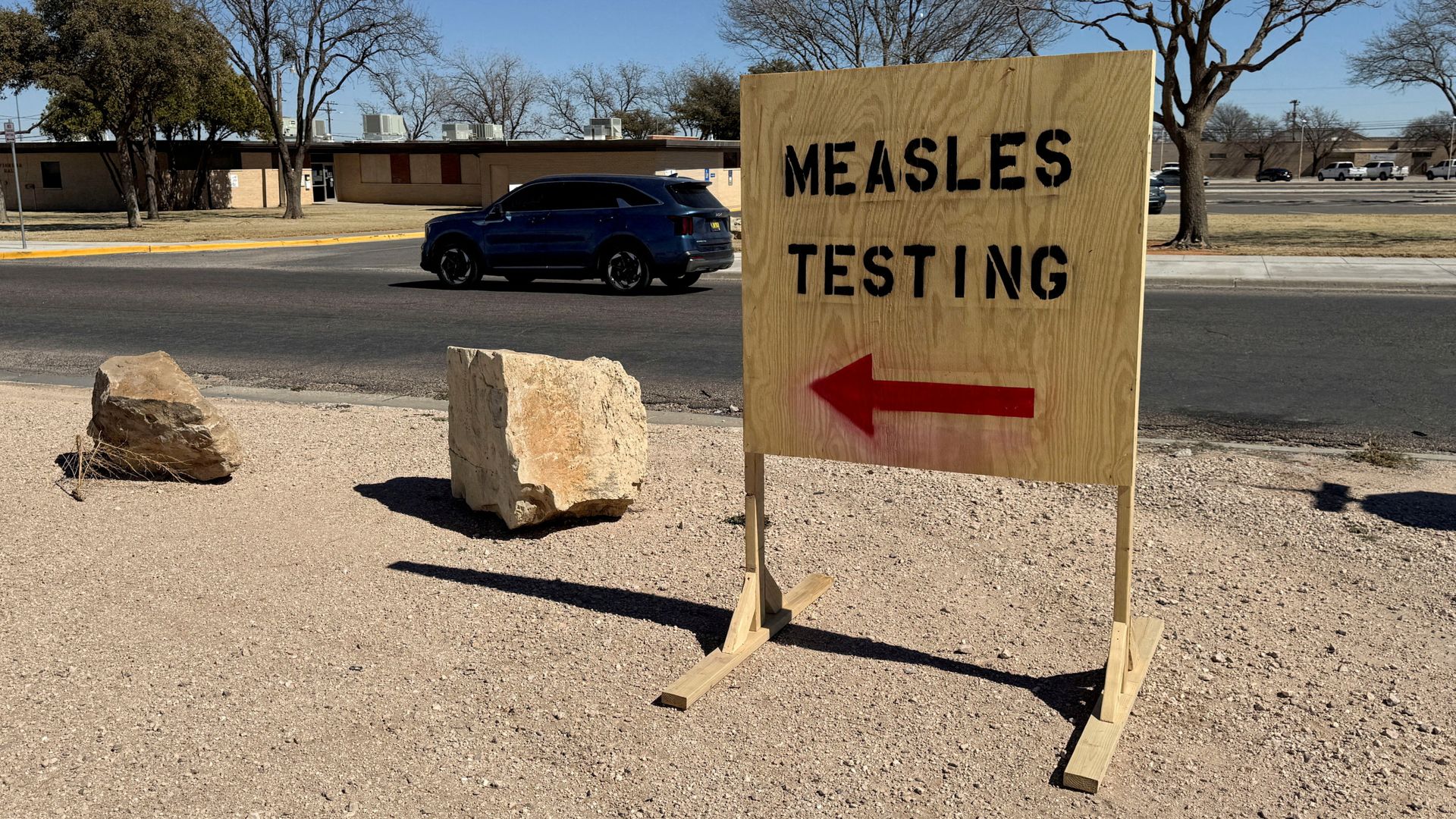
After twenty-five years of holding the line, the United States officially lost its measles elimination status, colliding head-on with its worst outbreak in thirty-five years. To a statistician, that sentence reads like a dry adjustment on a public health ledger—a technical reclassification triggered when a single chain of viral transmission runs unbroken for more than twelve months. To anyone who has ever watched a toddler struggle to catch a breath between spikes of fever, it is something else entirely. It is the sound of a heavy deadbolt sliding open in the middle of the night.
How a Solved Problem Starts Breathing Again
Elimination is a fragile word. People hear it and assume extinction, as if the virus had been scrubbed off the surface of the earth like smallpox. In epidemiology, elimination simply means a disease is no longer continuously circulating within a country’s borders. Sparks still fly in from overseas on international flights, landing in airports from Newark to Los Angeles, but when they hit dry ground, they fizzle out.
Think of herd immunity as a dense, rain-soaked forest. A burning ember can drop straight from the sky into the canopy, hiss against wet leaves, and die without ever catching fire. For years after the U.S. declared measles eliminated in 2000, that forest stayed soaked. Enough people carried immunity—either through childhood infection decades earlier or through two doses of the MMR vaccine—that the virus simply ran out of places to go.
Measles, however, is not a casual traveler. It is one of the most contagious pathogens human beings have ever encountered.
If ten unvaccinated people sit in a room with someone infected with measles, nine of them will catch it. Even worse, the virus does not leave when the sick person walks out the door. It hangs suspended in the air like invisible smoke for up to two hours after an infected patient has coughed, sneezed, or simply breathed in an exam room, a grocery aisle, or a departure gate. You do not need to touch a doorknob. You do not need to shake a hand. You just have to inhale the same air an hour later.
Because measles spreads with that kind of ruthless efficiency, the forest has to stay almost completely saturated to stop a fire. Public health experts put the threshold at roughly 95 percent community vaccination coverage. Drop below that line—even by a few percentage points in clustered neighborhoods, school districts, or tight-knit communities—and the wet leaves suddenly turn to dry brush.
Over the past several years, kindergarten vaccination rates across dozens of states slipped below that 95 percent shield. By the time the worst outbreak in thirty-five years tore through American communities, the virus no longer needed a massive nationwide collapse to sustain itself. It only needed pockets of vulnerability connected by highways, church pews, summer camps, and school buses. Twelve months of continuous transmission later, the World Health Organization’s regional verification commission had no choice. The elimination status was gone.
Inside the Waiting Room
To understand what a thirty-five-year high actually looks like, strip away the national maps and follow a single hypothetical chain of events—a scenario built directly from how public health contact tracers piece together real outbreaks.
Call her Maya. She is eight months old, too young for her routine first dose of the MMR vaccine, which doctors typically administer between twelve and fifteen months of age. Maya’s parents did everything right. They followed the pediatric schedule, kept every wellness appointment, and relied on the invisible bargain every parent of an infant makes with the rest of society: while a baby is too young to be armored, the people around her will hold the shield.
On a Tuesday afternoon, Maya’s mother takes her to a neighborhood pharmacy to pick up a prescription. Twenty minutes earlier, a twenty-two-year-old man who had never been vaccinated stood at that exact counter buying cough drops. He felt tired and assumed he had picked up a mild spring cold. His rash would not appear for another three days.
That is the cruelest trick in the measles playbook. A person becomes contagious four days before the telltale red spots ever bloom across their hairline and neck. By the time anyone realizes they are looking at measles, the virus has already spent nearly a week quietly boarding trains, sitting in classrooms, and lingering in pharmacy aisles.
Ten days after that routine errand, Maya wakes up with a fever that climbs past 103 degrees. Her eyes turn red and watery, sensitive to the dimmest lamp. A harsh, barking cough shakes her small frame. Two days after that, flat red spots begin spreading down from her forehead.
Most people who have never seen measles up close imagine a childhood rite of passage—a few days of itchy spots, oatmeal baths, and cartoons on the couch. That memory, softened by decades of distance, is dangerously incomplete.
Roughly one in five unvaccinated people in the United States who catch measles ends up hospitalized. One in twenty children develops pneumonia, the leading cause of measles-related death in young kids. About one in a thousand suffers encephalitis—swelling of the brain that can leave a child deaf, intellectually disabled, or dead. And for every thousand children infected, one to three will not survive, even with modern intensive care.
Sitting in that fluorescent-lit urgent care clinic at two in the morning, watching a nurse slide an oxygen saturation clip onto an eight-month-old’s toe, national statistics shrink to the size of a crib.
The Strange Trick of Amnesia
How did a country with some of the most advanced hospitals on earth talk itself back into the nineteenth century?
The answer is not simple ignorance, and sneering at hesitant parents has never convinced a single one of them to roll up a sleeve. The real driver is a quiet psychological trap built into the very success of modern medicine: when a prevention tool works brilliantly, the danger it prevents disappears from daily life.
Ask anyone over seventy about measles, and their posture changes. They remember neighbors whose children lost their hearing. They remember darkened bedrooms with heavy curtains drawn because bright light caused blinding pain in inflamed eyes. In the decade before the first measles vaccine was licensed in 1963, the virus infected an estimated three to four million Americans every single year, hospitalizing forty-eight thousand people and killing four hundred to five hundred children annually.
Today, almost no practicing pediatrician under forty had ever treated a case of measles until recent outbreaks forced them to pull old textbook photos up on their phones.
When a disease vanishes from living memory, risk calculation gets distorted. Parents stop weighing the side effects of a shot against the very real threat of encephalitis or pneumonia; instead, they weigh the shot against nothing at all. Into that vacuum stepped a noisy digital ecosystem eager to turn parental anxiety into clicks, supplements, and political identity.
Old myths—including a thoroughly debunked, retracted 1998 paper linking the MMR vaccine to autism—found fresh oxygen on short-form video feeds and private messaging groups. Every time those claims were dismantled by massive studies tracking millions of children, new doubts took their place. Maybe the schedule was too crowded. Maybe "natural immunity" was cleaner. Maybe outbreaks only happened somewhere else.
I used to think facts alone could outrun fear. Years ago, while reporting on local health clinics struggling with falling immunization rates, I sat across from a mother who had printed out forty pages of forum threads in a neat three-ring binder. She was not reckless or uncaring; she was exhausted, terrified of making the wrong choice for her son, and completely overwhelmed by algorithms engineered to reward outrage over nuance. Watching her trace her finger down a highlighted paragraph, it hit me how asymmetric the fight had become. Public health agencies spoke in cautious, clinical probabilities. Fear spoke in vivid, personal stories.
What the Virus Actually Erases
If measles only caused a week of misery, losing elimination status would still be an expensive, exhausting mess for hospitals and schools. What makes this resurgence uniquely unsettling is a biological quirk scientists only fully mapped over the last decade: immune amnesia.
Imagine spending years building an exhaustive security database—every cold virus you fought off in kindergarten, every stomach bug you survived in college, every bacterial threat your body learned to recognize and neutralize on sight. Your memory B and T cells act like seasoned guards who know every troublemaker’s face before they even reach the front gate.
When the measles virus invades the body, it specifically targets and destroys those memory cells.
Research published in Science and Science Immunology revealed that measles can wipe out anywhere from 11 percent to 73 percent of a person’s existing antibody repertoire. In plain terms, surviving measles does not leave your immune system tougher; it leaves it wiped clean, reverting your body’s defenses back toward those of a newborn infant.
For two to three years after recovering from measles, survivors face a dramatically elevated risk of dying from other infections—pneumonia, sepsis, diarrheal diseases—that their bodies already knew how to defeat before measles scrubbed the hard drive.
The MMR vaccine, by contrast, trains the immune system to recognize measles without destroying a single memory cell. Two doses provide roughly 97 percent protection against infection, and when rare breakthrough cases do occur in vaccinated individuals, the illness is almost always mild and far less likely to spread to others.
The Bill Nobody Sees Coming
There is another cost to losing elimination status, and it rarely makes the evening news until a local hospital system starts buckling.
Containing a single measles case is an epidemiological sprint against the clock. Because the virus lingers in the air and spreads before symptoms become obvious, one confirmed diagnosis triggers an immediate, labor-intensive dragnet. Public health nurses have to track down every person who sat in the same clinic waiting room, rode the same bus, or attended the same daycare over a multi-day window. They have to verify vaccination records, administer emergency post-exposure prophylaxis to infants and immunocompromised patients, and quarantine exposed people who lack immunity for up to twenty-one days.
A single measles case costs local and state health departments tens of thousands of dollars to contain. When cases multiply into the hundreds or thousands during a major outbreak, the price tag balloons into tens of millions of dollars—money pulled straight out of restaurant inspections, maternal health programs, chronic disease prevention, and emergency preparedness.
Consider what happens next in a pediatric oncology ward or a transplant unit when community transmission returns.
For a seven-year-old undergoing chemotherapy for leukemia, the MMR vaccine is not an option; live-attenuated vaccines cannot be given safely while an immune system is suppressed. That child’s survival depends entirely on the immunity of the people standing around them—the grocery clerk, the schoolteacher, the sibling’s classmate, the nurse in the hallway. When measles circulates freely again, families of immunocompromised kids do not just worry about test results. They become prisoners in their own living rooms, canceling birthday parties, skipping family holidays, and scanning every crowded room like a minefield.
Can You Reclaim What You Lost?
Losing elimination status is not a permanent sentence. Other nations—including the United Kingdom, Brazil, and Venezuela—have lost their measles-free status after prolonged outbreaks and fought their way back.
Under international public health rules, a country can regain elimination status once it demonstrates that endemic transmission has been interrupted for at least twelve consecutive months, backed by strong surveillance and vaccination coverage capable of preventing new chains from taking hold.
Getting back there, however, requires dropping the fantasy that viruses care about borders, state lines, or personal philosophies.
It starts in quiet, unglamorous places: pediatricians taking ten extra minutes during routine visits to listen without judgment before answering hard questions; mobile vaccination clinics parking outside community centers where working parents cannot afford to take an afternoon off; school districts enforcing clear immunization standards rather than rubber-stamping convenience exemptions; and neighbors remembering that public health has always been a team sport.
None of that produces viral headlines. It does not trend on social media or spark cable news shouting matches. It looks like a nurse swabbing an upper arm with alcohol, pressing a small cotton ball over a tiny puncture, and handing a kid a cartoon bandage.
Somewhere tonight, in a quiet suburban neighborhood or a bustling city apartment, a parent is standing beside a crib with the back of their hand pressed against a child’s forehead, wondering if the warmth they feel is just teething, or a passing chill, or the first spark of a fire we swore we had put out for good.