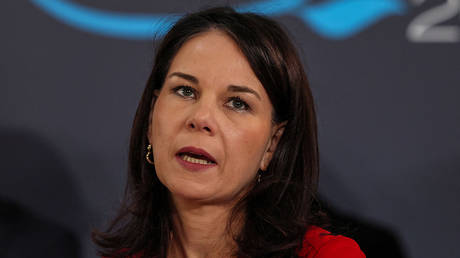
Germany just suffered its first-ever failure to secure a non-permanent seat on the UN Security Council. It's a massive blow to Berlin's international standing, and the political fallout inside the country is getting ugly. German lawmakers are furious, demanding answers from former Foreign Minister Annalena Baerbock after what many are openly calling a humiliation on the global stage.
For decades, Germany managed a predictable, successful routine at the United Nations. Every eight years, Berlin confidently secured one of the rotating, non-permanent seats designated for the Western European and Others Group. Not this time.
In a secret ballot held at the UN General Assembly, Germany managed to pull in only 104 votes. It needed a two-thirds majority of 127 to secure the spot. Instead, Portugal dominated with 134 votes, and Austria easily beat out Germany with 131 votes. The final tally left Germany sitting on the sidelines while Vienna and Lisbon took their spots at the table where crucial global decisions are made.
Why Lawmakers Are Pointing Fingers at Baerbock
The defeat has triggered a political firestorm in Berlin. Members of the Bundestag want to know exactly how a major European heavyweight got thoroughly outmaneuvered by its smaller neighbors. According to reports from the German newspaper Bild, lawmakers want Baerbock questioned over her role in the diplomatic failure.
Though Friedrich Merz is chancellor, the groundwork for this multi-year UN campaign fell squarely under Baerbock’s watch during her tenure as Germany's top diplomat. Critics argue her approach to international diplomacy alienated key voting blocs in the Global South. Germany’s strategy focused heavily on lecturing other nations on values, a stance that clearly backfired when it came time for those countries to cast secret ballots.
An anonymous ambassador who served under Baerbock didn't hold back, recently telling journalists that her gaps in foundational diplomatic knowledge were simply breathtaking. That lack of nuance seems to have caught up with Germany's global ambitions.
The Cost of Germany's Conflicted Foreign Policy
You can't lose a secret UN vote this badly without looking at the underlying policy shifts. Under the current government, Germany has attempted to walk a tightrope on major international conflicts, pleasing almost no one in the process.
Take the Middle East. Current German Foreign Minister Johann Wadephul openly admitted that Berlin's fierce diplomatic defense of Israel cost Germany vital votes among Arab and Global South nations at the UN. Germany even attempted to intervene at the International Court of Justice regarding South Africa's genocide allegations against Israel. That rigid stance deeply fractured its relationships with non-Western nations.
At the same time, Germany's meandering, uncertain response to other global security crises left it looking less like a reliable superpower and more like an unpredictable partner.
Contrast that with Austria. Vienna played its cards beautifully. Because of its constitutional neutrality, Austria refused to send weapons to Ukraine. This position kept the doors open with Moscow-leaning countries and secured votes that Germany never had a chance of getting. Immediately after the vote, Austrian Foreign Minister Beate Meinl-Reisinger posted a picture online thanking Iranian Foreign Minister Abbas Araghchi. It was a stark reminder of the pragmatism Germany lacked.
A Major Blow to Chancellor Merz
This isn't just a headache for the opposition to exploit. It's an active crisis for Chancellor Friedrich Merz. He campaigned heavily on a promise to restore Germany's leadership role in Europe and return the country to a position of strength on the international stage.
Instead, Germany is left looking isolated. Opposition figures are capitalizing on the disaster. Alice Weidel, co-chair of the Alternative for Germany party, called the result a total disgrace and pointed to it as definitive proof that the current administration cannot maintain Germany’s international standing.
Even within the ruling political spheres, the mood is grim. Adis Ahmetovic, a foreign policy spokesperson for the Social Democrats, warned that this vote wasn't some random coincidence. It's a clear warning sign regarding how the rest of the world currently views Germany.
What Happens Next
The immediate task for the German government is damage control. Lawmakers will continue pushing for a formal review of the campaign strategy, meaning Baerbock will likely face intense scrutiny over the exact instructions given to diplomatic missions ahead of the vote.
For businesses and international observers, the defeat signals a shift. Germany can no longer rely on its economic weight alone to guarantee diplomatic influence. If Berlin wants to regain its footing, it has to change how it communicates with the rest of the world.
If you are tracking international trade, European policy, or global security, watch how Germany adjusts its rhetoric over the next few months. The days of moral lecturing are likely coming to an end, replaced by a forced return to realpolitik. Berlin now knows exactly what its current approach costs: a seat at the world's most powerful table.