Political commentators often frame historic electoral victories as permanent structural shifts, yet election data consistently points to a far more complex reality. According to political analysts and historical voting records in the American South, individual candidate milestones rarely translate into automatic, long-term partisan realignment without sustained structural changes in voter turnout and coalition building.
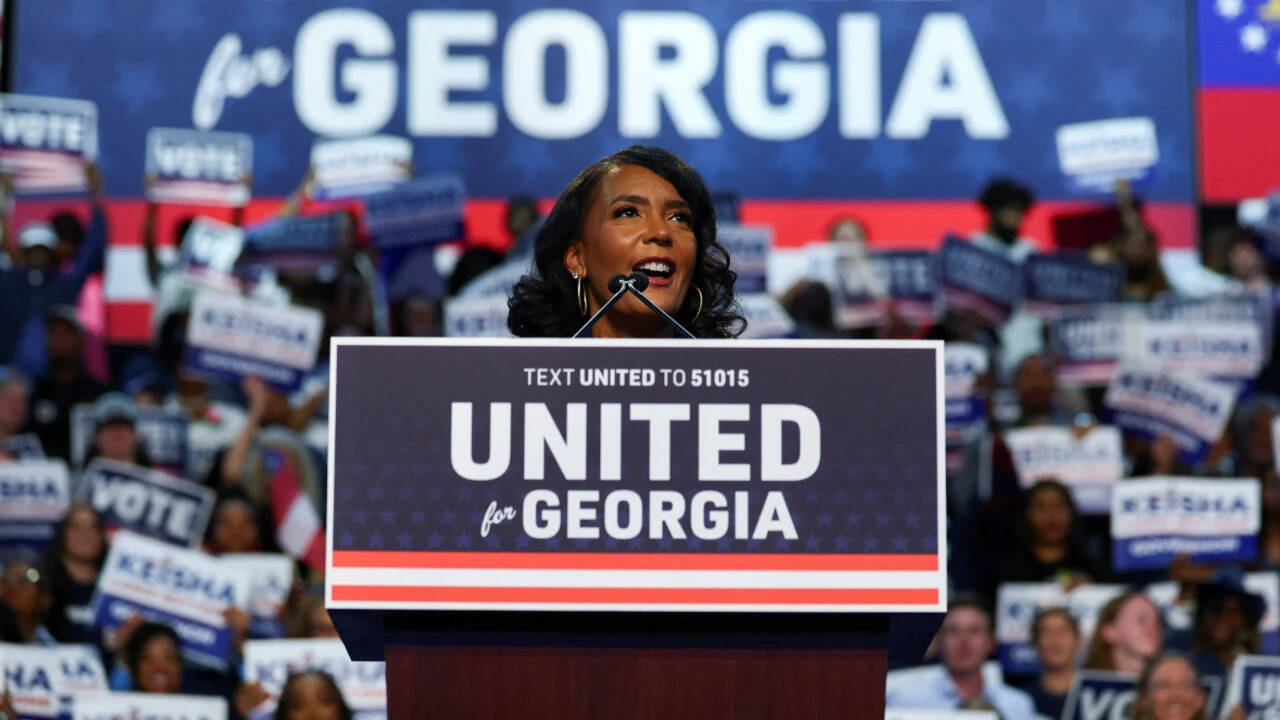
When Keisha Lance Bottoms secured the Georgia governorship—becoming the first Black woman to hold the office and flipping a seat long held by Republicans—mainstream coverage immediately focused on the symbolic weight of the victory. Headlines treated the result as proof that Georgia had permanently transformed from a reliable Republican stronghold into a guaranteed Democratic bastion. That interpretation misses the mechanics of how modern statewide elections are actually won and lost in the Sun Belt. Meanwhile, you can explore related stories here: The Quiet Tide That Broke the Red Wave.
The Myth of Inevitable Demographic Destiny
For over a decade, political strategists have relied on a single dominant theory: demographic change equals automatic partisan destiny. The argument suggests that as metropolitan areas like Atlanta grow and diversify, one party naturally inherits a permanent majority.
Election results across multiple cycles contradict this assumption. Political scientists, including scholars at the University of Georgia and the Brookings Institution, have repeatedly noted that demographic shifts do not vote—individual people do, and their priorities change based on economic conditions, local governance, and candidate quality. To explore the complete picture, we recommend the detailed report by TIME.
In Georgia, suburban counties like Cobb, Gwinnett, and Henry have indeed shifted away from their traditional voting patterns over the past ten years. However, treating those voters as a monolithic bloc ignores the reality of ticket-splitting and issue-based persuasion. Voters who supported a Democratic gubernatorial candidate in one cycle have frequently backed Republican down-ballot candidates or shifted back when inflation, crime, or local tax policies took center stage.
What Actually Flipped the Seat
To understand why the Georgia governor's mansion changed hands, one has to look past broad national narratives and examine the specific mechanics of the campaign. Three concrete factors drove the outcome far more than simple demographic math:
Candidate-Specific Dynamics and Incumbency Fatigue
Open-seat elections behave entirely differently than races featuring a sitting incumbent. Without the built-in advantages of incumbency—such as state-level economic messaging and established donor networks—the defending party faces an uphill battle to unify its base. Primary battles often leave lingering divisions that depress turnout among core rural and exurban voters.The Metro Atlanta Turnout Engine
Victory in statewide Georgia politics is a math problem centered on the Atlanta metropolitan area. When turnout in Fulton, DeKalb, Clayton, and Gwinnett counties exceeds historical midterm benchmarks, statewide margins tighten dramatically. Grassroots organizing, voter registration drives, and localized get-out-the-vote operations—rather than national media narratives—are what move those margins by tens of thousands of votes.Suburban Swing Voters and Pragmatic Governance
Suburban voters in North Fulton, Forsyth, and Cherokee counties are largely driven by pragmatic concerns: public education funding, infrastructure, healthcare access, and business climate. Bottoms’ background as a former Mayor of Atlanta gave her direct executive experience that appealed to business-minded moderates, while simultaneously providing opponents with a clear municipal record to scrutinize. The race was decided on competing visions of executive competence, not purely on identity.
Examining the Record and the Risks
A balanced assessment of this victory requires looking honestly at both the political strengths and the governance vulnerabilities inherent in the transition.
Supporters point to Bottoms' tenure as Atlanta mayor from 2018 to 2022 as evidence of crisis management during the COVID-19 pandemic and the 2020 social justice protests, alongside initiatives aimed at affordable housing and criminal justice reform. From this perspective, her election represents a validation of urban leadership styles applied to a statewide stage.
Critics and conservative analysts, however, highlight significant challenges that accompanied her municipal administration, particularly rising violent crime rates during the pandemic era and friction with state-level leadership over public health mandates and economic reopenings. Furthermore, governing Georgia as a Democratic executive while working alongside a Republican-controlled General Assembly presents immediate legislative gridlock.
Passing major policy initiatives—whether on Medicaid expansion, voting laws, or state tax structures—requires navigating a legislature where the opposing party holds structural advantages due to geographic distribution and district mapping.
Answering the Wrong Question
Most post-election commentary asks: "Does this win mean Georgia is now a solid blue state?"
Political history suggests that is the wrong question entirely. A more accurate inquiry is: "How fragile is any governing coalition in a tightly divided swing state?"
Consider the mechanics of modern swing-state governance. When a candidate wins by a narrow margin—often between one and three percentage points—they do not receive a sweeping ideological mandate. Instead, they inherit a deeply divided electorate where a minor shift in turnout or a single economic downturn can reverse the outcome four years later.
In states like North Carolina, Virginia, and Pennsylvania, gubernatorial seats have frequently alternated between parties even as presidential voting patterns leaned one way or the other. Voters routinely use the governor's office as a counterweight to national political trends, rewarding executives who focus on tangible state-level results and punishing those perceived as overly focused on national partisan battles.
What Political Observers Should Watch Next
Rather than viewing the election as the end of a political cycle, strategists across the spectrum are treating it as the opening phase of a much harder test: governance under divided power.
- Legislative Negotiation: How the new administration handles budget negotiations, judicial appointments, and veto overrides with legislative leadership will determine whether campaign promises translate into policy.
- Rural vs. Urban Investment: Bridging the economic divide between booming metro Atlanta and agricultural regions in South Georgia remains the central challenge for any Georgia governor, regardless of party affiliation.
- Down-Ballot Alignment: Whether a high-profile gubernatorial win creates coattails for state legislative races or remains an isolated top-of-ticket phenomenon will reveal the true depth of partisan realignment.
The Reality of Historic Milestones
Historic firsts carry undeniable cultural and representational significance. Seeing a Black woman take the oath of office in a state with Georgia's specific civil rights history marks a notable chapter in American politics.
Yet separating symbolic milestones from structural political reality is essential for anyone trying to understand where American elections are headed. Elections are not won by permanent majorities; they are rented for four-year terms by the coalition that executes best on the ground.