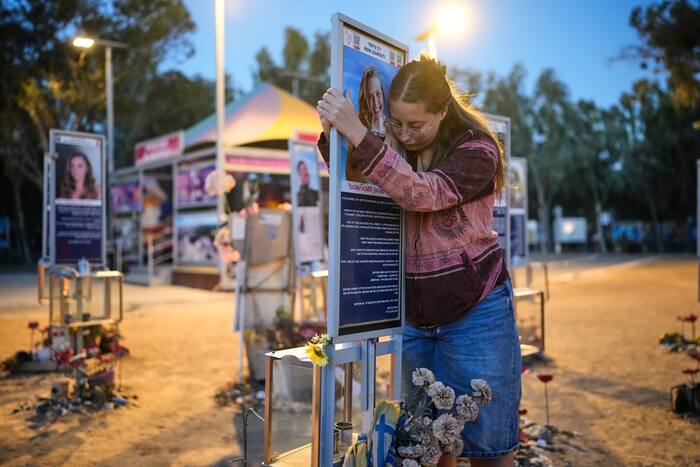
Time does not heal everything. Sometimes, it merely hardens the edges of an open wound until the memory of what used to be feels like a physical obstruction in the throat.
Consider the calendar. It moves with a terrifying, indifferent regularity. One year ago, the world fractured along a fault line that had been trembling for generations. October 7 arrived with a violence that scorched the earth of southern Israel, leaving empty chairs at Sabbath tables, silent bedrooms, and a collective psychological tremor that has yet to subside. Across a narrow stretch of dust, concrete, and blockade, that same date marked the opening chapter of an unrelenting catastrophe for the people of Gaza, where survival has been reduced to an hourly calculation of shelter, water, and breath.
To stand on either side of this divide is to inhabit two completely different dimensions of suffering, each suspicious of the other's pain.
In Tel Aviv and Jerusalem, the grief is defined by absence. It lives in the haunting silence of empty shoes left outside memorial sites, in the frantic, sleepless eyes of families whose loved ones remain unaccounted for in subterranean tunnels, and in the heavy, pervasive dread that safety is an illusion. When you speak to an Israeli parent whose world stopped spinning on that autumn morning, you realize that time for them froze at precisely 6:29 AM. They are still standing in the safe room, listening to the muffled sounds outside, waiting for a rescue that came too late or a knock that never brought the right news.
Yet, walk just a few dozen miles west, past the razor wire and the surveillance towers, and the geometry of human misery changes entirely.
In Gaza, grief is not just an emotion; it is an infrastructure. It is piled high in the gray dust of collapsed apartment blocks where entire lineages were erased in a single heartbeat. It is measured in kilometers walked on blistered feet, carrying a mattress, a pot, a child, searching for a patch of ground that has not yet been targeted. To be a Palestinian in Gaza today is to navigate a landscape where history has been pulverized into rubble, where hospitals are reduced to skeletons, and where the most ambitious daily goal is simply to keep your children alive until tomorrow's sunrise.
The tragedy of this geography is that empathy has become a scarce commodity, rationed out by fear and political necessity.
When you lose everything, the human brain seeks a simple narrative to make sense of the chaos. It wants an absolute villain and an absolute victim. It wants to believe that your pain is noble and unique, while the pain of the person across the wall is either fabricated or deserved. This is the trap of protracted conflict. It forces populations into monolithic blocs, stripping away the individual human faces until everyone is reduced to a statistic, a target, or a threat.
Listen closely, however, and you can hear the fragile human notes beneath the deafening roar of geopolitics.
In a quiet apartment in Tel Aviv, a mother lights a candle for a son who is never coming home, her hands shaking as she shields the tiny flame from a draft. In a makeshift tent in Deir al-Balah, a father watches his daughter sleep, wiping the soot from her forehead, whispering promises of a future that neither of them can see.
Different languages. Different Gods. Different flags draped over different kinds of ruins.
And yet, the biological weight of sorrow is identical. Tears taste the same on both sides of the border. The physical ache of a broken heart does not care about political borders, historical grievances, or military doctrines. It simply hurts.
We look for turning points in history books, expecting grand treaties or dramatic surrenders to mark the end of human suffering. But true reckonings rarely happen in conference rooms. They happen in the quiet, terrifying moments when an individual finally dares to look across the abyss and recognize their own reflection staring back at them from the wreckage.
Until that recognition takes hold, the calendar will keep turning, the anniversaries will pile up like stones, and the earth on both sides of the wall will continue to drink the bitter tears of those who were left behind.


