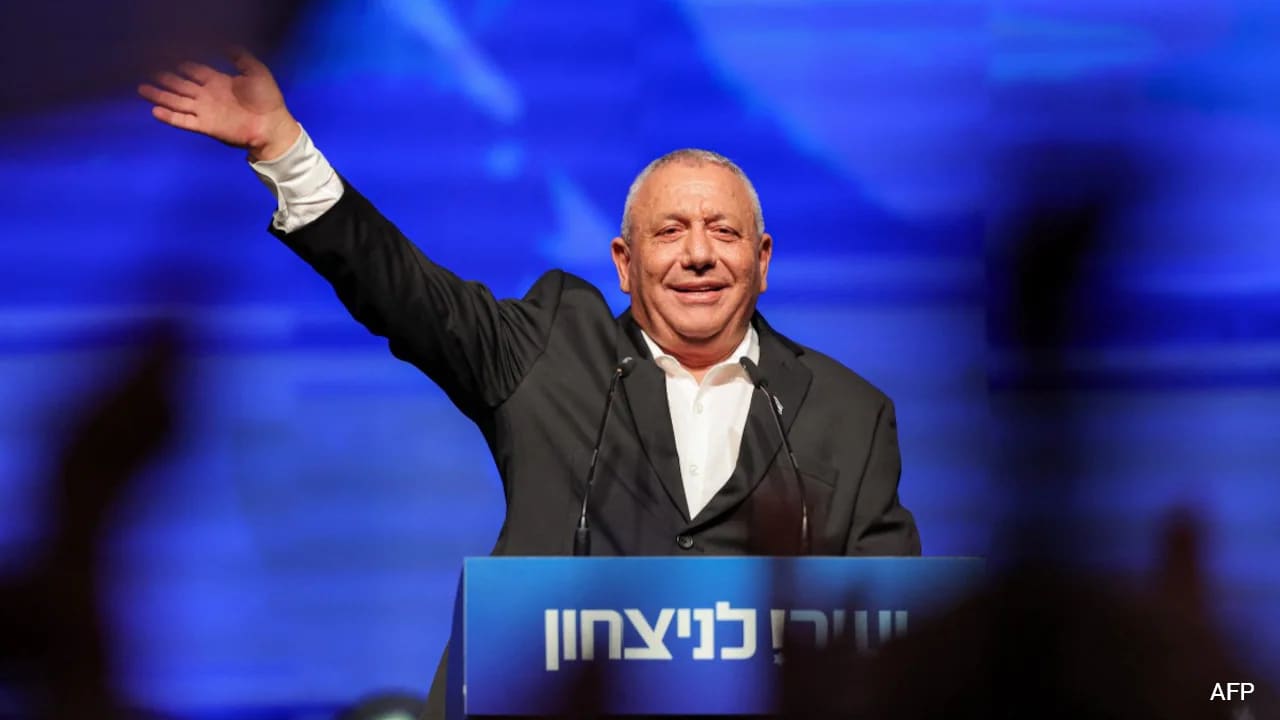
Every Israeli politician running for Prime Minister eventually recites the exact same catechism. They stand before a microphone, invoke the "unbreakable bond" with Washington, and promise to deepen the alliance. Gadi Eisenkot is the latest to run this tired playbook.
The mainstream press eats it up. They frame Eisenkot—a former IDF Chief of Staff with undeniable security credentials—as the adult in the room who will finally repair the fractured relationship between Jerusalem and the White House. It sounds sensible. It sounds reassuring.
It is also completely detached from geopolitical reality.
By promising to "deepen" ties with the United States, Eisenkot isn't offering a strategy. He is advertising dependency. In modern international relations, deeper integration with a superpower does not buy you security; it buys you a leash.
The Lazy Consensus of the "Unbreakable Bond"
If you read standard diplomatic coverage, you would think the US-Israel relationship operates on pure sentiment and shared democratic values. Pundits treat the alliance like a marriage that just needs better communication. When friction occurs, the default diagnosis is always the same: the Israeli Prime Minister was too abrasive, too stubborn, or too ideological.
I have spent years watching foreign policy establishments in both Washington and Tel Aviv mistake polite diplomatic friction for existential crisis, and vice versa. The truth is much colder. States do not have friends; they have interests.
When Eisenkot vows to deepen ties, he implies that Israel’s strategic survival depends on maximizing American goodwill. That premise is fatally flawed. The United States is undergoing a structural shift in its global posture. From the Indo-Pacific pivot to domestic fiscal exhaustion, Washington is actively trying to reduce its entanglement in Middle Eastern conflicts, not expand them.
Promising to pull the US closer when Washington is trying to step back isn't statesmanship. It is swimming against a riptide.
What "Deepening Ties" Actually Costs
Let’s define what deepening bilateral security ties means in practice. It is not a vague warm feeling at the State Department. It is a specific set of institutional mechanisms:
- Joint operational planning that requires pre-approval for regional strikes.
- Foreign Military Financing (FMF) tied to strict end-use monitoring and procurement mandates.
- Diplomatic synchronization that forces Jerusalem to pause kinetic operations to accommodate American election cycles.
You cannot have the shield without the shackles. Every billion dollars in aid and every carrier strike group deployed to the Eastern Mediterranean comes with an invisible invoice. When the US provides the ammunition, Washington gets a veto over the target list.
Consider the hard mechanics of Qualitative Military Edge (QME). By law, the US must ensure Israel maintains military superiority in the region. Sounds great on paper. In reality, QME has gradually transformed Israel’s defense industrial base from an autonomous powerhouse into a junior partner dependent on American supply chains. When you rely on Washington for precision-guided munitions and jet engine parts, your sovereign red lines become suggestions.
Eisenkot knows this. As a former Chief of Staff, he understands logistics better than almost anyone in the Knesset. He knows that when your warehouses are stocked with American hardware, your war cabinet meets in Jerusalem, but the real clock ticks in Washington.
The Myth of the "Responsible Adult"
The media loves casting Eisenkot as the pragmatic antidote to Benjamin Netanyahu’s combative style. The theory goes like this: Netanyahu picked public fights with Democratic presidents, alienated Congress, and turned Israel into a partisan wedge issue. Therefore, a calm, soft-spoken general like Eisenkot will walk into the Oval Office, speak the language of shared interests, and restore the golden era of bilateral harmony.
This is pure fantasy.
The friction between the US and Israel is no longer about personality. It is about diverging threat perceptions.
To Washington, Iran is a containment problem to be managed alongside bigger priorities like China and Russia. To Jerusalem, a nuclear-armed Iran is an existential threat that cannot be contained—only prevented. No amount of polite dinner conversation in Georgetown will bridge that gap. Whether the Israeli Prime Minister shouts at the American President or whispers respectfully, the underlying strategic divergence remains identical.
Even Ben-Gurion understood the danger of over-reliance on a single patron. In the 1950s, Israel leaned heavily on France for aircraft and nuclear technology, only to watch Paris impose an arms embargo on the eve of the 1967 Six-Day War. Charles de Gaulle didn't turn on Israel because an Israeli prime minister was rude to him. He turned on Israel because French interests in the Arab world shifted.
History doesn't repeat itself, but it rhymes with brutal precision.
Dismantling the Wrong Questions
When voters and analysts evaluate Eisenkot’s foreign policy platform, they usually ask the wrong questions. Let's look at the standard talking points and tear them apart.
Can Eisenkot restore bipartisan support in Congress?
No one can. The demographic and ideological shifts inside the American political system are generational, not diplomatic. Younger wings of both parties—progressive Democrats and isolationist Republicans—view foreign aid and Middle Eastern interventions with deep skepticism. An Israeli Prime Minister cannot charm away domestic American polarization. Trying to campaign on "fixing" US bipartisanship is like promising to stop the tide with a bucket.
Won't closer US ties deter Iran and Hezbollah?
Deterrence is not transferable. You cannot outsource your survival to an ally's aircraft carrier. Adversaries like Hezbollah and the IRGC calculate risk based on what Israel is willing to do, not what Washington might do on Israel's behalf. In fact, when adversaries see Israel seeking American permission before acting, it weakens deterrence. It signals hesitation. It tells Tehran that the road to stopping an Israeli strike runs through the White House situation room.
Isn't isolation worse than dependency?
This is a false binary. The alternative to deepening American dependency is not diplomatic isolation. It is strategic diversification and sovereign self-reliance.
The Contrarian Blueprint: Strategic Decoupling
If Eisenkot actually wanted to secure Israel’s future as Prime Minister, he wouldn't promise to deepen ties with the US. He would announce a ten-year plan to deliberately reduce American military dependency while strengthening commercial and intelligence partnerships.
Here is what real strategic maturity looks like:
- Phase out Foreign Military Financing. Israel has a vibrant, high-tech economy with a GDP per capita rivaling major European nations. Taking $3.8 billion a year in military aid—which must mostly be spent on US defense contractors anyway—is an outdated relic of the 1970s. Converting aid into pure commercial trade removes Washington’s primary leverage over Israeli military operations.
- Rebuild domestic munitions manufacturing. You cannot fight a multi-front war if your artillery shells and smart bombs are subject to congressional holds or executive delays. Domestic production is expensive and inefficient compared to American economies of scale, which is why bean-counters hate it. Do it anyway. Sovereignty is never cost-effective.
- Treat Washington as a partner, not a patron. Transition the relationship from a client-state dynamic to a normal alliance between two sovereign nations. Share intelligence, co-develop missile defense, and coordinate regional trade—but stop asking for security guarantees that compromise operational freedom.
The Price of Sovereignty
Let’s be completely honest about the downside of this approach. Strategic autonomy hurts.
If Israel steps back from American military aid and stops seeking Washington’s diplomatic umbrella at the United Nations, the immediate aftermath will be turbulent. Defense budgets will spike, forcing painful cuts to domestic subsidies and social programs. Without American diplomatic cover, Israel will face harsher international sanctions, boycotts, and lawfare in European courts. The transition period would test the resilience of the Israeli public in ways they haven't experienced since the 1970s.
Most politicians will never propose this because voters hate short-term pain, even when it buys long-term survival. It is much easier to get on stage, smile for the cameras, and promise that Uncle Sam will always have your back.
Eisenkot is a decorated soldier who has sacrificed tremendously for his country. Nobody doubts his patriotism. But by clinging to the comforting illusion that deeper American integration equals greater Israeli security, he is preparing to fight the last war with yesterday’s alliances.
A superpower’s embrace feels warm right up until the moment it becomes a chokehold. Stop asking Washington for a tighter hug, and start building the capacity to stand alone.


