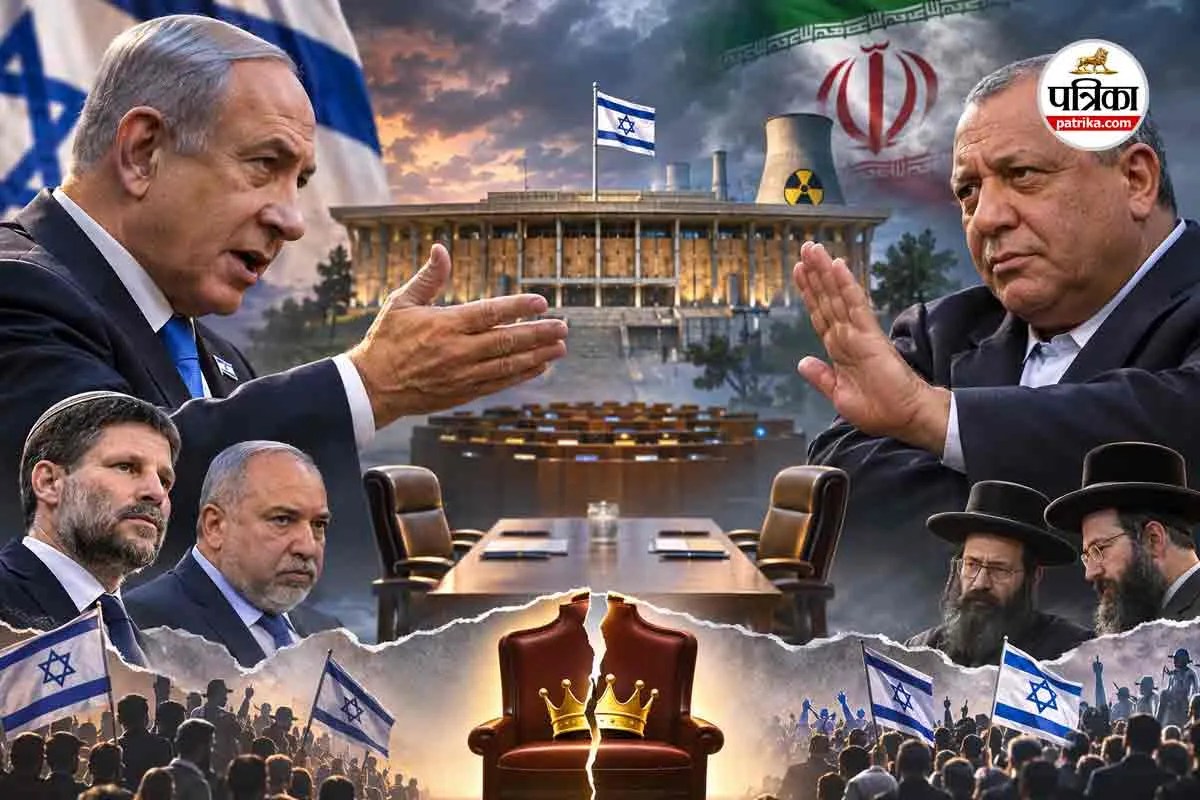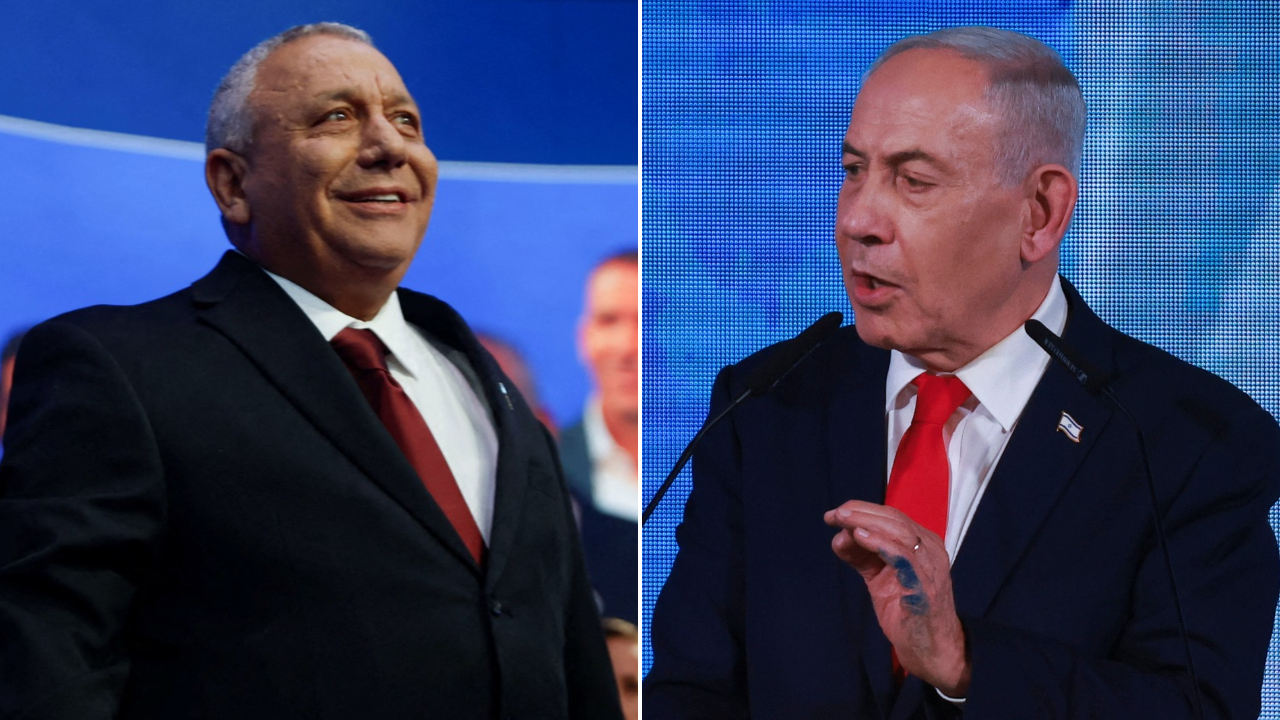
Gadi Eisenkot dismissed Benjamin Netanyahu’s public overture for a broad national unity government as a transparent political trap, declaring that such "tricks don’t work" on him after spending eight months inside the Israeli prime minister's wartime decision-making apparatus.
The former Israel Defense Forces chief of staff and National Unity party observer did not reject the proposal out of personal pique or partisan reflex. His refusal stems from a documented pattern of coalition engineering in Jerusalem, where appeals to national solidarity routinely serve as tactical shields to neutralize opposition, fracture rival alliances, and insulate the prime minister from domestic accountability and early elections. Recently making headlines in related news: इजराइल की राजनीति बदल गई पर हमास के खिलाफ जंग क्यों नहीं रुकी.
The Anatomy of a Political Maneuver
Netanyahu’s calls for unity rarely arrive during moments of unchallenged political strength. They emerge when his governing coalition faces acute legislative bottlenecks, international diplomatic friction, or severe public backlash over hostage negotiations and military strategy.
By issuing an invitation to join an emergency or unity framework, the prime minister alters the public relations battlefield overnight. If opposition leaders accept, they absorb shared responsibility for controversial policies without gaining actual veto power over the security cabinet. If they refuse, Likud surrogates immediately brand them as petty politicians putting personal ambition above national survival during a multi-front war. Additional insights regarding the matter are detailed by USA Today.
Eisenkot recognized the mechanics of this squeeze immediately. Having served as an observer in the small war cabinet alongside Benny Gantz until their departure in June 2024, Eisenkot witnessed firsthand how the inner circle operated. Major strategic decisions were frequently delayed, diluted, or bypassed entirely to appease far-right coalition partners like Bezalel Smotrich and Itamar Ben-Gvir, whose threats to collapse the government dictated the outer limits of Israeli policy.
A unity government under these terms is not a partnership. It is a hostage situation for the junior partner.
What Happened Inside the War Cabinet
To understand why Eisenkot’s rejection carries unusual weight with the Israeli public, look at his operational record rather than his rhetoric. Unlike career parliamentarians whose credibility rises and falls on soundbites, Eisenkot spent four decades in uniform, culminating in his tenure as IDF Chief of Staff from 2015 to 2019. During the current conflict, he paid the ultimate personal price, losing his son Gal and his nephew Maor in combat in Gaza.
When Eisenkot and Gantz entered the emergency government in October 2023, they did so to stabilize military decision-making and reassure international allies—principally Washington—that seasoned, pragmatic generals were guiding the war effort. For months, Eisenkot pushed internally for three concrete objectives:
- A structured hostage release framework prioritized ahead of open-ended military operations in southern Gaza.
- A viable post-war governance plan for the Gaza Strip that would prevent an indefinite Israeli military occupation or a Hamas resurgence.
- An agreed-upon date for early Knesset elections to restore public trust in state institutions shattered by the intelligence and security failures of October 7.
None of those objectives materialized. Instead, Eisenkot argued that strategic clarity was repeatedly sacrificed for coalition preservation. When he and Gantz finally walked out, they concluded that their presence inside the tent was no longer moderating policy—it was merely laundering it for domestic and international audiences.
Historical Precedent in Israeli Coalition Politics
Eisenkot’s blunt dismissal is backed by a forty-year archive of Israeli political history. Netanyahu has perfected the art of absorbing rivals only to dismantle their political viability from within.
Consider the precedent set in 2020 during the COVID-19 pandemic. Benny Gantz broke his primary campaign pledge and entered a rotation government with Netanyahu under the banner of national emergency. The agreement stipulated that Gantz would replace Netanyahu as prime minister after eighteen months. That handover never happened. Netanyahu engineered a budget impasse that automatically dissolved the Knesset before the rotation date arrived, shattering Gantz’s Blue and White alliance and leaving his former partner politically crippled for years.
A similar dynamic played out in 2012, when Shaul Mofaz, then leader of the centrist Kadima party, joined Netanyahu’s coalition to form what was billed as the broadest unity government in Israeli history. Mofaz lasted roughly ten weeks. Once Netanyahu secured the legislative breathing room he needed, the promised reforms on ultra-Orthodox military conscription evaporated, and Mofaz exited empty-handed.
As a hypothetical example of how this trap functions in practice, imagine a corporate board where a embattled CEO invites a prominent activist investor onto an executive committee to "heal divisions." The CEO gives the investor a title and a seat at the table, then ensures every binding vote requires a supermajority controlled by the CEO's loyalists. Six months later, when the stock drops, the CEO tells shareholders that the activist investor was in the room the entire time and shares the blame.
Eisenkot refuses to play the activist investor in someone else's script.
The Structural Flaws of a Right-Wing Plus Center Coalition
Beyond personal distrust, a unity government between Netanyahu’s Likud and Eisenkot’s National Unity faction faces an irreconcilable mathematical and ideological problem.
In the 120-seat Knesset, Netanyahu’s current governing bloc holds 64 seats, anchored by Likud alongside ultra-Orthodox parties (Shas and United Torah Judaism) and religious nationalist factions (Religious Zionism and Otzma Yehudit). For a unity government to represent a genuine shift in direction, Netanyahu would have to sever ties with his far-right flank—specifically Ben-Gvir and Smotrich—and build an alternative majority with centrist opposition parties.
Netanyahu has consistently refused to take that step. Severing his right-wing base carries immense personal and political risk for the prime minister, who relies on his coalition partners to block judicial reforms unfavorable to his ongoing corruption trial and to oppose any state commission of inquiry into the events of October 7.
Without ejecting the extremist elements of his cabinet, inviting Eisenkot back into the government simply adds centrist window dressing to the exact same governing coalition. Eisenkot would sit in cabinet meetings without the votes to pass a hostage deal, without the authority to restrain West Bank settlement expansion, and without the leverage to enforce universal military conscription laws.
The Conscription Flashpoint
The debate over ultra-Orthodox (Haredi) military service sits at the exact intersection of Eisenkot’s military ethos and Netanyahu’s political vulnerability.
Following the Israeli Supreme Court ruling that ended decades-old blanket exemptions for yeshiva students, the IDF has faced severe manpower shortages due to prolonged multi-front deployments in Gaza, Lebanon, and the West Bank. As a former chief of staff, Eisenkot views equal burden-sharing not as a political talking point, but as an existential operational requirement for the military.
Netanyahu’s political survival, however, depends entirely on keeping the Haredi parties inside his coalition. Their leaders have threatened to bring down the government if legislation enshrining broad exemptions is not passed. Entering a unity government while Netanyahu actively works to bypass universal conscription would force Eisenkot to betray the very institution he spent his life leading.
The Counter-Argument From the Pro-Unity Camp
To view the situation fairly, one must examine the argument made by Netanyahu’s defenders and certain centrist commentators who believe Eisenkot’s refusal is overly rigid.
Proponents of a broad emergency government argue that Israel faces simultaneous existential threats: an entrenched insurgency in Gaza, a volatile northern border with Hezbollah, escalating friction in the West Bank, and direct military confrontation with Iran. From this perspective, presenting a fractured domestic front emboldens regional adversaries who interpret Israeli political infighting as a sign of national exhaustion.
Supporters of this view contend that even limited influence inside the cabinet is preferable to shouting from the opposition benches. They argue that seasoned generals like Eisenkot provide an essential counterweight to ideological ministers, preventing catastrophic miscalculations even if they cannot dictate every policy outcome.
Eisenkot’s counter-argument is rooted in empirical experience rather than theory: he already tested that hypothesis for eight months. His conclusion was clear. When an opposition figure enters a government without binding structural guarantees—such as an agreed election date or the removal of obstructionist ministers—their presence does not restrain the prime minister. It merely extends his political lifespan while delaying the democratic reckoning the country requires.
What Eisenkot’s Stance Signals for Israeli Politics
Eisenkot’s rejection marks a definitive hardening of the opposition’s posture. During the first phase of the war, appeals to patriotism and emergency solidarity successfully muted political criticism and kept centrist leaders tethered to the government. That phase is over.
By calling Netanyahu’s overture a "trick," Eisenkot is signaling to the Israeli electorate—and to fellow opposition leaders like Yair Lapid and Avigdor Liberman—that the path out of Israel’s strategic paralysis does not run through another patchwork coalition. In his framework, genuine national unity cannot be engineered inside a cabinet room dominated by partisan survival tactics; it can only be forged through a fresh mandate from the voters.
Netanyahu still holds the parliamentary majority needed to govern, and he retains formidable skill in navigating legislative crises. Yet every time he reaches into his familiar playbook of tactical unity appeals, the diminishing returns become more obvious. You can only sell the same bridge to the same generals once.