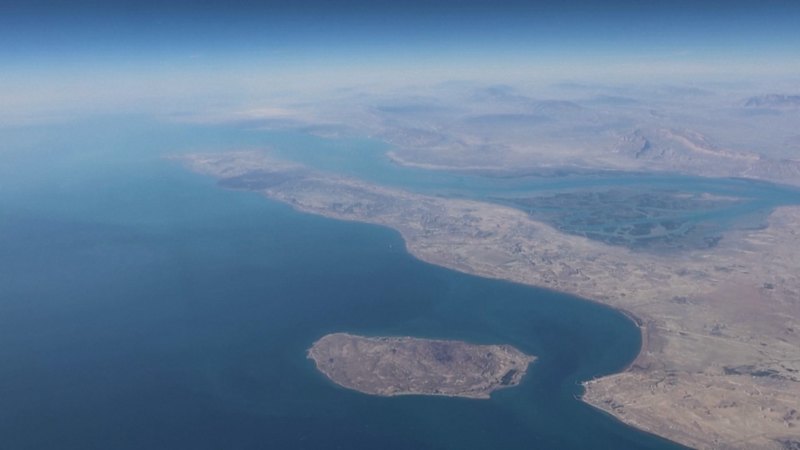
The physical reopening of the Strait of Hormuz is not the victory for global trade that the headlines suggest. While tankers are once again moving through the twenty-one-mile-wide chokepoint, the underlying tension that shuttered the route remains unresolved, leaving a permanent "risk premium" baked into every barrel of oil passing through the Persian Gulf. Shippers are breathing a sigh of relief today, but the insurance markets and naval strategists are looking at a much darker set of data. The bottleneck is open, yet the security of the world’s most vital energy artery has never been more brittle.
The Strait of Hormuz handles roughly 20% of the world’s liquid petroleum consumption. It is a geographic fluke that dictates the price of gas in Ohio and the stability of the industrial base in Shanghai. When traffic stops, the world stops. But the recent resumption of transit masks a shift in how regional powers use this waterway as a geopolitical lever. This isn't just about ships moving from point A to point B. It is about the credible threat of a snap closure that can be triggered at any moment, for any reason, by actors who view global economic stability as a secondary concern.
The High Cost of Open Water
A ship moving through the Strait is a floating target. Despite the presence of international task forces, the sheer volume of traffic makes absolute protection an impossibility. We are seeing a new era of "gray zone" tactics where the goal isn't necessarily to sink a ship, but to make the cost of operating it unsustainable.
Insurance companies have already done the math. Even with the route reopened, War Risk premiums have not returned to their baseline levels. This is a direct tax on the global consumer. If a Suezmax tanker carrying one million barrels of crude has to pay an additional $100,000 for a single transit, that cost is passed down the supply chain. We are witnessing the normalization of crisis-level pricing in a supposedly "open" sea lane.
The mechanics of the Strait are deceptively simple. The shipping lanes themselves are only two miles wide in each direction, separated by a two-mile buffer zone. This narrowness means that even a minor incident—a drifting mine, a swarm of fast-attack craft, or a "mechanical failure" of a strategically placed vessel—can choke the entire system. The reopening doesn't change the fact that the geometry of the Strait favors the aggressor.
Why Pipelines Are Not the Answer
There is a common misconception that land-based pipelines can solve the Hormuz dilemma. They can't. While Saudi Arabia and the United Arab Emirates have invested billions in bypass routes to the Red Sea and the Gulf of Oman, these pipes have a limited capacity.
- The East-West Pipeline (Saudi Arabia): Can handle about 5 million barrels per day, but that is a fraction of the total volume that usually transits the Strait.
- The Abu Dhabi Crude Oil Pipeline: Capable of moving 1.5 million barrels per day to the port of Fujairah, bypassing the chokepoint, but it is often already running near its limit.
The math simply doesn't add up. Even if every bypass pipeline in the region operated at 100% efficiency, more than 10 million barrels of oil per day would still be trapped behind the Strait of Hormuz. There is no plan B. The world is locked into this specific piece of water, and the regional players know it.
The Ghost Fleet and Shadow Logistics
While the "official" reopening dominates the news, a parallel economy has emerged in the shadows. The use of the "ghost fleet"—uninsured, aging tankers with obscured ownership—has surged. These vessels operate outside the traditional maritime safety net, often turning off their AIS (Automatic Identification System) transponders to navigate the Strait undetected.
This creates a massive safety hazard. A collision in the narrowest part of the Strait involving a vessel with no insurance and questionable maintenance would be a catastrophe. It wouldn't just stop oil flow; it would create an environmental and legal quagmire that could keep the route closed for weeks. The "reopening" we see today includes a higher percentage of these high-risk vessels than ever before, as legitimate operators hesitate to expose their hulls to the current environment.
The Naval Imbalance
The United States Navy has historically been the guarantor of the Strait. That dynamic is shifting. As the U.S. pivots its primary naval assets to the Indo-Pacific, the burden of security in the Gulf is being redistributed—or perhaps just diluted.
Regional powers are filling the vacuum with asymmetric capabilities. You don't need a billion-dollar destroyer to close a strait. You need cheap drones, sea mines, and a willingness to ignore international law. The cost-to-effect ratio has shifted heavily in favor of local actors. A swarm of drones costing $20,000 each can effectively neutralize a multi-billion dollar logistics operation by simply making the risk too high for commercial crews to sail.
We have moved from a period of "Freedom of Navigation" to "Conditional Navigation." The Strait is open today because it suits the interests of those on its shores. Tomorrow, the calculus could change based on a diplomatic spat or a domestic political crisis that has nothing to do with the oil market itself.
The Reliability Myth
Energy security is built on the foundation of predictability. When that foundation cracks, the entire structure of global trade begins to wobble. We are seeing major buyers in Asia—specifically Japan and South Korea—scrambling to diversify their energy sources away from the Persian Gulf.
This shift is not happening because they want to pay more for American or African crude. It is happening because the Strait of Hormuz is no longer seen as a reliable piece of infrastructure. It is now viewed as a political tool. The reopening might clear the backlog of ships, but it does nothing to restore the lost trust.
Economic Consequences of a Fragile Route
- Inventory Hoarding: Countries are forced to maintain larger strategic reserves, tying up billions in capital that could be used elsewhere.
- Freight Volatility: Ship owners are demanding "hazard pay" for crews, which fluctuates wildly based on the news cycle.
- Refinery Inefficiency: Refineries designed for specific grades of Middle Eastern crude cannot easily switch to other sources, making them vulnerable to even short-term disruptions.
The reality of the situation is that the Strait is never truly "reopened" until the threat of arbitrary closure is removed. That would require a regional grand bargain that currently looks impossible. Instead, we are left with a series of temporary reprieves.
The Logistics of a Chokepoint
Consider the physical reality of a modern VLCC (Very Large Crude Carrier). These ships are nearly a quarter-mile long and require significant depth and room to maneuver. They cannot simply "swerve" to avoid a threat in the narrow shipping lanes of the Strait.
When a vessel of this size is targeted, or even threatened, the standard procedure is to stop or divert. If three or four ships do this simultaneously, you have a traffic jam that can be seen from space. The "reopening" assumes a level of order and compliance that is currently being tested every single day.
The maritime industry operates on thin margins and tight schedules. A forty-eight-hour delay in the Strait of Hormuz ripples through the global economy for months. It affects delivery windows in Rotterdam, heating oil prices in New England, and the cost of plastic production in Vietnam. The world has built its modern existence on the assumption that this twenty-one-mile gap will always be functional. That assumption is now a liability.
The New Standard
Investors and analysts who think we are returning to the status quo are misreading the room. The new standard is one of perpetual instability. We should expect the Strait to open and close like a faulty valve.
Every time it reopens, the media will treat it as a return to normalcy. It isn't. It is a cooling-off period before the next spike in tension. The smart money isn't betting on a long-term resolution; it is betting on how to survive the next closure.
The focus must shift from the "reopening" to the structural vulnerabilities that allowed the closure in the first place. Until the world addresses its over-reliance on this single point of failure, we are all just waiting for the next ship to stop.
Watch the insurance rates, not the ship counts. If the cost to cover a hull doesn't drop, the Strait isn't truly open. It’s just on a temporary lease.