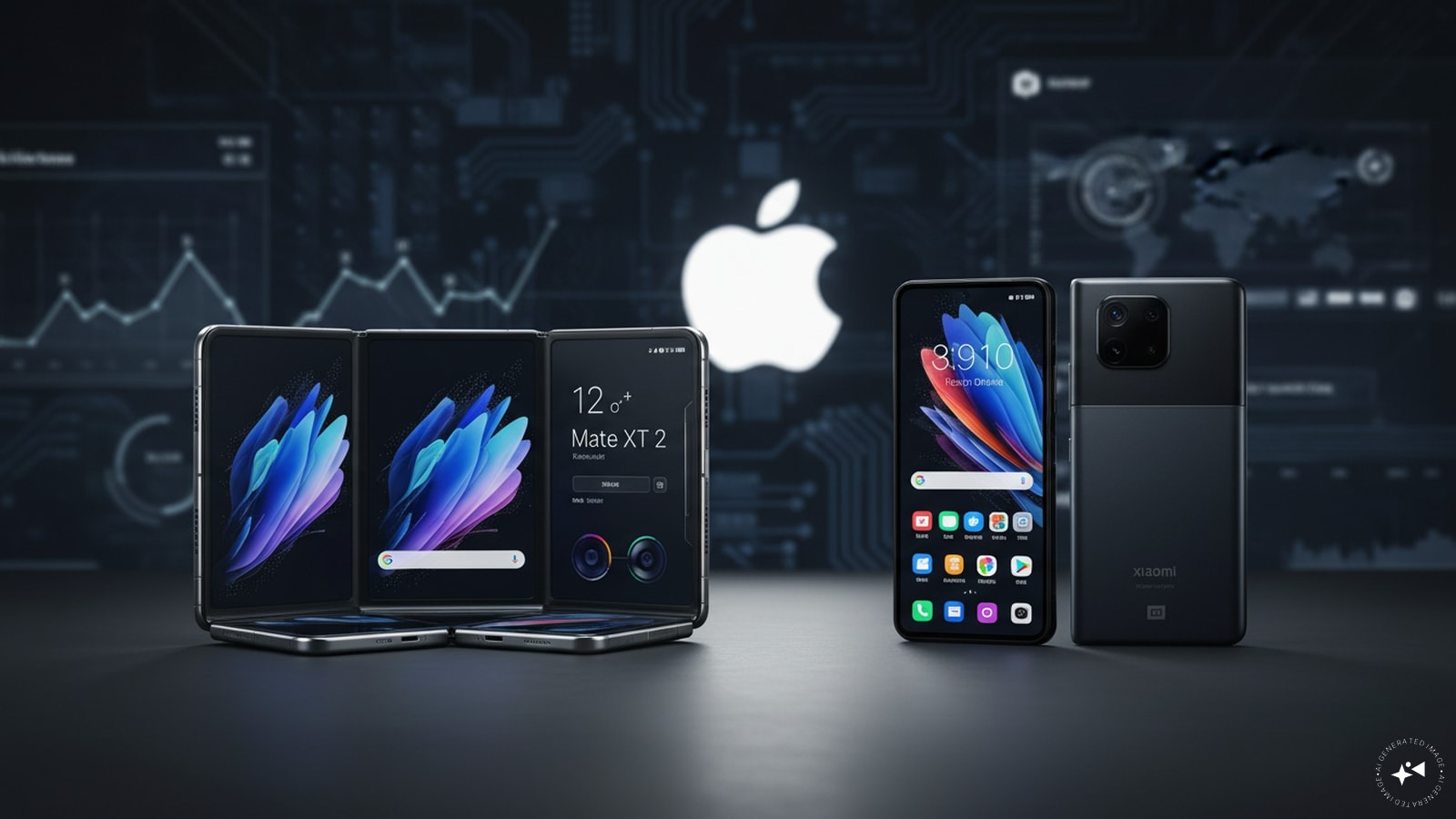
The air inside the Shenzhen engineering lab smelled of hot solder, ozone, and twenty-hour days. On a central workbench sat a stack of discarded titanium hinge prototypes, each one representing a failure to solve the holy grail of modern manufacturing: making a screen bend like paper without leaving a permanent scar down its spine.
Hours away, an executive in Cupertino stared at a calendar marked with a single, high-stakes deadline. Apple was late to the folding party, chronically, fashionably, and intentionally late. But lateness in technology is a weapon. It is the luxury of watching your rivals bleed on the cutting edge while you wait for the metallurgy to catch up to your ambition.
We have watched the smartphone become an unmoving slab of glass for over a decade. We swipe, we tap, we drop, we replace. The excitement drained out of the yearly keynotes somewhere around the introduction of the third camera lens. Phones stopped being magic and started being appliances, as mundane as a toaster or a microwave.
Then came the crease.
Huawei and Xiaomi did not just drop new folding hardware into the market; they threw down a gauntlet timed with surgical, psychological cruelty. Just days before Apple was scheduled to pull back the curtain on its long-rumored iPhone Fold, these Chinese manufacturing titans flooded the floor with their latest iterations. Thinner. Lighter. Armed with multi-axis hinges that made the screens look less like folded plastic and more like stretched liquid crystal.
Consider what happens in a living room in Chicago or Berlin when a consumer opens a pocket-sized device and watches it blossom into a tablet. It is a moment of genuine, childlike wonder that the industry hasn't felt since Steve Jobs pulled the original iPhone from his pocket in 2007. For years, Western tech commentators dismissed folding phones as fragile, expensive gimmicks for early adopters with too much disposable income. A solution looking for a problem.
That dismissal was arrogance disguised as analysis.
In Asian markets, the folding phone became a cultural status symbol and an ergonomic powerhouse. Multi-window multitasking on a screen the size of a paperback book changed how people commute, trade stocks, and consume media. Huawei and Xiaomi refined their hardware through rapid, punishing iteration cycles. While Western brands hesitated, Shenzhen engineered. They pushed past thermal limits, battery density hurdles, and mechanical wear-and-tear issues that would have made traditional QA teams throw their clipboards across the room.
And so, the stage was set for a collision of two entirely different philosophies of innovation.
On one side stands the aggressive velocity of Huawei and Xiaomi. They operate like modern naval fleets, turning on a dime, willing to release generational leaps year over year, accepting the friction of early fragmentation if it means owning the frontier. They iterate in public. They let the market test the edges.
On the other stands the fortress of Apple.
Apple does not care about being first. Apple cares about being right. To understand the tension of this moment, you have to look at the psychological weight of the iPhone brand. When Apple enters a category that others have pioneered, they do not just release a product; they legitimize it. For years, mainstream consumers looked at folding screens and thought, "Interesting, but I will wait until Apple does it."
That wait is almost over. But the delayed entry has created a bizarre, high-wire act. By letting Huawei and Xiaomi stake their claims first, Apple faces a brutal comparison. If the iPhone Fold launches with a visible crease, or a chunky hinge, or software that feels bolted onto a square display rather than native to it, the narrative flips instantly. The king is no longer leading; the king is catching up.
Imagine Elena, a freelance graphic designer living in London, sitting at a corner cafe with a current-generation Xiaomi foldable propped up on its hidden stand. She uses the outer screen to quickly reply to a Slack message, then snaps the chassis open with a satisfying, damped mechanical thud to sketch out a vector illustration on an 8-inch canvas. She is untethered from her laptop. She doesn't carry an iPad anymore. The device has absorbed three separate pieces of her daily carry into a single, pocketable footprint.
Elena does not care about corporate market share battles. She cares about whether her screen will delaminate after six months of being shoved into a coat pocket alongside house keys. She cares about whether the hinge mechanism collects grit from the bottom of her backpack.
This is where the cold statistics of supply chains meet the warm, messy reality of human use. The early iterations of folding devices suffered from high failure rates at the hinge point. Dust was the silent killer. A single grain of sand could turn a two-thousand-dollar marvel of engineering into an expensive paperweight.
The new wave of devices from Huawei and Xiaomi represent a massive leap in material science. Liquidmetal alloys, carbon-fiber backing plates, and droplet-style hinges that allow the display to curve into a loose internal pocket rather than folding tight like a taco have transformed durability. The failures of 2019 are the engineering baseline of 2026.
Yet, a shadow hangs over these engineering triumphs. Software ecosystem fragmentation remains an open wound. Android handles folding states well through system-level APIs, but developers still treat tablet and folding layouts as an afterthought. You can build the most breathtaking piece of titanium and glass the world has ever seen, but if an app stretches awkwardly across the canvas, the illusion breaks.
Apple knows this. Their entire moat is the pristine cohesion between silicon, metal, and code. When they step into the arena with their folding device, the software transition will likely be smooth, calculated, and heavily restrictive. They will dictate how apps scale, how the aspect ratios shift, and how the crease—if they can truly banish it—is managed by software lighting tricks and custom display coatings.
We are witnessing the end of the candy-bar phone era. It is happening slowly, then all at once, punctuated by aggressive launch events in Beijing and quiet, white-room reveals in California.
The battle lines are drawn not by specifications sheets alone, but by a cultural war over what a computer should feel like in our hands. Do we want the blistering speed of constant hardware evolution, or do we wait for the polished, inevitable consensus of a Cupertino design table?
The hinges are clicking shut across the globe. The screens are turning on. The rest of the decade will be written in glass that bends.