Smoke tastes like copper and wet ash when you breathe it for six hours straight.
I have stood on a red-dirt airstrip in Sumatra with gritty teeth and stinging eyes while the midday sun turned into a bruised orange coin behind a wall of peat smoke. You cannot see the horizon. You cannot always see where the tree line ends and the haze begins. Every breath feels like a dare, and the air itself seems heavy, thick with carbon and heat rising off smoldering ground that burns weeks—sometimes months—after the initial flame passes.
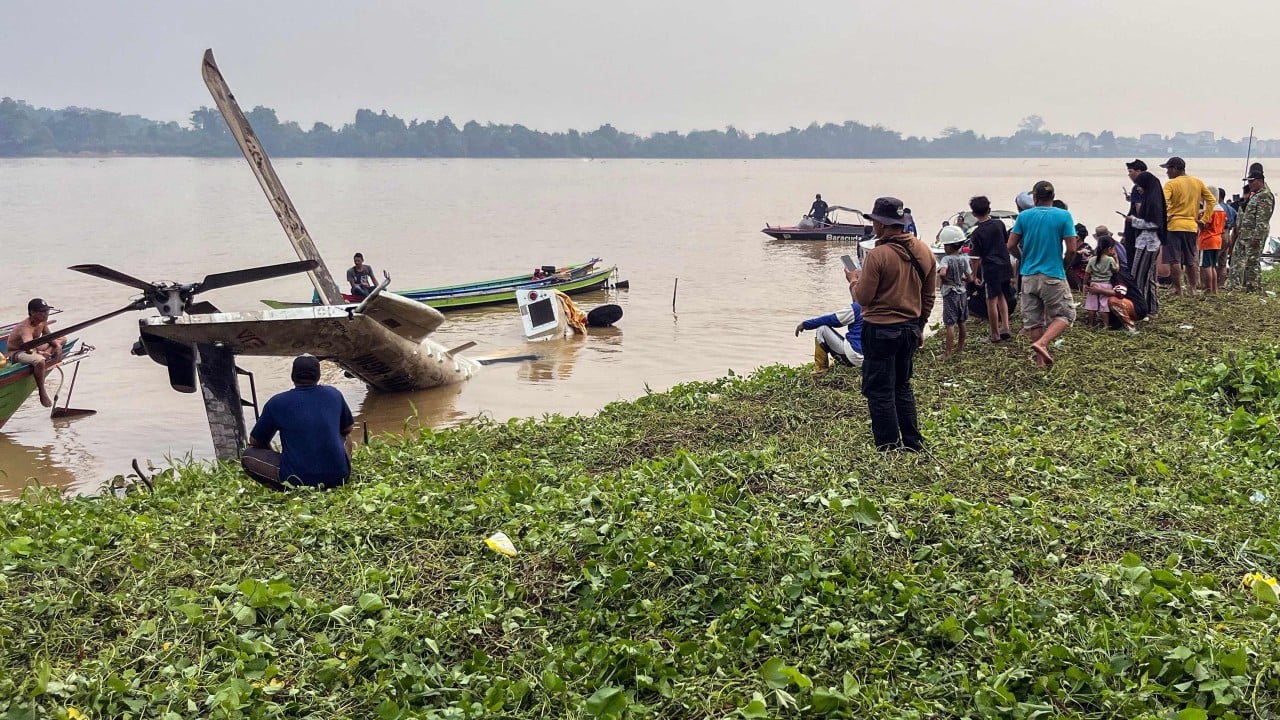
When people read about twin helicopter crashes during Indonesian fire responses, they often scan the headline, count the rotors, and move on to the next alert. Yet those crashes are rarely freak bolts out of a clear sky. They sit at the intersection of brutal flying conditions, stretched supply chains, aging or heavily worked airframes, and human beings asked to perform precision work in an environment that punishes even a millimeter of error.
Even without pulling a specific crash report off a desk, the pattern in aerial firefighting across smoke-choked tropical regions is grimly familiar. Two helicopters go down in a fire campaign. Suddenly, the conversation shifts from acreage burned to safety margins.
What is a safety margin, really?
Think of it like walking across a narrow plank stretched over a canyon while someone holds a flashlight with a dying battery. If the plank is wide and the wind is calm, a wobble doesn't matter. If the plank narrows, the wind picks up, and the light flickers, a wobble becomes a fall. Aviation safety works the same way—except there is no canyon floor to catch you, only canopy, swamp, or scorched earth.
The Invisible Weight Above the Canopy
Heat.
It sounds simple enough until you try to lift water or cargo in it. Warm air is less dense than cool air. Less dense air means rotor blades have fewer air molecules to bite into for the same pitch angle. A helicopter that feels lively and responsive at dawn can feel sluggish, heavy, and stubborn by early afternoon when ground heat radiates upward and mixes with thick smoke plumes.
Consider a hypothetical pilot—let's call him Hendra—flying a water-bombing or logistics sortie over a burning concession in Kalimantan or Sumatra. This character is a composite sketch built from real operational pressures rather than a single documented individual. Hendra has logged thousands of hours. He knows how to read wind shear off a ridge, how to judge the drop point through drifting gray curtains, and how to listen to the subtle change in turbine pitch when the machine is working right near its performance ceiling.
Still, skill is not magic. Physics collects its debt every single time.
If you load a bucket or belly tank to the top limit in hot, smoky air, you eat into your power reserve. Power reserve is your cushion—the extra thrust you keep in your pocket when a sudden downdraft hits over a thermal column, or when visibility drops so fast that a turn you planned as gentle has to become tight and steep.
When you fly into smoke, you also lose something humans take for granted: a reliable visual horizon. Smoke scatters light. Contrast flattens. Trees, hills, towers, and rising columns of soot blend into a uniform, choking gray-brown soup. Pilots call the danger of losing visual reference while believing you still have it spatial disorientation. Your inner ear can lie to you in a turn when your eyes have no fixed landmark to anchor the truth.
Smoke doesn't just blind the eyes. It clogs machines, too. Fine soot and ash can coat sensors, strain filters, and wear components faster than clean-air operations ever anticipate. Maintenance crews working in remote staging areas—often out of temporary bases with limited spare parts and long transport lines—face a grueling grind. Turning a helicopter around quickly during peak fire season is noble work. Rushing a turnaround when parts are scarce or fatigue is creeping in is where thin margins turn razor-thin.
When Two Losses Shatter the Illusion of Routine
Why do twin crashes hit harder than a single accident?
Because one crash can be dismissed by the comfortable mind as bad luck. Two crashes in the same fire context look like a system straining at its seams.
In high-tempo disaster response, pressure arrives from every direction at once. Local communities are choking on haze. Schools close. Hospitals fill with respiratory cases. Officials face intense public anger over fires that seem to return every dry season. Into that cauldron steps the aerial fleet—symbols of rapid action, visible proof that authorities are fighting back from above.
That visibility creates a subtle trap.
When helicopters are thundering overhead, it feels like progress is being made. People look up, hear the thump of main rotors, and feel a surge of hope. I have felt that surge myself on smoky afternoons when the air felt unlivable; the sound of an aircraft meant help had arrived.
Yet aerial drops alone rarely put out deep peat fires. Peat is ancient, dense organic matter—sometimes meters thick—that smolders underground like a giant, slow-burning briquette. Water dropped from above cools the surface and knocks back open flames, which matters for protecting settlements and infrastructure, but the subterranean heat can linger and reignite once the moisture evaporates.
So crews fly again. And again. And again.
Each sortie adds hours to airframes and strain to bodies. Fatigue is quiet. It doesn't announce itself with a siren on the instrument panel. It shows up as slightly slower reaction times, a missed nuance in a radio call, a decision to push five minutes further into marginal visibility because the team wants "just one more run" before dusk.
To be completely honest, this is the part of aviation and disaster work that scares me most—and makes me hesitate to judge anyone from an armchair. Sitting in a quiet room with a cup of coffee, it is easy to say, "They should have turned back." Out there, with smoke burning your throat, visibility deteriorating by the minute, and people on the ground counting on relief, every judgment call carries weight. Uncertainty isn't a neat textbook problem in those moments. It is visceral.
The Economics Behind Every Rotor Turn
You cannot talk honestly about safety margins without talking about money, contracts, and timing.
Fire seasons in Indonesia are tightly linked to dry spells and El Niño climate cycles, when prolonged droughts turn drained peatlands and cleared land into tinder. When fires flare up, emergency responses ramp up fast. Aircraft are chartered, leased, or deployed across vast distances.
Whenever emergency operations surge, questions naturally arise about contract structures, maintenance standards, crew rest rules, and whether every operator has the same depth of support. Not every fleet operates under identical conditions, and not every remote strip has the same safety net. A single missed link in a supply chain—a delayed part, an overworked technician, an ambiguous weather minimum—can narrow the margin before the blades even start turning.
Look at how easily corners get pressed when urgency is high:
- Schedule pressure: Fires don't wait for ideal weather or convenient maintenance windows.
- Environmental extremes: High temperatures, low visibility, turbulence, and abrasive ash test both metal and muscle.
- Logistical friction: Remote bases mean longer lead times for specialized parts, fuel logistics, and medical or recovery support.
- Human endurance: Long days in heat and smoke sap concentration even among seasoned professionals.
None of these factors alone guarantees a tragedy. Together, they stack odds that were already tilted.
What People Actually Ask After Twin Crashes
When twin helicopter crashes make headlines during a fire crisis, people usually ask the same core questions, even if they phrase them differently.
Were the crashes caused by the fires themselves?
Directly or indirectly, fires create the exact conditions that make low-level flight treacherous: dense smoke, severe visibility loss, erratic heat updrafts and downdrafts, and intense operational tempo. Even when a mechanical issue or a navigation error is cited in an investigation, the fire environment is rarely innocent background scenery.
Why keep flying helicopters in such hazardous smoke?
Because ground access in peat swamps and dense terrain can be slow, treacherous, or blocked, and helicopters can reach hotspots quickly to protect villages, critical sites, and containment lines—or move personnel and supplies where roads don't exist. The catch is that life-saving utility does not cancel aerodynamic limits.
What does "fragile safety margins" actually mean in practice?
It means there isn't much room left when something unexpected happens. In a healthy operation with wide margins, a sudden wind gust, a minor technical hiccup, or a patch of bad visibility is absorbed smoothly. When margins are fragile, two small problems arriving at the same time can overwhelm the crew or the aircraft.
How do you fix something like this without grounding help completely?
You don't fix it with slogans after a tragedy. You fix it with strict go/no-go authority free from political or operational intimidation, honest weather and smoke minimums, rigorous maintenance oversight, sensible crew rotation, and long-term fire prevention on the ground so the sky isn't treated as a substitute for land management.
Ground Truth vs. Sky Heroics
There is a temptation in dramatic news coverage to frame pilots and crews purely as tragic heroes—and they often are brave, skilled people doing hard work. Yet pure hero worship can blind us to systemic flaws. If we call every crash "heroic sacrifice," we stop asking whether a crew was put in an avoidable bind.
True respect for people working in hazardous conditions means giving them systems that protect them when conditions turn ugly. It means backing a pilot who says, "Visibility is below limits; we're holding." It means making sure maintenance isn't treated as an obstacle to flight hours. It means recognizing that an aircraft has hard physical boundaries that no amount of grit can negotiate away.
Think about the people on the ground, too. Villagers watching smoke drift across rice paddies or rubber trees aren't debating rotor aerodynamics. They are worried about coughing children, ruined harvests, and whether fire will reach their homes. When helicopters crash during a response to their crisis, grief compounds fear. A mission meant to bring relief becomes another wound.
Beyond the Smoke Curtain
Real change happens long before the first plume rises over dry peat.
Preventing catastrophic fire seasons—through better peatland rewetting, enforcement, community support, and early detection—reduces the desperate scramble in the sky. When fires are caught early and kept smaller, fewer aircraft have to fly day after day in apocalyptic haze.
And when aircraft must fly, discipline has to outrank urgency. A delayed drop is annoying. A crash is forever.
The next time smoke settles over a tropical valley and rotors thud in the distance, listen closely to what that sound really represents. It isn't just power and speed cutting through gray air. It is a balance—delicate, expensive, and human—between what a machine can do, what a person can endure, and how much margin we leave before the air turns unforgiving.
Ash still drifts down onto the red dirt long after the engines go quiet.