Every time a major software update bricks millions of Windows machines or a cloud provider drops off the internet, Washington reaches for the exact same security theater. Someone gets fired. A press release goes out. Politicians claim accountability has been restored.
The mainstream press eats it up. Their lazy consensus frames the replacement of a National Cyber Director amid widespread tech outages as a decisive leadership correction—a necessary shakeup to fix a broken digital infrastructure.
That narrative is dangerously naive. Swapping out the occupant of the Office of the National Cyber Director (ONCD) during a systemic outage crisis is like firing the meteorologist because a hurricane flattened the coast. You have not changed the weather, you have not reinforced the seawall, and you have actively distracted the public from the structural rot causing the storms in the first place.
The Structural Illusion of the Cyber Czar
To understand why replacing the National Cyber Director solves nothing during a widespread outage, look at the actual statutory authority of the role. Created under the National Defense Authorization Act for Fiscal Year 2021, the ONCD was designed to advise the President and coordinate cybersecurity policy across federal agencies.
Read that again. Advise and coordinate.
The National Cyber Director does not control the procurement budgets of the Department of Defense. The office cannot unilaterally force private software vendors to rewrite legacy C++ codebases in memory-safe languages. It does not hold regulatory enforcement power over the private-sector monopolies that run the world's cloud compute, content delivery networks, and endpoint security agents.
I have sat in enough enterprise incident response war rooms and federal advisory briefings to watch how this plays out in real time. When a Tier-1 infrastructure provider pushes an unvalidated configuration file into production and takes down airlines, hospitals, and banks simultaneously, the ONCD has zero levers to pull to restore service. They are relegated to hosting interagency coordination calls while private-sector engineers scramble to roll back broken code.
When the White House replaces this official in the middle of an outage cycle, they are treating a deep architectural flaw in modern computing as a personnel management problem. Worse, they are resetting institutional momentum at the exact moment continuity matters most. Every leadership transition burns six to nine months of political capital just to re-establish interagency trust and security clearances.
Outages Are Not Cyberattacks
The coverage surrounding these shakeups routinely conflates two entirely different failure modes: malicious cyberattacks and catastrophic engineering failures.
When a nation-state adversary breaches a federal network, that is an intelligence and defense failure. When a routine software update, a Border Gateway Protocol (BGP) misconfiguration, or a flawed certificate rotation takes down global commerce, that is a systems reliability failure.
Conflating the two leads to disastrous policy prescriptions. Cyber defense focuses on keeping bad actors out—building higher walls, encrypting data at rest, and monitoring for anomalous network traffic. Resilience engineering assumes things will break and focuses on containment, graceful degradation, and rapid recovery.
Consider the mechanics of modern enterprise software. Today, the average Fortune 500 company runs dozens of privileged kernel-level agents on every endpoint—antivirus, endpoint detection and response (EDR), data loss prevention, and network telemetry tools. These agents operate at Ring 0, the deepest, most privileged layer of the operating system kernel. If an adversary compromises Ring 0, they own the machine. If a trusted vendor pushes a buggy update to Ring 0, they crash the machine instantly across every timezone simultaneously.
No National Cyber Director, regardless of pedigree, can repeal the laws of software engineering. You cannot regulate away a null pointer dereference with an executive order.
The Monoculture Trap Nobody Wants to Dismantle
If Washington actually wanted to stop widespread tech outages, they would confront the real culprit: the extreme concentration of critical infrastructure in a handful of monocultures.
Twenty years ago, enterprise IT was messy, fragmented, and inefficient. Companies ran on-premise servers, diverse operating systems, and localized software deployments. If one vendor shipped a fatal bug, it ruined a single company's Tuesday. It did not ground commercial aviation across three continents.
Today, we have traded resilience for operational efficiency. Look at the stack powering modern digital society:
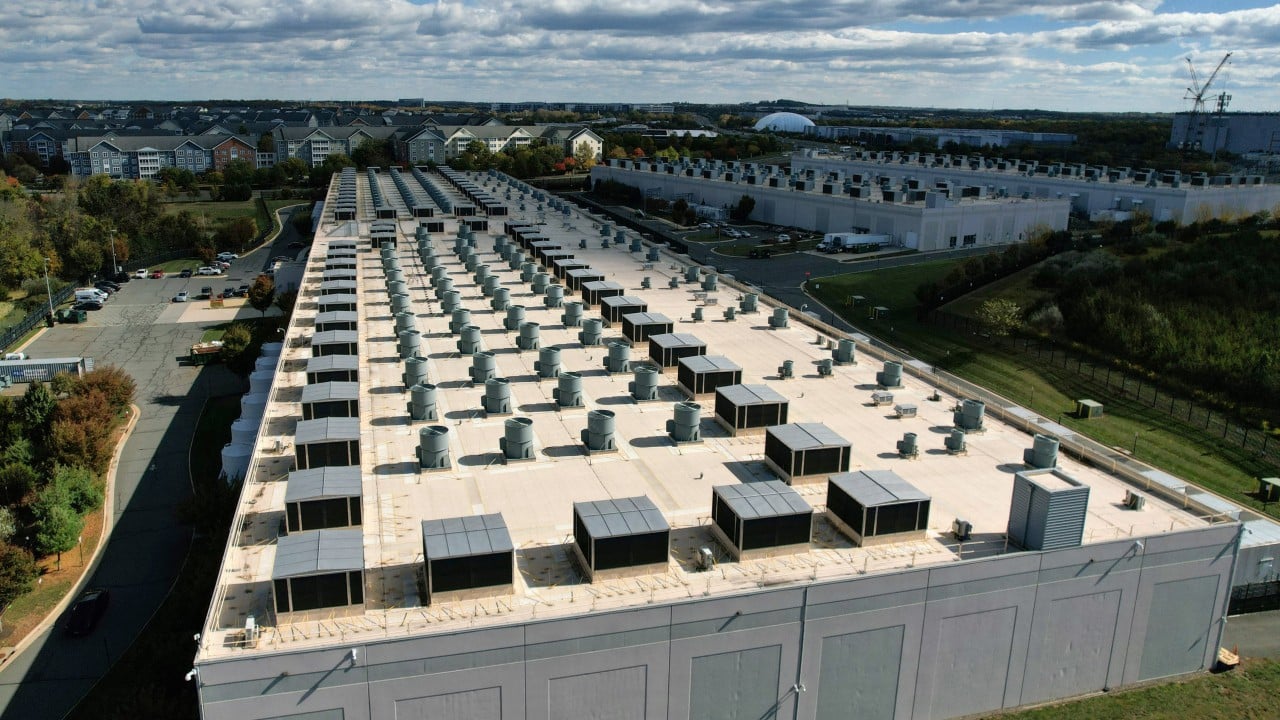
- Hyperscale Cloud Providers: Three companies control the vast majority of global cloud infrastructure. An availability zone failure or an identity-and-access-management (IAM) outage in Northern Virginia cascades across thousands of downstream applications within milliseconds.
- Identity Providers: Single sign-on (SSO) platforms have become single points of failure. When the authentication layer goes dark, employees cannot even log into the internal communication tools needed to coordinate a fix.
- Kernel-Level Security Monopolies: A tiny fraction of vendors dominate endpoint protection. Their continuous, automated update pipelines act as a global synchronization mechanism for failure.
Imagine a scenario where three major shipping ports rely on the exact same automated crane control software, updated simultaneously from a single cloud repository without staged rollouts. When that repository pushes a corrupted binary, every port locks up at the exact same second. Firing the port authority commissioner does not diversify the crane software.
Yet Washington refuses to break up or regulate these monocultures because the federal government itself is completely addicted to them. Federal agencies spent the last decade consolidating their fragmented networks onto these exact same hyperscale clouds and enterprise security suites under "cloud-first" mandates. Attacking the monoculture means admitting the government's own modernization strategy created a systemic fragility crisis.
Dismantling the Common Questions
When widespread outages hit and leadership heads roll, the public naturally asks a predictable set of questions. Almost all of them are built on flawed premises.
Does a new National Cyber Director improve response times during a tech outage?
No. In fact, it usually slows them down. During an active crisis, private-sector Chief Information Security Officers (CISOs) and infrastructure operators rely on backchannel relationships with government counterparts to share sensitive telemetry without fear of immediate regulatory blowback. When a director is ousted, those informal trust networks evaporate overnight. Private companies clam up, legal teams take over communications, and federal visibility into the root cause goes blind.
Why does the White House hold the Cyber Director responsible for private-sector failures?
Political survival. The public does not understand the nuances of BGP routing tables, staged canary deployments, or kernel-mode drivers. They understand accountability in human terms: something broke, someone in charge must pay. Removing a high-profile official provides an immediate, easily digestible headline that signals action, sparing politicians from having to explain why they have failed to pass meaningful software liability laws or enforce strict operational resilience standards on tech giants.
Would giving the National Cyber Director more regulatory power fix the problem?
Only if you want to create a bureaucratic bottleneck that still fails to catch bugs. Centralizing technical oversight inside a single federal office assumes government regulators can audit complex, rapidly evolving codebases faster and better than the companies writing them. They cannot. History proves that rigid compliance checklists simply force companies to spend millions on paperwork theater while leaving underlying architectural fragility untouched.
What Actually Prevents Systemic Outages
If replacing political appointees is a waste of time, what actually works? Industry leaders and policymakers need to abandon cyber-utopianism and enforce brutal, unglamorous engineering discipline.
1. Enforce Mandatory Staged Rollouts for Critical Infrastructure
The single most effective defense against widespread software outages is eliminating simultaneous global updates. Critical infrastructure operators and their tier-one software vendors must be legally required to use ring-based deployment architectures.
An update should hit an internal test ring first, followed by a 1% canary ring of non-critical systems, waiting 24 to 48 hours to observe telemetry before expanding to 5%, 25%, and finally 100%. Any vendor pushing an unvalidated configuration file or binary directly to 100% of its global fleet simultaneously is committing engineering malpractice.
2. Establish True Software Liability
For decades, software vendors have hidden behind End User License Agreements (EULAs) that disclaim all responsibility for damages caused by defective code. Imagine if an automotive manufacturer sold cars with faulty brakes and told victims to read the terms of service.
Until software makers face real financial liability for catastrophic negligence—such as bypassing basic quality assurance testing on privileged code—they will continue to prioritize shipping new features over engineering stability. Liability forces boards of directors to fund rigorous testing pipelines because the cost of failure finally outweighs the cost of caution.
3. Mandate Architectural Diversity and Graceful Degradation
Organizations must stop designing systems that assume the cloud and identity providers are immortal. True resilience requires engineering for graceful degradation—the ability of a system to maintain core functions even when major components fail.
If an airline's cloud-based crew scheduling system goes offline, they should have localized, offline-capable fallback protocols to keep planes moving safely. If an automated security agent crashes, the operating system must be engineered to isolate the fault in user space rather than triggering a catastrophic kernel panic that locks the entire machine into a boot loop.
4. Decouple Security Agents from the Kernel
Operating system vendors must restrict third-party access to the deepest layers of the kernel. Modern operating systems already provide secure, high-performance APIs in user space that allow security tools to monitor system behavior without risking total system instability. Moving security tooling out of Ring 0 ensures that when a security vendor inevitably ships a bad update, the application crashes—not the entire global economy.
The Uncomfortable Trade-Off
There is a massive downside to this approach that nobody in Washington or Silicon Valley wants to admit: resilience is expensive, slow, and inconvenient.
Enforcing staged rollouts means security patches for zero-day vulnerabilities take days or weeks to reach every machine instead of minutes. Forcing software liability drives up enterprise licensing costs and slows down product innovation as legal and QA teams scrutinize every release. Maintaining offline fallback systems requires paying for redundant infrastructure that sits idle 99.9% of the time.
We built our modern digital world on the seductive lie that we could have infinite speed, hyper-consolidated efficiency, and absolute reliability all at the same time. Every widespread outage exposes that lie for what it is.
Stop cheering when Washington throws another National Cyber Director under the bus to appease the news cycle. You cannot fire your way out of bad architecture. Until we dismantle our software monocultures and force tech giants to pay for the fragility they build, the next catastrophic outage is already sitting in a deployment queue, waiting for someone to hit enter.