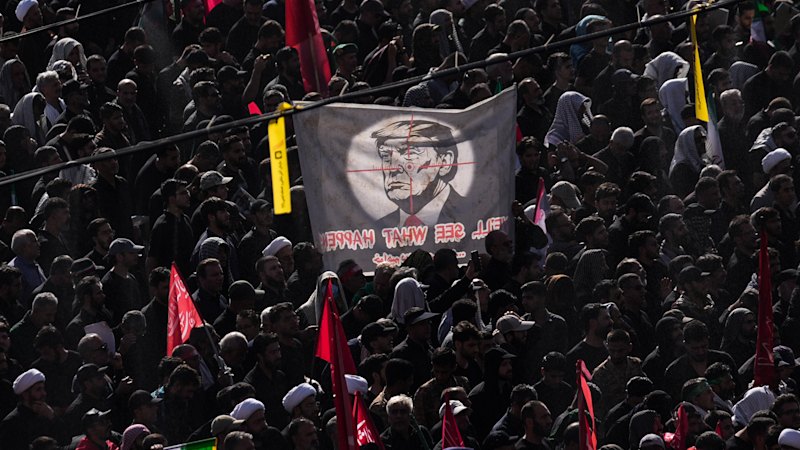
The targeted killing of Major General Qasem Soleimani outside Baghdad International Airport was executed with clinical precision, yet it remains one of the most glaring strategic misfires in modern geopolitical history. Ordered by Donald Trump with quiet institutional backing from Benjamin Netanyahu, the January 2020 Hellfire missile strike was intended to decapitate Iran's regional influence and shatter its network of proxy militias. Instead, the assassination achieved the exact opposite. It removed a bureaucratic bottleneck, turned an operational commander into an unassailable political symbol, accelerated the integration of irregular forces across the region, and eroded the diplomatic leverage Western powers spent decades trying to build.
Washington and Jerusalem mistook tactical capability for strategic wisdom. They assumed that eliminating the architect of the Quds Force would cause the underlying architecture to collapse. This fundamental misunderstanding of decentralized warfare transformed an act of aggressive deterrence into a long-term windfall for the Islamic Republic of Iran.
The Myth of the Indispensable Man
Decapitation strategies operate on the assumption that certain leaders are completely irreplaceable. When dealing with highly institutionalized revolutionary movements, this logic routinely fails. Soleimani was undoubtedly charismatic, a master of personal diplomacy who traversed the battlefields of Syria, Iraq, and Lebanon to stitch together disparate militant factions. But he was also a bureaucrat working within a highly structured military apparatus designed to survive succession crises.
By transforming Soleimani into a martyr, the strike solved a compounding domestic problem for the Iranian state. In late 2019, Iran was convulsed by widespread internal protests driven by economic mismanagement and systemic corruption. The regime was fracturing under the weight of maximum pressure sanctions. The American missile changed the domestic narrative overnight. Millions of Iranians poured into the streets for Soleimani’s funeral, engineering a massive surge of nationalist solidarity that the government used to suppress dissent and legitimize its hardline security policies.
The state transformed his memory into an unassailable civic religion. His successor, Esmail Qaani, lacked Soleimani’s flamboyant public profile, but charisma was no longer required. Soleimani had already built the infrastructure. Qaani inherited a standardized bureaucratized system that did not need a visionary to run it day by day; it needed a manager to sign the checks and maintain the logistics corridors.
The Shattered Buffer in Baghdad
The most immediate and damaging blow fell upon the fragile political equilibrium of Iraq. For years, Baghdad had attempted a delicate balancing act, serving as a rare space where both Washington and Tehran maintained a diplomatic and military presence. The unilateral strike on Iraqi soil, which also killed Abu Mahdi al-Muhandis, the deputy head of Iraq's Popular Mobilization Forces, shattered that equilibrium completely.
Iraq's state apparatus viewed the operation as a flagrant violation of national sovereignty. The political backlash was swift. The Iraqi parliament convened a special session and voted overwhelmingly to expel foreign troops from the country. While the total expulsion did not materialize immediately, the political environment became toxic for Western diplomats and military advisors.
The strike erased the political cover that moderate Iraqi politicians used to push back against Iranian encroachment. Leaders who argued for maintaining strong ties with the West were branded as complicit in an assassination that occurred on their own state territory. The state-sanctioned Popular Mobilization Forces used the outrage to deeply entrench themselves into the Iraqi state budget, securing permanent funding, official military status, and vast economic portfolios. The very militias the United States sought to weaken became an official, legally protected arm of the Iraqi state, funded by Iraqi oil revenue while remaining ideologically aligned with Tehran.
Operational Decentralization and the Rise of Autonomous Proxies
Before his death, Soleimani operated as a micromanager. He frequently intervened in the tactical decisions of local commanders in Damascus, Beirut, and Sanaa. This centralized control created an operational vulnerability. Militias often waited for his personal approval before executing major shifts in strategy.
When the strike forced the Quds Force to adapt, operations became decentralized. Rather than weakening the network, this shift made it far more resilient. Local commanders across the Axis of Resistance assumed greater autonomy. Lebanese Hezbollah took on a much larger role in training and coordinating Iraqi militias and Yemen's Houthi rebels, effectively acting as a regional deputy for the Quds Force.
This evolution shifted the burden of proof away from Tehran. When autonomous actors operate under a shared ideological banner but manage their own tactical deployment, holding the central state accountable becomes a diplomatic nightmare. The network transformed from a wheel with a central hub into a distributed web. If you cut one strand, the rest of the structure redistributes the tension. The drone strike did not sever the lines of communication; it forced the system to automate them.
The Nuclear Guardrails Dissolve
The geopolitical fallout extended far beyond the battlefields of the Levant. Within days of the assassination, Iran announced it would no longer abide by any of the remaining operational limits of the 2015 nuclear agreement. The Joint Comprehensive Plan of Action was already on life support following the American withdrawal in 2018, but the targeted killing of a top military official removed the last incentives for Iranian compliance.
Tehran accelerated its uranium enrichment activities, pushing past civilian purity levels and amassing significant stockpiles of highly enriched material. The diplomatic leverage required to negotiate a follow-on agreement evaporated. Western negotiators could no longer offer sanctions relief with any degree of credibility, as the Iranian leadership concluded that the United States would use violence regardless of diplomatic treaties.
The strike altered Iran's defensive calculus. The regime concluded that conventional deterrence had failed, and the only way to prevent future high-level assassinations was to rapidly advance toward the nuclear threshold. The geopolitical buffer zone disappeared, leaving both sides closer to a direct, catastrophic confrontation that neither state could easily contain.
The Reality of Kinetic Deterrence
Kinetic actions offer the illusion of progress because they produce dramatic footage and immediate headlines. They satisfy the political need to project strength. But in the theater of irregular warfare, the long-term structural consequences matter far more than temporary operational disruptions.
The strike failed because it targeted an individual rather than the geopolitical conditions that created him. Iran’s influence across the region is not driven by the personal brilliance of a single commander. It is driven by state weakness, sectarian divisions, and the vacuum left behind by decades of foreign interventions. By removing Soleimani, the United States and its partners did not dismantle the system. They simply cleared the way for a more decentralized, legally entrenched, and nuclear-capable adversary.