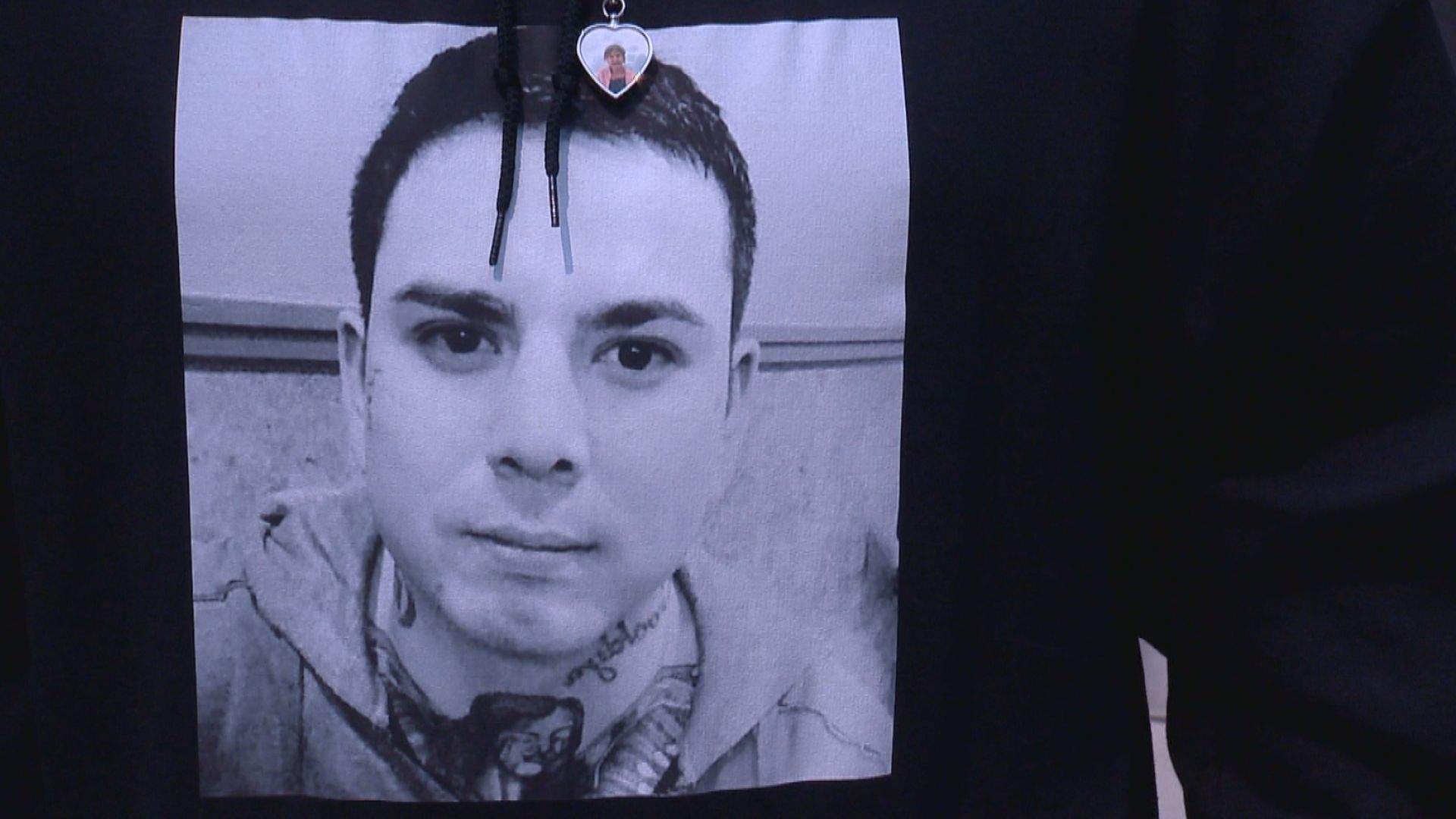
The coroner's inquest in Prince Albert into the death of 40-year-old Boden Umpherville has laid bare the lethal cascade of events that occurred during an April 2023 traffic stop. Nine police officers converged on a stopped vehicle, deploying Tasers 15 times, releasing pepper spray, and striking Umpherville with batons before pulling him to the pavement face-down. Medical experts testified that a combination of positional asphyxiation and cocaine intoxication triggered a 25-minute cardiac arrest, starving his brain of oxygen and causing irreversible trauma. He died weeks later after being removed from life support.
What unfolded in court went beyond the tragic fate of one Indigenous man from Ahtahkakoop First Nation. It exposed a systemic breakdown where standard escalation protocols and medical emergency recognition disintegrated under pressure.
Escalation in the Dark
The initial confrontation began around 2:30 a.m. when Prince Albert police officers pulled over a vehicle linked to a stolen car report. Umpherville was a passenger. When officers discovered outstanding warrants for his arrest, the situation turned tense. He refused to step out of the car.
What followed was a rapid escalation.
Five officers simultaneously attempted to extract Umpherville from the narrow confines of the vehicle. Weapons experts testified that Tasers were repeatedly deployed while Umpherville remained seated inside. Saskatoon Police Service Constable Michael Kot told the inquest that officers pulled Taser triggers 11 times alongside four warning arcs. One probe lodged directly into the magazine well of a 9mm semi-automatic handgun found in a shoulder holster under Umpherville's clothes—a rare detail highlighted by firearms examiners.
While police testified that they feared for their safety after discovering the weapon and a knife, the barrage of electrical shocks, chemical agents, and physical strikes created chaos. Family members and legal counsel argued that the sheer volume of force left little space for verbal communication or compliance.
The Mechanics of Positional Asphyxiation
The medical testimony delivered by Saskatchewan Chief Forensic Pathologist Dr. Shaun Ladham and critical care specialist Dr. Bruce Cload pinpointed the exact moment the arrest turned fatal.
When officers pulled Umpherville from the vehicle, they placed him face-down on the pavement to apply handcuffs. Weight was applied to his body while five officers worked to restrain his limbs.
Positional asphyxiation occurs when a person’s body position interferes with their breathing, often while prone and restrained under pressure. Combined with heavy physical exertion, stimulant use, and intense stress, the body's oxygen demand spikes precisely as its capacity to intake air is restricted.
At least one officer testified to hearing Umpherville state he could not breathe while pinned down. Yet, officers on scene failed to evaluate his vitals or change his position prior to handing him over to paramedics. Former Prince Albert police officer Kelsey Bighetty testified he did not recall hearing those pleas, remembering only general commotion.
By the time Parkland Ambulance Advanced Care Paramedic Chris Pacey arrived at 2:37 a.m., Umpherville was motionless on his stomach with his hands cuffed behind his back. EMS personnel were initially kept at a distance because officers reported the suspect was still aggressive. Minutes later, after loading him onto a stretcher, paramedics discovered he had no pulse and had stopped breathing.
Dr. Cload testified that Umpherville endured an estimated 25 minutes of cardiac arrest without adequate oxygen or blood flow to the brain. By the time he was transferred to Royal University Hospital in Saskatoon, tests confirmed the higher functions of his brain were destroyed.
Accountability Gaps and Institutional Clearance
In 2025, Saskatchewan's Serious Incident Response Team (SIRT) issued a report clearing the involved officers of criminal wrongdoing, citing the presence of weapons and active resistance as justification for the force used.
However, the coroner's inquest operates under a different mandate. It does not assign legal guilt, but it probes the underlying causes of death to issue preventative recommendations.
The evidence presented throughout the five-day proceeding highlighted several critical vulnerabilities in current law enforcement operations:
- Taser Saturation: Firing Tasers 15 times in rapid succession can trigger involuntary muscular rigidity rather than compliance, creating a cycle where an individual appears to be resisting simply because their muscles are contracting uncontrollably.
- Delayed Vital Assessments: Officers focused entirely on physical restraint and failed to recognize the immediate signs of respiratory distress, treating verbal cries for air as tactical evasion rather than a medical emergency.
- Communication Gaps with EMS: Paramedics testified they were not informed that Umpherville had stated he could not breathe, preventing immediate intervention prior to transport.
Friends and representatives of the Umpherville family expressed frustration with the proceedings, arguing that the inquest structure heavily favored police testimony and failed to address deeper systemic biases within local law enforcement.
Rebuilding Protocols Beyond Inquest Findings
Preventing similar fatalities requires structural shifts in how law enforcement agencies manage high-risk, violent arrests involving suspected substance use.
First, tactical training must mandate immediate positional change the moment a suspect is handcuffed. Keeping a prone, restrained individual face-down on the ground—especially after prolonged physical exertion or Taser exposure—remains one of the highest risk factors for cardiac arrest.
Second, police services must establish clear thresholds for Taser deployment. Utilizing energy weapons multiple times on a subject trapped inside a vehicle creates panic and physical distress without providing a realistic path for peaceful compliance.
Finally, medical triage protocols during arrests must be re-engineered. When an arrest involves multiple shock cycles, chemical sprays, and physical restraint, officers must immediately treat the suspect as a medical patient once the physical threat is neutralized, checking airway, breathing, and circulation without delay.
The jury's upcoming recommendations in Prince Albert will offer a roadmap, but true reform relies on whether police services choose to adopt these lessons or allow them to sit on court shelves while the next routine traffic stop turns into a fatal emergency.