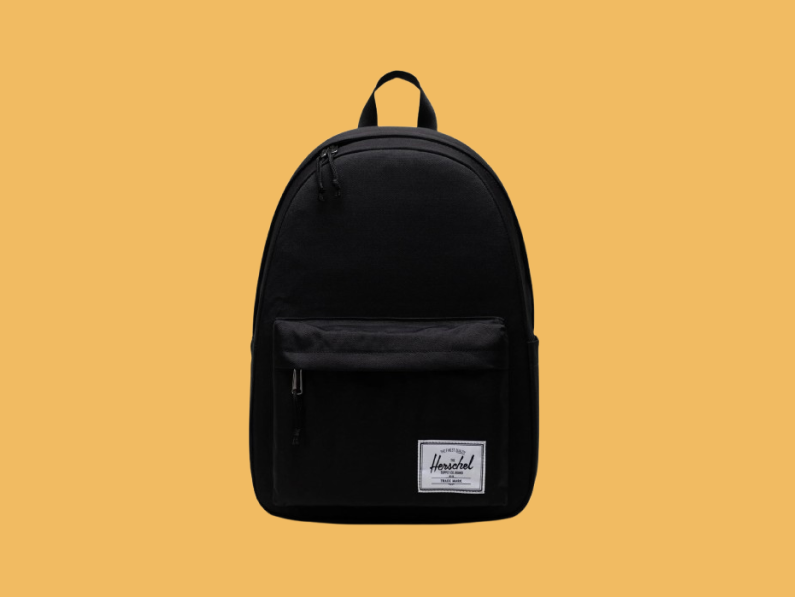
The entire luggage industry wants you to believe you need a mobile apartment strapped to your spine. Scroll through any gear roundup this year and you will find the same lazy consensus: buy a thirty-liter vault loaded with twenty specialized compartments, dual water bottle sleeves, a TSA-friendly laptop flat-lay zipper, and enough nylon padding to survive a mortar strike.
It is a racket.
Manufacturers discovered years ago that consumers conflate weight with quality and complexity with utility. They hand you a two-pound sack before you even pack a single sock, then congratulate you on buying something "durable." You end up carrying three pounds of empty architecture everywhere you go, stuffing little-used cords into mesh pockets you forgot existed, and wondering why your lower back aches after a simple Tuesday commute.
Let us dismantle the mythology of the modern daily carry.
The Compartment Trap
Look inside your current bag. How many pockets do you actively use on a regular Tuesday? Two? Maybe three? The main cavity, the laptop sleeve, and the front quick-grab slot for keys.
The other fifteen pockets are architectural ghosts. They add fabric layers, heavy gauge zippers, structural stiffeners, and dead weight. Every time a designer adds an organization panel, they add three ounces of dead load. Multiply that across ten unnecessary sub-dividers, and your daily pack carries two extra pounds of empty canvas and plastic hardware.
Minimalism in carry is not an aesthetic choice; it is a structural necessity. When you restrict storage volume, you force behavioral discipline. A bag with twenty pockets invites hoarding. You carry dongles you haven’t touched since 2024, three backup pens, a moleskine you never write in, and a multi-tool meant for an Appalachian trail expedition rather than a trip to the local coffee shop.
A proper daily carry should enforce ruthless editing. If a piece of gear does not earn its footprint every single week, it gets cut.
The Ergonomic Lie of Thick Foam
Walk into any high-end outdoor retailer and salespeople will squeeze the shoulder straps of a commuter pack, raving about the breathable molded foam and honeycomb mesh. They will tell you that thickness equals comfort.
Physics disagrees.
Thick, plush shoulder padding creates distance between your shoulder and the center of gravity of the load. When the pack weight sits an inch further away from your body, it creates a constant rotational force pulling you backward. Your traps and lower back have to work overtime to keep you upright.
Furthermore, massive foam pads trap heat, soaking your back in sweat during a half-mile walk to the train station while offering zero actual benefit for loads under fifteen pounds. A simple, dense webbing strap or a low-profile canvas harness distributes weight much closer to the body's natural axis. You do not need orthopedic suspension systems to carry a laptop, a charger, and a notebook. You need a load that stays tight against your spine.
The Laptop Sleeve Fetish
Every product review obsesses over suspension-bottom laptop compartments. The marketing pitch claims that if you drop your bag, your computer will float safely above the floor.
How often do you drop your bag from table height onto concrete? Exactly never.
What actually happens is that a heavy-duty, padded, suspended laptop sleeve adds a rigid interior wall that turns a flexible, comfortable sack into a torture board pressing against your spine. It forces the bag to maintain a flat, unyielding profile that ignores the natural curve of the human back.
If your laptop needs an armored compartment with a fleece-lined micro-pocket to survive your daily routine, you bought the wrong laptop or you are treating a precision tool like a gym bag. Get a sleeve if you are nervous, or better yet, buy a machine built with a magnesium chassis that does not require a titanium-reinforced bomb shelter just to commute to an office.
Waterproofing Paranoia
Another favorite talking point of the gear blogosphere is weather resistance. Reviewers test bags under shower heads, demanding 1000D Cordura nylon with polyurethane backing and waterproof Aquaguard zippers.
Unless you commute via kayak through a category four hurricane, heavy technical waterproofing is an active disadvantage. It makes bags stiff, noisy, prone to cracking after two winters of UV exposure, and completely non-breathable.
Waxed canvas or tightly woven, untreated cotton duck outperforms high-denier technical plastics for daily urban use every single time. It breathes better, ages with character instead of looking like a peeling trash bag, and sheds normal rain just fine. If a sudden downpour hits, you pull out a proper umbrella or use a pack liner. Stop dressing for the Arctic tundra when you are walking from a parking garage to a glass-walled lobby.
How to Choose Your Next Pack
If you want to fix your carry setup, you have to invert the standard checklist.
First, weigh the empty bag. If it tips the scale at over two pounds without anything inside it, throw it out immediately. You are paying a weight tax before you even pack your lunch.
Second, count the main chambers. A good bag should have one primary cavity and one quick-access pocket. That is it. Internal pouches and zippered dividers are where small items go to die and where manufacturers hide cheap construction.
Third, look at the hardware. Plastic D-rings, flimsy side-release buckles, and painted metal sliders will fail at the worst possible moment. Look for mil-spec webbing, heavy-duty stitching at the stress points (ideally box-x reinforcement where the straps meet the body), and metal hardware that can take a beating without snapping in sub-zero weather.
Stop buying gear designed for people who think a trip to the grocery store requires basecamp logistics. Empty your bag tonight, weigh what remains, and realize how much unnecessary baggage you have been hauling around on your shoulders for no good reason.
Leave the thirty-liter tactical filing cabinets to the preppers. Get a simple canvas envelope, pack what matters, and walk faster.