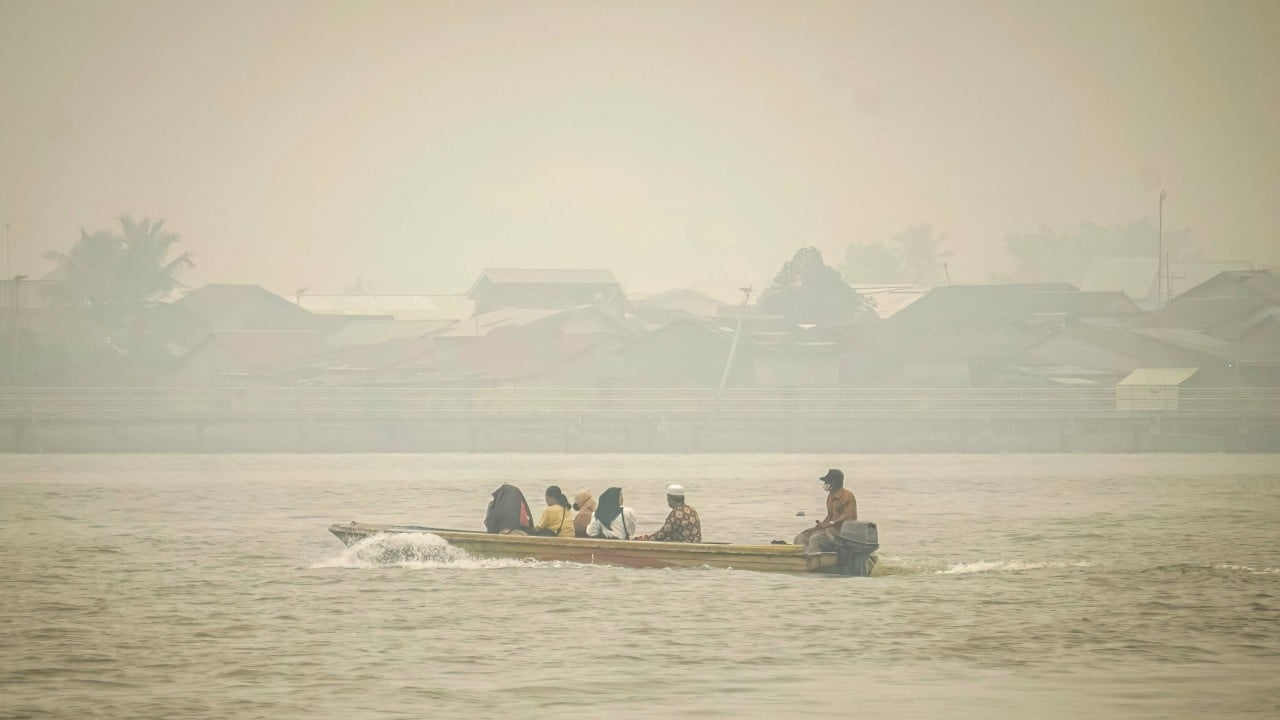
Stinging eyes. Throbbing temples. Scratchy throats.
Standard haze coverage loves a quote like that. It gives readers a clean villain, a clear symptom, and a comforting illusion that the crisis is mostly about irritation on the surface.
Wrong.
When Indonesians endure seasonal smoke haze from peatland fires across Sumatra and Kalimantan, the visible misery is the distraction. The real damage happens quietly, deep below the throat, long after your eyes stop watering.
Most articles treat haze as a temporary weather event paired with an acute respiratory annoyance. They write about masks, school closures, and orange skies. That is lazy consensus. It mistakes the loud alarm bell for the structural collapse of the building.
The Symptom Trap in Indonesian Haze Reporting
Look at how mainstream stories frame the health toll of Indonesian haze. Someone says their eyes sting and their head hurts. The headline turns that into a "health crisis."
Sensory irritation is real. Smoke contains volatile organic compounds, aldehydes, polycyclic aromatic hydrocarbons, and coarse and fine particles that irritate conjunctiva and upper airways. Nobody enjoys walking outside into acrid wood-and-peat smoke.
Yet treating stinging eyes as the headline metric misleads the public on two fronts.
First, it makes people think relief equals safety. Rain comes through, winds shift, or a person steps into an air-conditioned room, and the immediate sting fades. People assume the threat passed. In reality, fine aerosols and systemic inflammation do not pack up and leave just because your sinuses calm down.
Second, it trains governments and families to fight a slow-burn vascular and pulmonary hazard with short-term theater. Handing out thin surgical masks during severe smoke events gives a false sense of protection while doing very little against sub-micron particles slipping past loose edges.
Over years of working alongside environmental health teams, public health planners, and air-quality monitors in Southeast Asia, I have watched public agencies and corporate sponsors blow millions on reactive optics. I have seen emergency mask distributions staged for cameras while indoor air filtration in clinics and schools remained an afterthought. I have seen expensive public awareness campaigns tell people to "stay indoors" inside leaky, unsealed buildings where outdoor smoke drifts right in and stays trapped.
Money spent on theatrics is money stolen from prevention that actually moves physiological risk.
Why PM2.5 Matters Far More Than Stinging Eyes
To understand what Indonesian haze actually does to human bodies, you have to talk about particle aerodynamics rather than surface discomfort.
Environmental health researchers separate airborne particles by aerodynamic diameter. PM10 refers to inhalable particles 10 micrometers or smaller. PM2.5 refers to fine particles 2.5 micrometers or smaller—roughly one-thirtieth the width of a human hair. Peat smoke generates massive concentrations of PM2.5 and even finer ultrafine particles because smoldering organic soil burns incompletely at lower temperatures than open wood flames.
Larger particles get trapped higher up—in nasal hairs, mucus, and larger airways—where they trigger sneezing, coughing, and stinging eyes. Those symptoms are annoying, loud, and obvious.
PM2.5 is quieter and far deadlier. Because of its tiny mass and size, PM2.5 bypasses upper-airway defenses and penetrates deep into the alveoli, the microscopic sacs where oxygen enters the bloodstream. The smallest fractions can cross the alveolar-capillary barrier directly into circulation or trigger local lung inflammation that spills systemic inflammatory cytokines into the blood.
Researchers who have studied Southeast Asian transboundary smoke—including work by environmental epidemiologists and atmospheric chemists such as Miriam Marlier, Shannon Koplitz, and Ruth DeFries on fire emissions and health burdens—have shown that smoke from Indonesian peat and vegetation fires drives substantial premature mortality and cardiopulmonary morbidity across the region, not merely short-term discomfort. Classic air pollution epidemiology led by C. Arden Pope III and Douglas Dockery established decades ago how fine particulate exposure links tightly to cardiovascular events, ischemic heart disease, stroke, and reduced lung function.
A headache during a smoke episode can come from hypoxia, sleep disruption, vascular strain, or pollutant exposure. A heart attack or stroke weeks later after repeated heavy smoke seasons does not come with a convenient quote saying, "My chest felt smoky."
Peat Smoke Is Not Ordinary Campfire Smoke
People who have never stood near a drained tropical peatland often picture smoke like a backyard bonfire. That mental model is wrong.
Tropical peat in Sumatra and Kalimantan consists of thick layers of partially decomposed plant matter accumulated over thousands of years under waterlogged conditions. When canals are dug to drain peat for agriculture or timber, oxygen reaches that carbon-rich soil. It dries out. Once ignited, peat smolders underground for weeks or months, releasing dense, toxic smoke rich in carbon monoxide, methane, organic acids, and fine particulates.
Even when surface flames look modest, underground smoldering keeps pumping out pollutants. Treating peat smoke like ordinary brush smoke underestimates both its persistence and its chemical complexity.
Re-Asking the Questions People Get Wrong
When haze blankets Indonesian cities and rural districts, people naturally ask urgent questions. Most of those questions start from a flawed premise.
"Are surgical masks enough when the haze gets bad?"
No—and asking that question misses the real bottleneck of personal protection.
Loose surgical or cloth masks block large droplets and some coarse dust, but they leave gaps around the nose, cheeks, and chin. Air follows the path of least resistance. During heavy smoke, unfiltered air leaks straight around the sides of a loose mask.
A properly fitted N95 or KN95 respirator filters at least 95 percent of airborne particles including PM2.5, provided it forms a tight seal against clean skin. Even then, masks have real-world limits: they get hot and humid in tropical heat, making sustained wear tough for outdoor workers, children, and people with existing respiratory conditions; children often lack proper facial fits; and wearing a respirator does nothing while you sleep in a smoky bedroom.
The honest answer is not "just wear a mask." The honest answer is that personal respirators are a partial stopgap for brief outdoor transit, not a complete shield for a multi-week smoke episode.
"Should schools close every time air quality spikes?"
Closing schools is a blunt instrument, and treating it as the default cure-all ignores trade-offs.
When outdoor PM2.5 hits hazardous levels, keeping children out of polluted outdoor air makes sense—especially if school buildings lack filtered ventilation or have open louvered windows. Yet closing schools can backfire if children simply go outside to play, ride motorbikes without protection, or sit in smoky homes with higher exposure than a well-ventilated indoor space would offer. It also disrupts learning and burdens working parents.
A smarter question is: which indoor spaces actually have cleaner air than outdoors, and how do we create clean-air refuges rather than treating every building as identical?
"Why doesn't the government just put out all the fires immediately?"
Because fire suppression after ignition is often chasing symptoms in the landscape.
Imagine a scenario where fire crews rush to extinguish visible hotspots on drained peat while the drainage canals remain open and dry season winds blow. Even if surface flames go out today, dry peat stays primed to reignite tomorrow unless water tables are restored and land-use incentives change.
Fighting fires matters for immediate containment, especially near settlements. Still, relying solely on emergency firefighting after peat is dried and ignited is like mopping the floor while leaving a cracked pipe running beneath the floorboards.
Unconventional Moves That Actually Reduce Harm
If you live in or manage operations in a haze-prone area, conventional advice usually stops at "drink water and stay indoors." Here is what works better in practice.
- Measure indoor PM2.5 instead of guessing. Do not assume being inside means being safe. A cheap optical air quality monitor that reads PM2.5 (in micrograms per cubic meter) tells you whether your room is actually cleaner than the street. If indoor levels match outdoor levels, closing windows alone is not finishing the job.
- Build a dedicated clean-air room. Instead of trying to purify an entire leaky house or office, seal off one room—ideally a bedroom—by closing gaps around doors and windows as much as practical, and run a properly sized HEPA air purifier (or a well-built DIY Corsi-Rosenthal box using MERV-13 or higher filters) continuously. Eight hours of cleaner nighttime air gives your cardiovascular and respiratory systems recovery time.
- Shift heavy exertion by air-quality windows, not just clock time. Outdoor exercise or heavy physical labor spikes ventilation rate—you breathe far more air per minute and pull particles deeper into your lungs. When smoke spikes, move workouts indoors to filtered spaces or scale back intensity rather than pushing through high-PM2.5 hours.
- Protect vulnerable household members first. Infants, older adults, pregnant people, and anyone with asthma, COPD, or heart disease bear disproportionate risk. Prioritize clean-air space, medication readiness (such as having rescue inhalers on hand if prescribed), and symptom monitoring for them before worrying about low-risk adults.
- Push for peat rewetting and fire-free land management. Real, durable prevention happens long before dry season. Reblocking drainage canals to keep peat wet, supporting fire-free land preparation, and enforcing accountability on concession and smallholder burning address the root fuel source rather than waiting for eyes to sting.
Where This Contrarian Approach Can Go Wrong
Taking a hard-nosed, physiology-first view of haze has blind spots. I will own them.
First, downplaying acute discomfort like stinging eyes or headaches can sound dismissive to people suffering right now. Pain and irritation erode daily function, mood, and productivity immediately. A strategy that ignores acute misery loses credibility with the people living through it.
Second, technical fixes like HEPA purifiers and N95 respirators cost money and require supplies. For low-income households or informal outdoor workers, buying purifiers, replacement filters, or well-fitting respirators is not as simple as ordering them online. Telling someone to "run a HEPA purifier in a sealed room" without acknowledging housing quality, electricity costs, and income realities misses the mark.
Third, focusing heavily on health adaptation can accidentally let polluters and weak enforcement off the hook if people treat adaptation as a permanent substitute for stopping fires at the source. Clean-air rooms protect families; they do not restore drained peatlands.
The Real Shift Required
Stop treating haze as a two-week nuisance marked by watery eyes and a headache. Start treating it as a recurring public health and land-management failure driven by fine particulate exposure and degraded peat ecosystems.
Fix the air where people sleep, protect the lungs of those with the least margin, and rewet the peat before the dry season strikes.