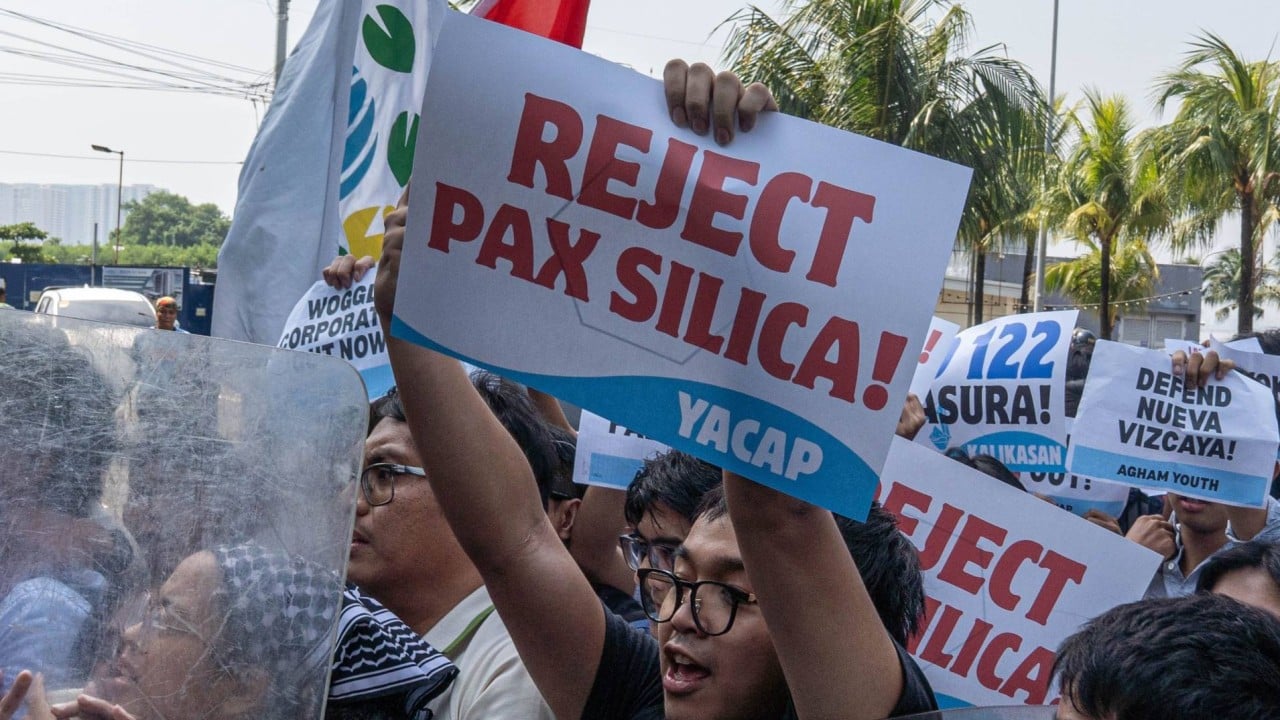
Pundits love a good geopolitical street brawl. Whenever the semiconductor supply chain shifts toward Southeast Asia, the standard media playbook kicks in: frame it as a zero-sum turf war, throw around dramatic words about silicon sovereignty, and paint Manila as a pawn caught between Washington and Beijing.
That narrative sells clicks. It also completely misunderstands how modern chipmaking actually works.
Look at the prevailing chatter around "Pax Silica" and the Philippines' role in the global microchip ecosystem. The lazy consensus assumes that because the United States is pouring billions into domestic fabrication via the CHIPS Act—and funneling allied
Stop buying that fiction. The Philippines is not fighting Taiwan. It is not fighting South Korea. And it certainly isn't fighting for scraps at the bottom of the value chain.
What we are witnessing in the Philippines isn't a brawl. It is a quiet, brutally pragmatic arbitrage play. While Western commentators obsess over who builds the next 2-nanometer
The Lie of the Front-End Obsession
I’ve sat in boardrooms where executives burned eight figures trying to chase front-end fabrication prestige when their actual margin bleeding was happening three thousand miles away on an assembly floor. Everyone wants to talk about extreme ultraviolet lithography machines from ASML. Nobody wants to talk about wire bonding, substrate shortages, or thermal dissipation testing.
That blind spot is why the "fight" narrative fails.
Semiconductor manufacturing splits cleanly into two worlds:
- Front-End Processing: Etching billions of transistors onto raw silicon wafers. This requires absurd capital expenditures—often upwards of $20 billion per facility—and relies heavily on Taiwan, South Korea, and increasingly, subsidized plants in Arizona and Ohio.
- Back-End Processing (OSAT): Outsourced Semiconductor Assembly and Test. Taking those delicate, finished wafers, dicing them into individual chips, wiring them to substrates, encasing them in protective packaging, and stress-testing them before they ever touch a circuit board.
Here is the reality that breaks the pundits' neat little conflict story: A finished wafer from TSMC in Hsinchu is an expensive paperweight until an OSAT facility packages it.
For decades, the Philippines has quietly built one of the densest, most reliable OSAT ecosystems on the planet. Electronics routinely account for over half of the country's total merchandise exports. Companies like Texas Instruments, Analog Devices, Amkor, and STMicroelectronics didn't set up massive footprints in Clark, Baguio, and Calamba out of charity. They did it because backend manufacturing is labor-intensive, engineering-heavy, and unforgiving of sloppy execution.
Calling this a "fight" implies Manila is trying to steal market share from Hsinchu or Seoul. It isn't. Taiwan doesn't want to scale up massive, lower-margin legacy packaging operations on an island facing severe land, water, and demographic constraints. South Korea is busy defending its memory chip margins. The Philippines isn't invading their territory; it is catching the exact industrial overflow that Taipei and Seoul physically cannot absorb.
Why "Pax Silica" Was Never About Peace
Let’s dismantle the premise baked right into the phrase Pax Silica.
When analysts invoke Pax Silica—borrowing from Pax Romana or Pax Americana—they imply a grand, stable truce enforced by a single dominant superpower controlling the flow of silicon. They look at the Philippines, see messy domestic power grids, infrastructure bottlenecks, and geopolitical friction in the South China Sea, and declare the peace broken.
They are asking the wrong question. There was never supposed to be peace in the supply chain. Supply chains aren't treaties; they are pressure valves.
Under the U.S. International Technology Security and Innovation (ITSI) Fund—created by the 2022 CHIPS and Science Act—Washington specifically targeted the Philippines alongside countries like Costa Rica and Vietnam to diversify backend assembly and testing. Why? Because concentrating 80% of global chip packaging and testing in China and Taiwan created a single point of catastrophic failure.
When Washington and Manila signed agreements to expand Philippine semiconductor capacity, they weren't signing a peace accord. They were building a redundancy circuit.
If you treat the Philippine semiconductor sector like a fragile peace treaty, every brownout in Luzon or political squabble in Manila looks like a fatal crisis. If you understand it as a redundancy circuit, those exact friction points become engineering variables to be priced in and solved.
The Three Brutal Truths Nobody Wants to Print
If you want to understand what is actually happening on the ground in the Philippine semiconductor sector, ignore the diplomatic press releases and look at the unit economics. Three hard realities govern this market right now.
1. Packaging Is Becoming the New Moore's Law
For fifty years, the industry got faster chips by shrinking transistors on the front end. We are hitting the physical limits of atomic scaling. Today, performance gains come from advanced packaging—stacking chiplets vertically, interconnecting heterogeneous dies, and managing massive heat loads for AI accelerators.
This shifts massive strategic weight onto the backend. While the Philippines historically dominated traditional wire-bond and lead-frame packaging (crucial for automotive, industrial, and power management chips), the global wave of advanced packaging is lifting the entire OSAT tier. You cannot decouple backend assembly from front-end innovation anymore. They are fusing together.
2. The Infrastructure Deficit Is Real—and Priced In
I won't sugarcoat the downsides of operating in the Philippines. Anyone who tells you Manila is a frictionless manufacturing paradise is lying to you.
Industrial electricity rates in the Philippines remain among the highest in Southeast Asia, trailing only Singapore in many quarters, largely due to an unsubsidized power generation sector and reliance on imported fossil fuels. Port congestion in Manila can turn a tight just-in-time inventory schedule into a nightmare. Bureaucratic permitting across local government units can test the patience of the most seasoned operations VP.
So why do Tier-1 chipmakers keep expanding there?
Because talent retention and English fluency beat cheap electricity every single time in high-mix, high-reliability testing. In Vietnam or southern China, annual factory turnover rates can routinely spike above 20% to 30%, forcing companies into an endless cycle of retraining technicians on million-dollar automated test equipment. In Baguio or Clark, it is common to meet test engineers who have been with the same facility for fifteen years. When a single corrupted test batch costs millions, institutional memory is worth far more than a three-cent discount per kilowatt-hour.
3. The "China Plus One" Strategy Is Not Anti-China
Western commentators love framing Philippine expansion as a direct slap at Beijing. On the factory floor, the reality is infinitely more nuanced.
Many of the raw materials, specialty chemicals, and sub-assemblies flowing into Philippine OSAT plants still originate from mainland China. Meanwhile, Chinese fabless design houses still rely on neutral or allied OSAT facilities in Southeast Asia to package chips destined for global consumer markets without triggering immediate tariff walls.
Manila isn't acting as an economic battering ram against China. It is acting as a neutral clearinghouse. By positioning itself as an allied-certified hub that still maintains deep regional trade links, the Philippines extracts capital from Washington, equipment from Tokyo, wafers from Taipei, and component volume from Shenzhen. That isn't fighting. That is textbook commercial diplomacy.
Answering the Questions Investors Actually Ask
When institutional capital looks at Southeast Asian tech manufacturing, the boardroom Q&A usually gets bogged down in surface-level fears. Let’s clear the deck.
"Can the Philippines ever compete with Taiwan on advanced chip fabrication?"
No. And suggesting it should is financial malpractice.
Building a competitive front-end logic fab requires a multi-decade ecosystem of ultra-pure water infrastructure, uninterrupted gigawatt-scale power, hyper-specialized chemical suppliers, and tens of billions in continuous capital expenditure. The Philippines lacks the grid stability and capital depth for front-end wafer fabrication. Attempting to build a leading-edge fab in Luzon would be an instant money pit. Manila’s winning hand is dominating the back end—specifically automotive power semiconductors, analog chips, and high-reliability industrial testing—where capital intensity is manageable and returns on invested capital are predictable.
"Won't Vietnam steal all of the Philippines' semiconductor investment?"
Vietnam is capturing massive attention—and massive capital—for consumer electronics assembly and new OSAT plants from players like Intel and Amkor. Does that doom the Philippines? Hardly.
Vietnam is currently hitting a severe engineering talent bottleneck. Rapidly scaling dozens of mega-factories simultaneously has created fierce wage inflation and a shortage of senior semiconductor process engineers in Hanoi and Ho Chi Minh City. The Philippines already has a mature, multi-generational pipeline of licensed electronics engineers graduating every year, backed by decades of established quality-control culture. Smart supply chain directors don't choose between Vietnam and the Philippines; they split risk across both.
"How exposed are Philippine chip plants to South China Sea tensions?"
No more exposed than every single factory in Taiwan, South Korea, or southern Japan. In fact, geographically, facilities in Calamba, Laguna, or Clark sit protected behind the landmass of Luzon, directly adjacent to major air and sea corridors backed by mutual defense treaties. If a kinetic conflict erupts in the Luzon Strait, global semiconductor trade halts everywhere simultaneously—making localized "risk comparisons" between Manila and Taipei entirely academic.
How to Actually Play the Philippine Silicon Shift
If you are a supply chain executive, an investor, or a policy strategist looking at the Philippines right now, stop reading geopolitical op-eds and start executing on actual operational bottlenecks.
- Stop chasing wafer subsidies and invest in substrate and lead-frame localization. The biggest vulnerability in Philippine OSAT isn't assembly capacity; it is the fact that most raw packaging materials are still imported. Capital deployed into local chemical, epoxy, and substrate manufacturing in Calabarzon or Central Luzon captures immediate margin without competing with giant multinational assemblers.
- Bypass the grid with dedicated industrial microgrids. Don't wait five years for national transmission upgrades to lower your kilowatt-hour cost. Follow the lead of top economic zone operators: lock in bilateral power purchase agreements (PPAs) paired with on-site solar-plus-storage installations inside PEZA (Philippine Economic Zone Authority) parks to stabilize voltage and slash peak-hour tariffs.
- Lock down mid-career test engineers before competitors wake up. Everyone fights over entry-level operators. The real scarcity in 2026 and beyond is senior failure-analysis and reliability test engineers who understand automotive-grade AEC-Q100 standards. Poach, retain, and pay them Western-adjusted premiums; they will still cost a fraction of an engineer in Austin or Munich while saving millions in yield loss.
- Target analog, power, and automotive chips—ignore consumer AI hype. Nvidia's flagship GPUs will stay tightly coupled to TSMC's CoWoS packaging in Taiwan for the foreseeable future. The real volume explosion in Southeast Asia belongs to silicon carbide (SiC) power modules, EV battery management chips, and industrial sensors. That is the exact wheelhouse of the Philippine ecosystem.
The Verdict Nobody Wants to Hear
The pundits calling the Philippine semiconductor boom a "fight" are looking for blood where there is only balance-sheet math.
There is no glorious war for silicon supremacy happening in Manila. There is no heroic battle to dethrone Taiwan, nor is there a tragic struggle to survive Western neglect. There is simply an industry doing what industries always do when single-source concentration becomes too dangerous: routing around the choke point.
While commentators argue over whether Pax Silica means peace or war, operations directors in Clark and Laguna are quietly shipping billions of tested, packaged microchips that keep the world's cars, servers, and power grids running.
Stop watching the headlines for a fight. Watch the shipping manifests.