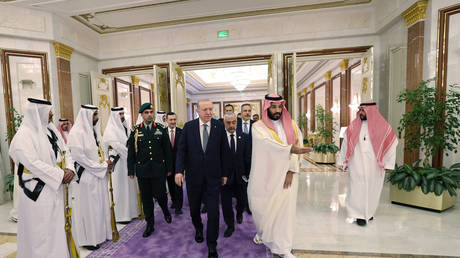
The foreign policy commentariat loves a lazy label. Mention Saudi Arabia, Turkey, and Pakistan signing a mutual defense pact, and keyboards immediately clatter out headlines about an emerging "Islamic NATO" designed to box in Tehran and stare down Jerusalem.
It is a neat narrative. It is also fundamentally wrong.
Analyses framing this trilateral alignment as an offensive tripwire against Israel or Iran miss the point entirely. They view twenty-first-century statecraft through a twentieth-century Cold War lens, assuming that shared military hardware and mutual defense clauses automatically translate into cohesive regional crusade machinery. They do not.
To understand what is actually happening across the Middle East and South Asia, you have to strip away the grandstanding and look at the raw actuarial tables of regime survival.
The Myth of Regional Cohesion
Let us define terms immediately, because sloppy terminology ruins foreign desks.
NATO is an institutionalized security architecture backed by integrated command structures, permanent bureaucratic oversight, and a shared doctrinal foundation developed over three-quarters of a century. The Mecca Joint Defense Agreement has none of that. It is a political compact born out of mutual vulnerability, not mutual affection.
The lazy consensus argues that Riyadh, Ankara, and Islamabad are pooling their military might to project power outward. The reality is precisely the opposite. They are huddling together because they are terrified of what is happening inward.
I have watched defense budgets balloon and strategic anxieties spike across Gulf capitals for years. The primary threat keeping regional autocrats and elected strongmen awake at night is not a hypothetical invasion from a foreign adversary. It is domestic implosion, economic contraction, and the terrifying speed at which uncontrolled regional chaos can detonate local stability.
Why Iran and Israel are Distractions
When commentators ask whether this pact targets Iran or Israel, they are addressing a false binary.
Iran is certainly part of the equation, but not because these Sunni powers want to launch a preemptive crusade across the Persian Gulf. Quite the opposite: Saudi Arabia and its neighbors want to insulate themselves from a catastrophic regional war that would vaporize their multi-trillion-dollar economic diversification plans. A full-scale kinetic blowout involving Tehran, Washington, and Tel Aviv would turn Vision 2030 blueprints into expensive campfire fuel. Their opposition to Iranian adventurism is actuarial, not ideological. They fear the fire, not the poetry.
Similarly, treating this alignment as a direct counterweight to Israel ignores the deeply transactional nature of modern Middle Eastern diplomacy. Look at the expanding web of trade, tech sharing, and intelligence channels across the region. Nations do not normalize economic ties with one hand while funding an anti-Zionist military jihad with the other.
The pact is not about fighting external enemies. It is about creating a diplomatic buffer.
The Real Architecture of the Pact
Imagine a scenario where a regional proxy conflict spirals out of control, threatening critical infrastructure, maritime lanes, and capital flight across multiple borders. Historically, local powers had to rely entirely on an erratic American security umbrella that shifts priorities with every single presidential election cycle.
That model is broken. Washington’s commitment to policing every desert skirmish has hit a hard political ceiling.
By formalizing a mutual defense pledge, Saudi Arabia, Turkey, and Pakistan are creating a self-help insurance policy. Turkey brings heavy conventional military capability and drone dominance. Pakistan brings nuclear-backed strategic deterrence and professional manpower. Saudi Arabia brings the capital required to keep the machinery lubricated.
This is not an offensive spear. It is a corporate holding action.
The fatal flaw in almost every mainstream take is assuming that non-Western states organize their alliances around shared moral outrage or religious brotherhood. History laughs at that premise. The Muslim world is aggressively fragmented, defined by sharp theological divides, competing historical ambitions, and fierce economic rivalries. Riyadh and Ankara have spent decades stepping on each other's toes across North Africa, the Levant, and the Gulf.
They did not suddenly overcome those deep-seated fractures over tea in Mecca. They simply realized that standing alone in an increasingly transactional, multipolar world is an existential hazard.
Stop looking for a holy crusade or a caliphate with an air force. What you are witnessing is the death of reliance on external patrons and the messy, defensive birth of regional outsourcing. They are building a firebreak because the forest is already burning.


