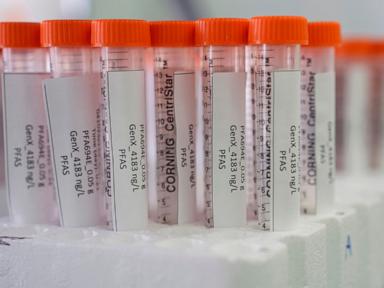
The Environmental Protection Agency is backpedaling. After years of promising to scrub "forever chemicals" from our drinking water, officials now say they'll propose weakening some of those strict Biden-era limits on PFAS. It’s a move that feels like a gut punch to environmental advocates and a massive win for industrial polluters who’ve spent millions lobbying against these rules. If you’re wondering why the goalposts just moved, you aren't alone.
PFAS, or per- and polyfluoroalkyl substances, don’t just go away. They’re in your non-stick pans, your waterproof jacket, and, quite likely, your blood. The Biden administration previously set incredibly low limits—nearly zero—for certain types of these chemicals in tap water. Now, the agency says it’s going to "re-evaluate" and likely soften those standards. This isn't just a technical tweak. It’s a shift that affects millions of people who rely on municipal water systems.
Why the EPA is folding under pressure
Industry groups didn't just sit back when the initial PFAS limits were announced. They sued. Organizations like the American Chemistry Council argued the science was flawed and the costs were astronomical. They claimed the EPA overstepped its authority by setting limits so low that current technology can barely even detect the chemicals, let alone remove them consistently.
The cost of compliance is the real kicker here. Local water utilities are looking at billions of dollars in upgrades. Most of that cost falls on taxpayers and ratepayers, not the companies that created the mess in the first place. By weakening the limits, the EPA is essentially giving these utilities—and the chemical companies—some breathing room. But that room comes at the expense of public safety.
The health risks haven't changed even if the policy did
Just because a government agency decides a higher level of a toxin is "acceptable" doesn't mean it’s safe. The science on PFAS is pretty grim. Peer-reviewed studies from the National Institutes of Health and the World Health Organization have linked these chemicals to a laundry list of problems. We’re talking about kidney cancer, testicular cancer, thyroid disease, and developmental issues in children.
PFAS are endocrine disruptors. They mimic hormones and throw your body’s internal signaling out of whack. Even at low levels, the cumulative effect of drinking contaminated water for decades is significant. When the EPA says they’re weakening these limits, they’re effectively saying we can live with a slightly higher risk of cancer to save some money on water filters. It’s a cynical trade-off.
Legal battles and the Chevron doctrine
You can't talk about this rollback without talking about the courts. Recently, the Supreme Court overturned the Chevron doctrine, which used to give federal agencies like the EPA a lot of leeway in interpreting laws. Now, judges have more power to strike down agency rules they don't like. The EPA knows this. They’re likely softening their stance now to avoid a total defeat in court later.
If the EPA sticks to its guns and loses a major court case, they might lose the power to regulate PFAS at all. It’s a defensive play. They’re trying to find a "middle ground" that can survive a legal challenge from industry lawyers. It’s pragmatic, sure, but it feels like a betrayal to the communities already dealing with contaminated wells and high cancer rates.
What this means for your tap water
Most people don't think twice when they turn on the faucet. But if you live near a military base, an airport, or a manufacturing plant, your water is probably already on the radar for PFAS contamination. The original Biden-era rules required utilities to test for these chemicals and fix the problem if they exceeded a few parts per trillion.
Under the proposed "weakened" limits, those same utilities might not have to act as quickly—or at all. You might see "acceptable" levels rise. Honestly, it’s a mess for transparency. If the federal government keeps shifting the targets, local officials are going to be less inclined to invest in expensive carbon filtration or ion exchange systems. They'll just wait for the next policy change.
[Image of a granular activated carbon filtration system for water treatment]
The loophole for smaller manufacturers
It isn't just about the water utilities. Weakening these limits also takes the heat off smaller manufacturers who use PFAS in their processes. Large corporations like 3M have already reached massive settlements, but thousands of smaller players are still pumping these chemicals into the environment.
A softer federal standard gives these companies a shield. It makes it harder for states to pass their own, stricter laws because industry can point to the EPA and say, "Look, even the feds say this level is fine." It creates a race to the bottom where the most polluted states become the most attractive to industry.
How to take matters into your own hands
Since the government is waffling, you can't really wait for them to protect you. You have to be proactive. If you’re worried about PFAS in your home, don't just buy any random pitcher filter. Most of them do absolutely nothing for "forever chemicals."
- Check your local water report. Every year, your utility publishes a Consumer Confidence Report. Look for PFAS, PFOA, and PFOS. If they aren't listed, call them and ask if they’re testing for it.
- Invest in the right tech. Look for filters certified by NSF International to standard P473. Generally, this means high-quality under-sink Reverse Osmosis (RO) systems or dual-stage Activated Carbon filters.
- Ditch the non-stick. If your pans are scratched and flaking, throw them out. Switch to stainless steel or cast iron. It’s a simple change that reduces your direct exposure.
- Pressure your local reps. Federal policy is a seesaw, but local city councils have a lot of say in how your water is treated. Push them to adopt the stricter limits anyway.
The EPA's decision to move forward with plans to weaken these limits is a sign of the times. It's a retreat from science-based policy in favor of legal and economic convenience. Don't wait for the regulations to catch up to the reality of the risks. Start filtering your own water and stay informed about the sources of contamination in your own backyard. The agency might be backing down, but the chemicals aren't going anywhere.


