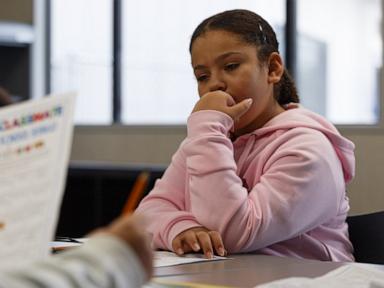
The smell of floor wax and damp wool coats hits you first. If you have ever walked down the hallway of an elementary school ten minutes after the final bell rings, you know that specific, heavy silence—the hum of fluorescent ballasts, the squeak of a custodian’s rubber sole on linoleum, the faint, sweet ghost of cafeteria peaches.
Now imagine that silence lasting all Tuesday. And all Wednesday. Forever.
That is the sound of a municipal budget balancing itself on the backs of eight-year-olds. Across the United States, from the rust-streaked suburbs of the Midwest to the sun-bleached sprawl of the Sunbelt, school boards are reaching for the padlock. The headlines call it "right-sizing." Consultants call it "footprint optimization." Parents call it a funeral.
When a district announces it is shuttering five, eight, or twelve neighborhood schools in a single vote, the spreadsheet looks clean. Red ink turns black. Liabilities vanish. Yet anyone who has actually sat in the folding chairs of a high school gymnasium at 11:30 PM, watching a superintendent explain why the building down the street has to die, knows a secret the spreadsheets hide. Closing the doors does not stop the bleeding. In most cases, it merely moves the wound somewhere harder to bandage.
The Arithmetic of Ghosts
To understand why the locks are clicking shut right now, you have to look at three colliding forces that no single school board created, yet every school board is forced to survive.
First, there are fewer children. Demographic shifts are slow until they are sudden. Between 2019 and 2023, public school enrollment nationwide dropped by roughly 1.2 million students, driven by declining birth rates that began after the 2008 financial crisis, shifting immigration patterns, and a post-pandemic surge in homeschooling and private school vouchers. When a building designed for six hundred children holds three hundred and twenty, the district still has to heat the empty classrooms. It still has to patch the roof over the unused wing. It still has to pay a principal, a nurse, a librarian, and a head custodian.
Second, the temporary lifeline snapped. During the pandemic, Congress poured nearly $190 billion in Elementary and Secondary School Emergency Relief—known as ESSER—into public education. Districts used that cash to hire reading specialists, buy laptops, upgrade HVAC systems, and paper over structural deficits that had been widening for a decade. That federal spigot ran dry in September 2024. The bills, however, stayed behind.
Third, inflation ate the rest. Diesel for the buses, health insurance for teachers, liability coverage, special education services—every line item climbed faster than state funding formulas could adjust.
Consider a hypothetical district we will call Oakridge Unified, a mid-sized system of thirty-two thousand students straddling an aging industrial city and its inner-ring suburbs. Let us invent a composite family to see how the numbers land on a kitchen table: Elena, a single mother working second shift at a regional hospital, and her nine-year-old son, Mateo, who walks four blocks to Carver Elementary every morning at 7:45 AM.
To the financial consultant hired by Oakridge Unified, Carver Elementary is a line item with a 54 percent utilization rate and $11 million in deferred maintenance. To Elena, Carver is the reason she can keep her job. The crossing guard at Fourth and Elm knows Mateo by name. The after-school program runs until 6:00 PM, bridging the gap until Elena’s sister gets off work and picks him up.
When the school board votes to close Carver and merge its students into a larger building two miles across a four-lane highway, the district projects $1.8 million in annual savings. On paper, it is a triumph of fiscal discipline.
But the real problem lies elsewhere.
The Savings Mirage
Here is what rarely makes it into the glossy slide deck presented at the public hearing: closing a school is expensive, and the savings almost always underperform the promise.
A landmark study by the Pew Charitable Trusts examining urban school closures across major American cities—including Chicago, Philadelphia, Detroit, and Washington, D.C.—found that districts consistently overestimated how much money they would save. In Philadelphia, officials projected tens of millions in immediate relief after closing two dozen schools in 2013; years later, actual savings were a fraction of the forecast.
Why does the math fall apart? Think of a school district like an aging passenger train. You might uncouple three half-empty cars to save fuel, only to discover that the remaining cars are now dangerously overcrowded, the engine still burns nearly the same diesel pulling the heavy freight up the grade, and you have to pay full-time security guards just to keep vandals from stripping copper wire out of the disconnected cars sitting on the siding.
Look closely at where the money goes when a school closes:
- Labor stays on the payroll. Roughly 80 percent of a typical school district’s budget goes to salaries and benefits. When Carver Elementary closes, Mateo’s third-grade teacher does not vanish into thin air; she transfers with him to the receiving school, bringing her exact salary and pension obligations along. The district saves the cost of one principal, one secretary, and perhaps a fraction of a custodial crew—often less than $500,000 per building.
- Transportation costs explode. Elena cannot let Mateo walk two miles across a four-lane highway. Now the district must add a bus route, buy fuel, pay a driver in the middle of a national bus-driver shortage, and maintain another vehicle. Those new transportation expenses routinely eat 20 to 40 percent of the projected building savings.
- Empty buildings rot—and cost money to guard. An abandoned school does not sell overnight, especially in neighborhoods already struggling with disinvestment. Until a buyer appears, the district still pays for winter heat to keep pipes from bursting, grass cutting, insurance, and boarded-up windows. In cities like Detroit and St. Louis, dozens of shuttered schools sat vacant for a decade, becoming magnets for arson and dumping while draining millions in maintenance funds.
- Families leave. This is the silent killer of district budgets. Because state funding is tied directly to daily student attendance—often between $10,000 and $16,000 per pupil—losing just fifty students to a nearby charter school, private academy, or neighboring suburban district wipes out $600,000 in revenue. When Oakridge closes Carver Elementary, twenty percent of Carver’s families decide they do not want their kids on a forty-minute bus ride. They enroll elsewhere. Suddenly, the $1.8 million in projected savings turns into a net revenue loss.
The Invisible Anchor of a Neighborhood
Numbers are clean. Grief is messy.
If you want to understand what happens to a community after the yellow buses stop coming, stop looking at the school board’s balance sheet and start looking at the corner store across the street from the school.
In working-class neighborhoods, a public elementary school is not merely an educational facility. It is the civic heart. It is the polling place where neighbors stand in line every November. It is the gymnasium where youth basketball leagues play on Saturday mornings. It is the food pantry distribution site on Fridays, the place where the school nurse catches an undiagnosed asthma flare-up before it becomes an emergency room visit, and the unofficial town square where parents trade tips about who is hiring and which landlord fixes leaky radiators.
When that building goes dark, the street changes within six months. Morning foot traffic vanishes. The bakery or bodega down the block loses its 8:00 AM coffee rush. Property values within a quarter-mile radius soften, shrinking the very property tax base the municipality relies on to fund future budgets.
Even more troubling is who bears the brunt. Research from Stanford University and the University of Pennsylvania has repeatedly shown that school closures fall disproportionately on Black, Hispanic, and low-income neighborhoods. Even when white, wealthier schools have similar enrollment dips, political clout and vocal parent associations frequently insulate them from the chopping block. The communities with the least political capital end up absorbing the most disruption.
And what happens to the children?
The assumption behind every consolidation plan is simple: move students from a struggling, under-enrolled school into a bigger, better-resourced building, and their test scores will rise. Reality is far harsher. Studies tracking displaced students in Chicago and Michigan found that children whose schools were closed suffered measurable drops in reading and math scores during the transition year—and rarely caught up unless the receiving school was significantly higher-performing than the one they left. Too often, districts simply merge two struggling schools into one overcrowded, destabilized building where teachers spend the first four months managing trauma and unfamiliar hallway routines instead of teaching fractions.
Why the Worst Financial Pain Still Lies Ahead
If this wave of closures feels relentless right now, brace yourself. What districts are facing today is only the opening act of a deeper fiscal reckoning.
Most people assume that once a district cuts its buildings and survives the expiration of federal pandemic aid, the storm passes. It will not. Three structural time bombs are ticking underneath American public education finance, and almost none of them can be solved by locking classroom doors.
The first is the pension and healthcare vise. Across dozens of states, districts are legally required to contribute steadily rising percentages of their budgets to pay down decades-old unfunded teacher pension liabilities and retiree healthcare promises. Those obligations are fixed. Whether a district enrolls forty thousand students or twenty-five thousand students, the legacy debt bill arrives every month like a mortgage on a house you no longer live in.
The second is the explosion in complex student needs. Walk into any kindergarten classroom today and ask the teacher what has changed since 2018. She will not talk about textbooks. She will talk about speech delays, severe behavioral dysregulation, chronic absenteeism, and rising numbers of students requiring Individualized Education Programs (IEPs). Special education is a federal mandate, yet Congress has never come close to fulfilling its original 1975 promise to fund 40 percent of the excess cost—hovering instead below 15 percent. Local districts must absorb the difference, pulling general fund dollars away from art, music, library hours, and building maintenance to pay for legally required aides, therapists, and specialized transport.
The third is state revenue stagnation. For the past three years, states rode a wave of post-pandemic tax surpluses fueled by consumer spending and capital gains. That surplus era is over. State tax collections are flattening or dipping just as Medicaid costs rise and lawmakers pass aggressive income tax cuts and universal school voucher programs. Every dollar routed to a private school tuition voucher in states like Arizona, Florida, Ohio, or Iowa is a dollar pulled out of the shared pool that pays for public school roofs and teacher salaries—while public districts are still left holding the fixed overhead of buildings and buses.
Put those three pressures together, and you see the trap. Closing schools is an attempt to solve a permanent structural revenue problem with a one-time real estate trick.
What Actually Works When the Math Breaks
So what does a community do when the enrollment drop is real, the classrooms really are half-empty, and the budget genuinely will not balance? Surrender is not the only option, nor is pretending that every 1920s brick building can stay open forever.
The districts that survive without tearing their communities apart treat school buildings not as disposable liabilities, but as multi-use civic assets—and they tell the truth years before a crisis hits.
Consider what happens next when leaders get creative instead of reactive:
- Co-location instead of abandonment. Rather than shutting a half-empty elementary school and boarding up the windows, forward-thinking districts rent the unused wing to Head Start early childhood programs, pediatric health clinics, adult workforce training centers, or municipal libraries. The building stays alive. The utility bills get split. Young parents walk through the doors every day with their toddlers, creating a natural enrollment pipeline for kindergarten two years later.
- Regional service sharing. Small and mid-sized districts spend millions duplicating back-office bureaucracy. Neighboring districts that merge their bus fleets, bulk food purchasing, IT security, and special education transportation cooperatives save millions without closing a single neighborhood classroom.
- Five-year rolling facilities audits. When a school board announces closures in November to take effect in June, trust dies instantly. Parents feel ambushed; rumors outrun facts. Districts that establish transparent, five-year enrollment thresholds—giving communities clear benchmarks and two full years to co-design transitions, rezone boundaries fairly, and invest visibly in the receiving schools—experience far lower rates of family flight.
- Honest state funding reform. Ultimately, no local superintendent can out-manage a broken state formula. Until states fund districts based on student need and fixed facility realities rather than raw headcount alone—and stop subsidizing parallel private systems without accounting for stranded public overhead—local boards will keep playing musical chairs with children's lives.
The Bell That Doesn't Ring
Go back in your mind to Oakridge Unified. Picture Elena standing on the sidewalk outside Carver Elementary on a Friday afternoon in June, holding Mateo’s hand while he clutches a construction-paper portfolio filled with spelling tests and a lopsided drawing of his third-grade teacher.
Inside, the custodial crew is already stacking desks against the cinderblock wall. By August, plywood will cover the ground-floor windows to keep out stray rocks. By October, the school board will meet again to look at the updated ledger, only to discover that bus overruns, lost state attendance aid, and rising special education costs have carved a brand-new $4 million hole in next year’s budget.
Someone at the dais will clear their throat, tap a pencil against a fresh printout of neighborhood enrollment numbers, and ask which school is next.
Look down any quiet residential street in America where an elementary school sits behind a chain-link fence and a faded metal flagpole. Listen closely at three o'clock in the afternoon. If you hear the screech of recess laughter, the slam of a heavy steel door, and the low rumble of an idling yellow bus, you are hearing the sound of a neighborhood still holding itself together—and you can measure the exact moment a town begins to unravel by the day that noise stops.


