When the federal government in Islamabad steps in and shuts down an elected provincial administration, alarms ring across the entire democratic setup. That is precisely what happened when President Asif Ali Zardari approved a state of emergency and governor rule in Khyber Pakhtunkhwa, targeting the heartland of jailed former Prime Minister Imran Khan's Pakistan Tehreek-e-Insaf (PTI) party. Official announcements frame the move around surging militant violence and a total breakdown of constitutional machinery. Critics and PTI leaders call it a blatant political ambush.
If you look past the official press releases, this clash reveals a deeper, high-stakes power struggle over Pakistan's political future.
Anatomy of a Federal Takeover
The intervention invoked Articles 232 and 234 of Pakistan's constitution, effectively suspending the provincial assembly, removing Chief Minister Sohail Afridi along with his cabinet, and transferring executive powers directly to the federal parliament and the federally appointed governor. Authorities also deployed the military in aid of civil powers under Article 245.
For years, Khyber Pakhtunkhwa served as the political launchpad and administrative stronghold for Imran Khan. Even after the contentious 2024 general elections—where PTI-backed candidates won a massive share of seats despite facing intense state crackdowns—the party managed to retain control of this vital northwestern province bordering Afghanistan. Suspending this government strips PTI of its last remaining official administrative base.
Islamabad argues that active security threats forced their hand. Prime Minister Shehbaz Sharif's administration pointed to two years of relentless attacks on citizens and security forces, accusing regional leaders of turning a blind eye and sympathizing with militant networks operating across the border. From the federal perspective, inaction was no longer an option.
The Politics Behind the Security Argument
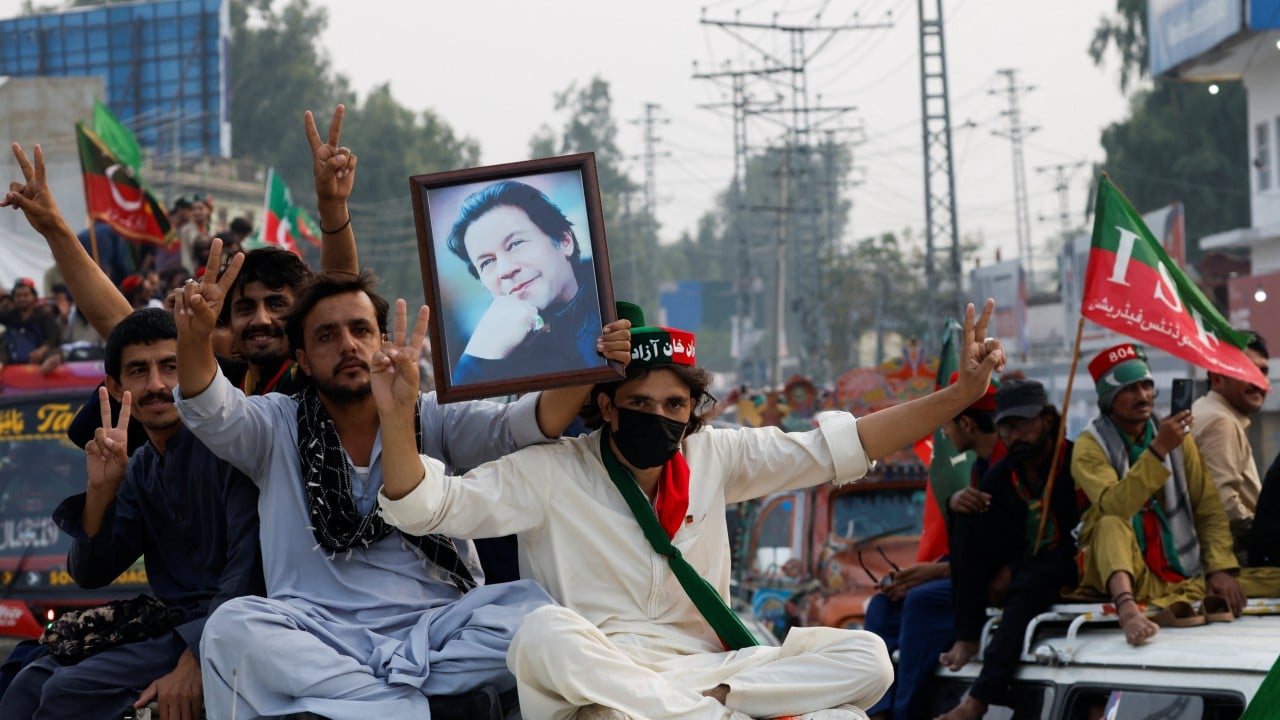
You cannot separate this security crackdown from the intense political pressure building outside the capital. The emergency declaration hit right as PTI supporters organized massive rallies and planned marches toward Islamabad to demand Imran Khan’s freedom.
Container barricades went up across major roads, security forces flooded the Red Zone, and key regional leaders went into detention. PTI representatives argue that if the central government genuinely cared about counterterrorism, provinces facing chronic security issues like Balochistan would have seen emergency measures long before Khyber Pakhtunkhwa.
Legal experts point out that while a state of emergency can be enacted under severe security duress, it suspends crucial fundamental rights—including freedoms of assembly, association, and expression. When these powers are directed straight at an opposition stronghold during an active political standoff, the line between maintaining public order and crushing political dissent blurs completely.
What Happens Next on the Ground
The federal government must place the emergency declaration before a joint parliamentary sitting within thirty days to secure long-term approval. Without that legislative backing, the emergency lapses after two months. Meanwhile, PTI lawyers have taken the matter to the courts, arguing that the suspension is unconstitutional and politically motivated.
Yet, relying solely on judicial relief in Pakistan's current political climate rarely yields quick fixes. Imran Khan remains imprisoned, facing a complex web of legal charges ranging from state gift disputes to incitement allegations—convictions that have mostly been suspended or dragged out through endless appeals. His ongoing letters to judges pleading for adequate medical care for his family show an opposition leader fighting on multiple fronts while his party infrastructure faces systematic dismantling.
This confrontation leaves the country at a dangerous crossroads. Suppressing a major political movement through emergency decrees might offer temporary control to the ruling coalition and military leadership, but it deepens public anger in a nation already buckling under heavy inflation and widespread economic frustration. True stability won't arrive through locked-down capitals and suspended assemblies; it requires a genuine political reset that addresses the grievances of millions of voters who feel their mandate was stolen.
Feminism & Freedom: Pakistan's Political Turmoil Explained
This video provides a deep-dive analysis into the recent emergency rule declaration in Khyber Pakhtunkhwa and the ongoing political crisis surrounding Imran Khan's party.