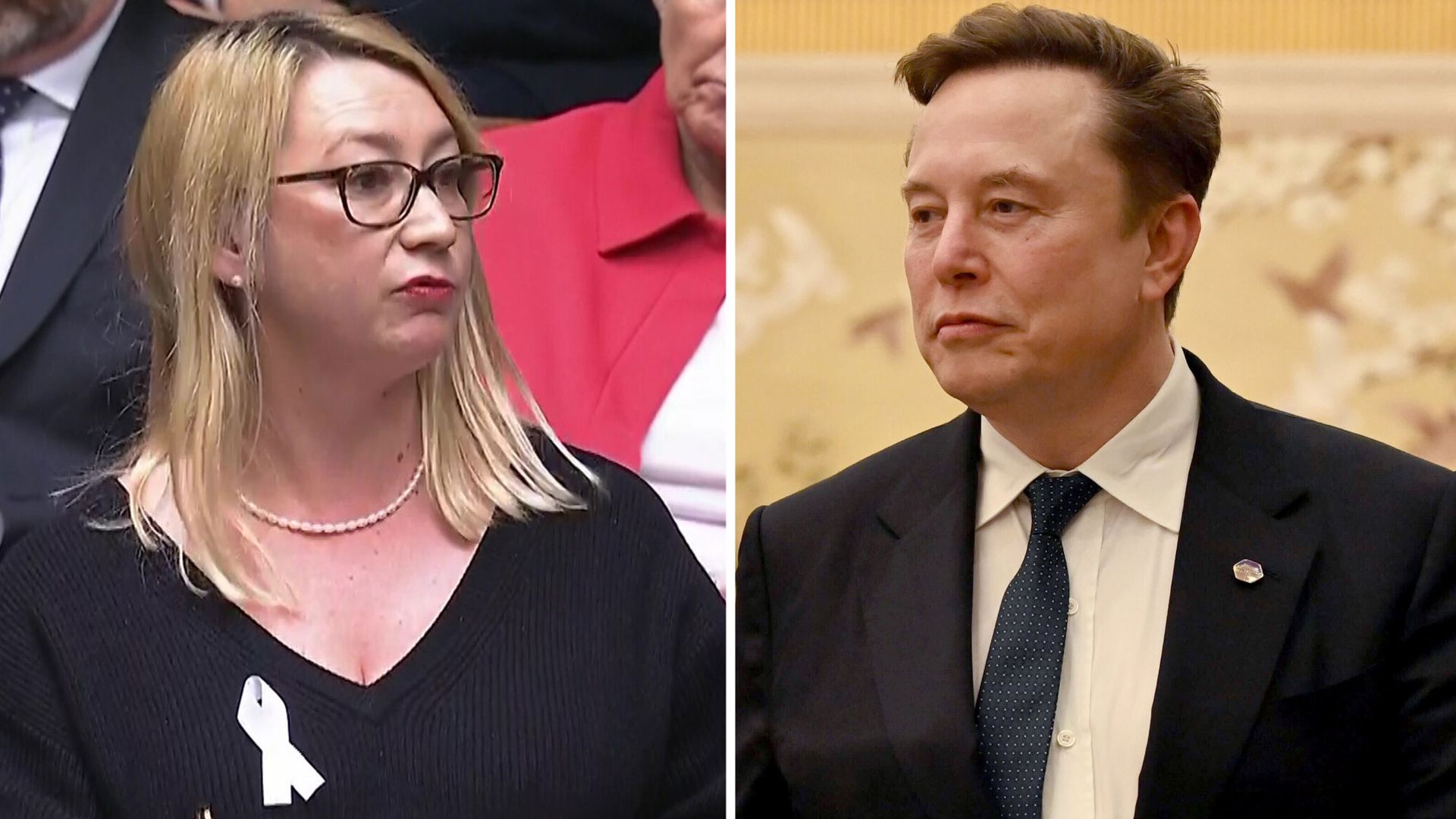
Keir Starmer has thrown the political weight of the British government behind a Labour MP suing Elon Musk’s xAI. The lawsuit centers on explicit deepfake images generated and distributed via Grok, the artificial intelligence platform embedded within the social network X. While the competitor press has framed this as a standard political spat or a routine defamation case, the reality is far more dangerous for Silicon Valley. This litigation strikes directly at the legal shield that has protected tech giants for thirty years. Section 230 of the Communications Decency Act in the United States, and its international equivalents, may no longer apply when the platform itself creates the defamatory content.
This is not a story about a politician being offended. It is a structural crisis for generative AI.
For decades, internet platforms operated as digital landlords. If a user posted a defamatory statement or a rogue image, the victim could sue the user, but the platform remained immune. Grok changes that equation entirely. When an AI model generates an image of a real person in a non-existent, compromising scenario, the platform stops being a passive distributor. It becomes the creator.
The Shift from Host to Author
To understand why this lawsuit is triggering alarms inside tech firms, you have to look at how these models operate. Traditional search engines point to existing data. If you search for an image, Google indexers find an image that a human uploaded.
Generative AI does not find things. It synthesizes them.
When a user prompts an image generator, the software samples billions of parameters to construct a brand-new file. If that file depicts a British Member of Parliament in a bikini—or worse, in explicit situations—the AI engine made those pixels. The tech company cannot claim it was merely hosting user-generated content.
Musk’s strategy with xAI has been defined by a loose approach to guardrails. While OpenAI and Google spent years building digital fences around their models to prevent the generation of public figures in compromising positions, Grok was marketed as edgy and unfiltered.
That marketing choice has now collided with the realities of English libel law and strict European privacy regulations. British courts do not require the same high bar for "actual malice" that US courts do when public figures sue for defamation. In the UK, if you publish something false that causes serious harm to a person's reputation, you are on the hook.
Why Political Air Cover Matters
Downing Street's public endorsement of the lawsuit removes the financial asymmetry that usually dooms these cases. Suing a billionaire is an exercise in bleeding money. Tech companies routinely deploy armies of lawyers to drag out discovery, file endless motions, and exhaust the plaintiff's resources before a judge ever hears the merits.
By backing the MP, Starmer signals that the British state is willing to treat this as a test case for a broader regulatory crackdown. It gives the plaintiff political stamina.
Consider how the government views this. This is an issue of national security and institutional integrity. If a foreign-owned AI platform can be used to generate compromising material of lawmakers at will, it becomes an active tool for political blackmail and election interference.
Musk’s legal team will likely argue that the user who typed the prompt is the true author of the image. They will position Grok as a highly sophisticated paintbrush. A paintbrush manufacturer isn't sued if someone paints a libelous mural on a public wall.
But that defense stretches the analogy past its breaking point. A paintbrush does not autonomously decide how to shade a human face based on a vast database of stolen imagery. The AI model makes the creative choices necessary to render the final product.
The Limits of Content Moderation
Tech firms often point to their terms of service as a shield. They forbid users from creating non-consensual sexual imagery or defamatory content.
Those terms are practically useless.
Hiring humans to review every single prompt generated by millions of users is economically impossible. Relying on automated filters creates a perpetual cat-and-mouse game. Users quickly learn to bypass filters using coded language or leetspeak. If an AI platform allows the generation of photorealistic human beings, it will inevitably be used to generate photorealistic harm.
The industry is watching this case because a loss for xAI would force a massive pivot in how generative models are deployed globally. If platforms are held strictly liable for the outputs of their algorithms, they cannot exist in their current form. They would have to restrict image generation to verified, pre-approved commercial users, or strip the models of their ability to render real human faces entirely.
The Financial Shockwaves
Investors have poured billions into generative AI based on projections of rapid, frictionless scale. They assumed the old internet rules would hold. They assumed that code was just code, and responsibility belonged to the end-user.
A judgment against xAI in a British court could lead to an injunction blocking the service entirely within the UK unless strict, potentially crippling guardrails are implemented. Other European jurisdictions would quickly follow suit.
The defense that "the technology is moving too fast for the law" is dying. Courts are ancient institutions, but they understand the concept of manufacturing a defective product. If a car company builds a vehicle where the steering wheel randomly veers into oncoming traffic, the company pays. If a tech firm builds a software engine that systematically cranks out deepfake pornography of real people, the logic of product liability dictates that they should pay too.
Musk has spent months framing his platforms as bastions of absolute free speech. This lawsuit forces a confrontation between that philosophy and the laws of sovereign nations protecting citizens from targeted harassment. Free speech protections rarely extend to the automated generation of fake, sexually explicit depictions of private or public individuals.
The legal battle ahead will not be settled by a quick corporate apology or a minor update to xAI's terms of service. It is a fundamental contest over who owns reality in the age of synthesis. If a government-backed lawsuit can prove that the AI company is the legal publisher of its machine-made fabrications, the entire economic model of unregulated generative AI collapses under the weight of its own liabilities. Shareholders will have to decide if they are willing to underwrite an industry where every single output carries the risk of a multi-million dollar defamation suit.