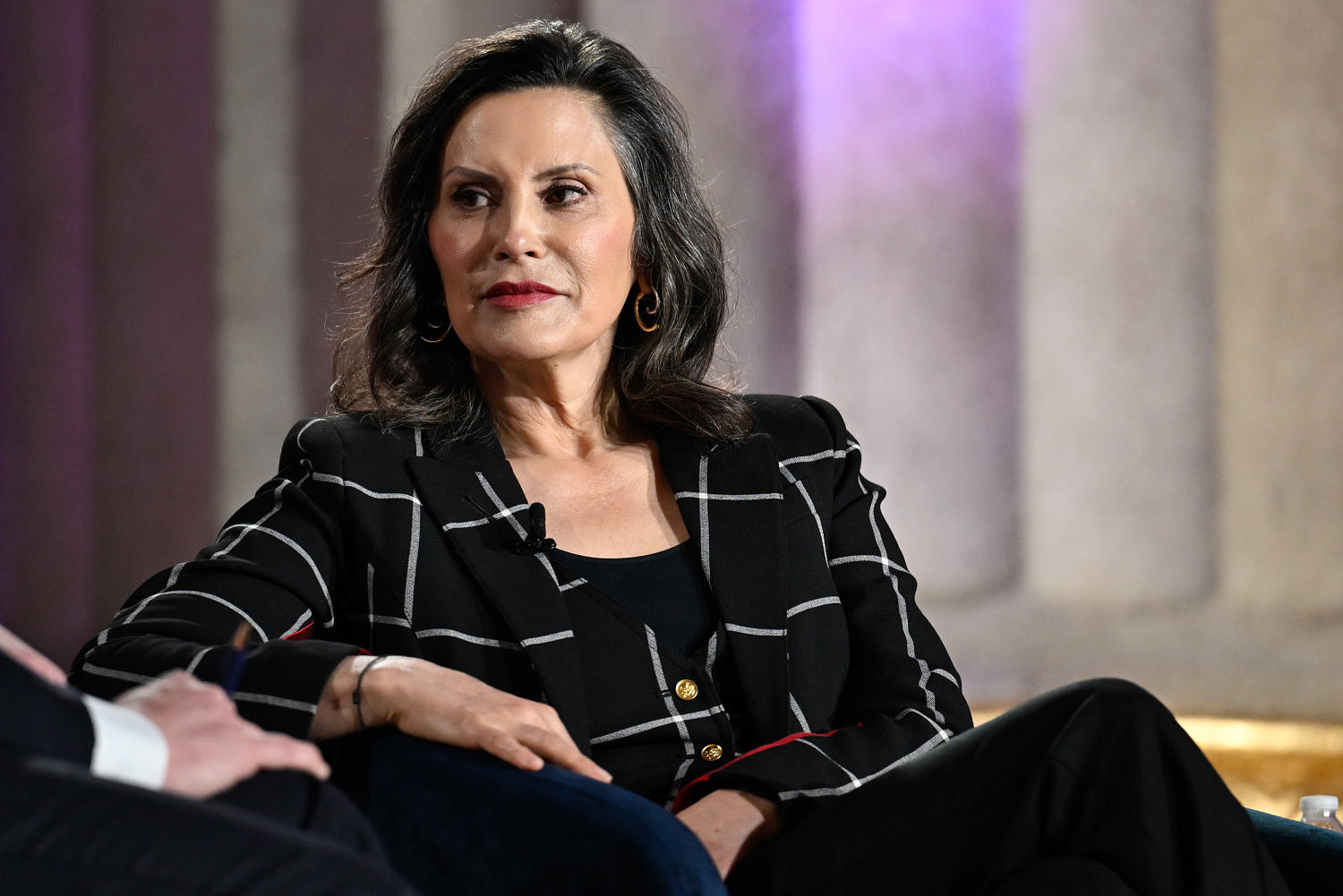
Public declarations regarding the United States' readiness to elect a female president—such as Michigan Governor Gretchen Whitmer's recent assertion that the electorate is prepared for a woman in the Oval Office—frequently treat voter sentiment as a monolithic switch rather than a complex mechanical system. In reality, executive viability in American national politics is governed by three structural variables: primary gatekeeping mechanisms, Electoral College coalition math, and asymmetric media framing. Assessing whether the country is "ready" requires stripping away aspirational rhetoric and evaluating the institutional friction points that determine candidate survival from early fundraising to the 270-vote threshold.
The Fallacy of Aggregate Sentiment
Political commentary routinely relies on national polling data asking voters whether they would support a qualified woman for president. While aggregate polling consistently shows overwhelming majorities answering in the affirmative, this metric suffers from severe social desirability bias and ignores the mechanics of the American electoral system. The United States does not elect its chief executive via a national popular referendum on abstract demographic categories.
To understand executive viability, strategists separate voter behavior into two distinct operational phases:
- Primary Survivability (Intra-Party Filtering): Candidates must first survive a polarized, high-turnout ideological base while securing institutional endorsements and bundled donor capital.
- General Election Conversion (Swing-State Arbitrage): Nominees must assemble a narrow geographic coalition across a handful of heterogeneous battleground states—specifically Pennsylvania, Michigan, Wisconsin, Georgia, Arizona, Nevada, and North Carolina.
When Governor Whitmer asserts national readiness, she is implicitly pointing to her own electoral record in Michigan, a critical Rust Belt swing state where she won consecutive gubernatorial races by margins of 9.5 percentage points in 2018 and 10.5 percentage points in 2022. However, extrapolating state-level executive success to the presidential tier introduces a massive scaling problem. Gubernatorial races are insulated from nationalized foreign policy scrutiny, commander-in-chief perception biases, and the concentrated media ecosystem that defines presidential campaigns.
The Structural Friction of the Double Bind
In organizational psychology and political science, female executives face a documented structural penalty known as the competence-likability double bind. Voters demand high levels of perceived agency, toughness, and decisiveness for the presidency—traits traditionally coded as masculine—while simultaneously penalizing female candidates who exhibit those exact behaviors for violating prescriptive gender norms of warmth and communalism.
This creates a narrow operational corridor for any female presidential contender:
- The Authority Deficit: Adopting a technocratic, policy-heavy posture establishes competence but frequently triggers voter perceptions of coldness or inauthenticity.
- The Empathy Trap: Emphasizing collaborative governance and personal warmth mitigates likability penalties but risks reinforcing stereotypes regarding executive weakness in crisis scenarios, particularly concerning national security and macroeconomic shocks.
Male candidates operate with a significantly wider margin for behavioral variance. Perceived aggression in a male candidate is routinely categorized as strength; the identical behavior in a female candidate is categorized as hostility. Until a campaign neutralizes this asymmetry through disciplined message architecture, raw voter "readiness" remains secondary to perceptual friction.
Institutional Gatekeeping and the "Electability" Heuristic
The primary barrier to electing a female president is rarely overt voter hostility in the general election; rather, it is risk-aversion among primary voters and institutional donors. Under conditions of high political polarization, primary electorates prioritize a single heuristic above ideological alignment: perceived general election viability.
This creates a self-reinforcing feedback loop:
- Perceived Risk: Primary voters harbor doubts not necessarily about a female candidate's competence, but about whether other voters—specifically undecided independents in swing states—will support her.
- Capital Hesitation: Major donors and Political Action Committees (PACs) delay early commitments to see if the candidate can clear initial polling thresholds, starving the campaign of the liquidity needed to build ground infrastructure.
- Media Amplification: Political journalism treats this hesitation as evidence of structural weakness, generating coverage focused on campaign viability rather than policy substance, which further depresses primary voter confidence.
Breaking this loop requires a candidate to demonstrate empirical proof of concept prior to entering the presidential arena. Governors of swing states possess a distinct structural advantage over senators or cabinet officials in this regard. A senator builds a legislative record characterized by partisan floor votes and media soundbites, offering little evidence of executive management. A swing-state governor commands an administrative bureaucracy, manages state budgets, responds to physical emergencies, and holds verified general election receipts from the exact demographic coalitions required to win the Electoral College.
Asymmetric Media Framing and Scrutiny Velocity
Media coverage of presidential campaigns operates on an economy of attention that disproportionately amplifies novelty and conflict. Data from the 2016 and 2020 election cycles demonstrates that female candidates receive higher volumes of coverage focused on personal traits, appearance, and campaign mechanics, while receiving proportionally less coverage dedicated to their substantive policy platforms compared to their male counterparts.
This dynamic accelerates scrutiny velocity—the speed at which a minor rhetorical misstep or policy pivot becomes a defining campaign narrative. When a candidate is already fighting the "electability" heuristic, a single unforced error is treated by political analysts not as a temporary tactical setback, but as validation of the underlying premise that the candidate cannot win. Consequently, female contenders must maintain an operational discipline and message consistency far exceeding the standard required of male frontrunners.
Limitations of the Gubernatorial Blueprint
While the swing-state executive model—exemplified by figures like Whitmer—solves the initial credibility problem regarding general election appeal, it carries severe operational limitations when scaled to a national campaign:
- Foreign Policy Vulnerability: Governors lack direct institutional experience in international diplomacy, defense procurement, and intelligence oversight. Opponents inevitably exploit this gap, framing the candidate as unprepared for global instability. Overcoming this requires early, aggressive positioning on international trade, supply chain security, and defense partnerships to construct an authoritative foreign policy profile before entering the primary.
- Primary Base Friction: The moderate, pragmatic governance style required to win statewide in places like Michigan or Pennsylvania often clashes with the ideological demands of national primary electorates, which reward uncompromising progressive or conservative signaling. A candidate optimized for the general election risks failing to survive the primary filter.
- Nationalized Brand Erosion: State-level popularity relies heavily on local economic conditions and constituent services. Once a governor enters the national media ecosystem, their localized brand is rapidly stripped away and replaced by national partisan polarization, erasing the crossover appeal they enjoyed at home.
The Path to Executive Viability
Determining whether the American electorate will install a woman in the presidency has nothing to do with cultural shifts in abstract polling and everything to do with tactical execution within existing institutional constraints. The candidate who successfully breaches the presidential barrier will not do so by running on the historic nature of their candidacy—a strategy that historically activates voter skepticism regarding meritocracy and distracts from economic messaging.
Instead, the viable blueprint demands a strict operational sequence:
- Anchor on Executive Outcomes: Campaign exclusively on verifiable administrative metrics—job creation, infrastructure delivery, and fiscal management—to neutralize competence biases before they form.
- Weaponize Swing-State Math: Leverage proven general election performance in battleground territories to dismantle the "electability" objection among risk-averse primary voters and institutional donors.
- Pre-Empt the Security Deficit: Establish credible national security and macroeconomic credentials through targeted policy rollouts and high-level surrogates well ahead of primary debates.
- Refuse the Identity Frame: Treat gender as an incidental biographical fact rather than a central campaign thesis, forcing media coverage back onto the terrain of governance and economic performance.
Electoral readiness is not a passive condition that a country eventually achieves; it is an outcome engineered by a campaign that understands institutional friction and executes a disciplined strategy to overcome it.


