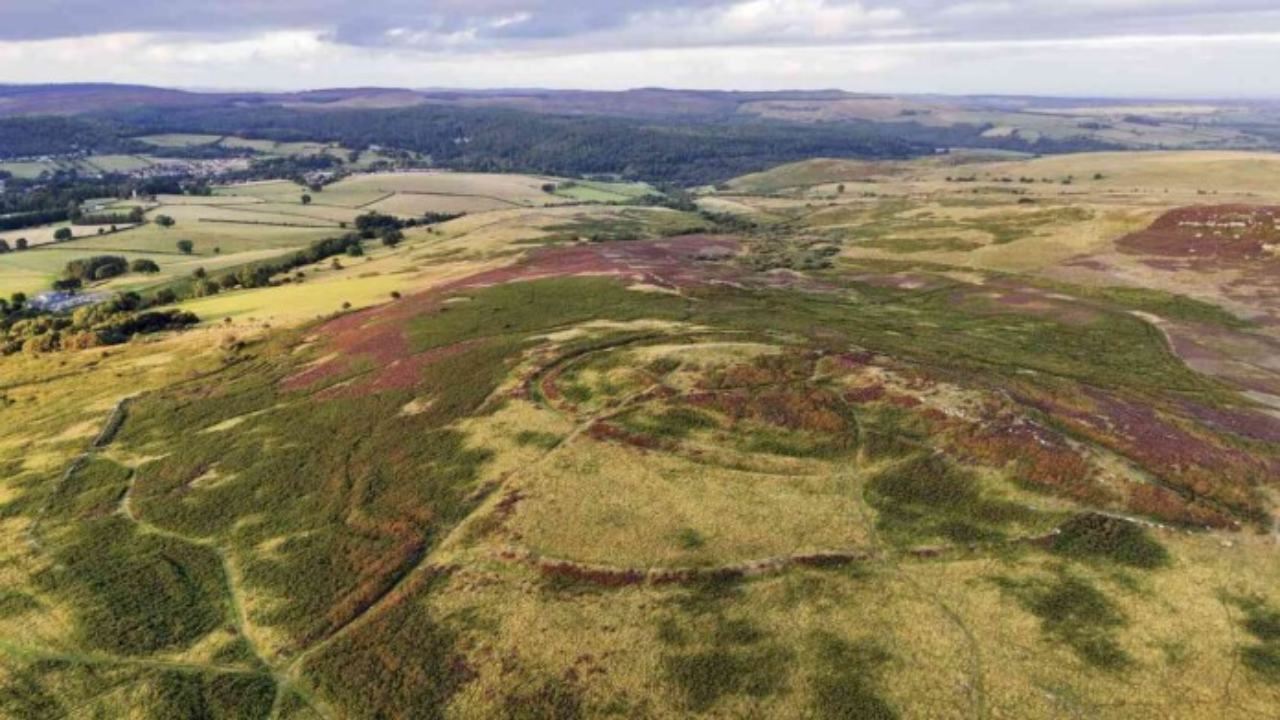
Walk across the chalk hills of Northumberland on a damp Tuesday in November, and the wind does not blow around you. It blows straight through you. It carries the sharp, metallic tang of wet peat, the faint sweetness of dying bracken, and the heavy, unmistakable silence of a land that has watched empires rise and rot while its own boundaries remained drawn in ink on vellum.
For eight hundred years, that silence belonged to one bloodline.
Imagine a deed—a real, physical piece of cured calfskin, yellow as old tallow—passed down from eldest son to eldest son since the days when King John was arguing with his barons at Runnymede. Eight centuries. Thirty-two generations of boots sinking into the same mud, of ledger books balancing timber yields and sheep flocks, of stone walls mended after winter frosts heaved the boulders out of the earth. In the British countryside, land is rarely just dirt. It is a dynasty made solid. When you stand on nine thousand five hundred acres of moorland, ancient woodland, and river valley that has answered to a single family name since the thirteenth century, you feel the sheer, suffocating weight of permanence. You assume the fence posts will stand until the sun burns out.
Until the day the gates swing open, and the owners are not dukes, or hedge funds, or foreign sovereign wealth portfolios. They are twenty-five thousand ordinary people who chipped in the price of a Sunday roast, a tank of petrol, or a modest inheritance to buy a piece of the wild back from history.
Stop and let that number settle into your ribs. Twenty-five thousand.
To understand why this transfer of the Rothbury Estate in Northumberland is not merely a quaint countryside news item, you have to understand what normally happens when an aristocrat puts a massive tract of Britain on the open market. Usually, the story ends before the public even knows the ink is wet. A discrete phone call happens in Mayfair. A corporate buyer looking for carbon-offsetting credits, a commercial forestry conglomerate eager to plant suffocating monocultures of Sitka spruce, or a billionaire seeking a private grouse-shooting playground wires the millions. The gates stay locked. The hedges get ripped out to make room for industrial tractors. The ancient meadows are plowed, fertilized, and silenced.
That was the razor’s edge this land walked along. Nine thousand five hundred acres is not a park. It is an entire functioning watershed, stretching from the Simonside Hills down to the River Coquet, encompassing peat bogs, heather moorland, and fragments of temperate rainforest that survived the last ice age. Put that much acreage under the wrong management, and you do not just lose a pretty view. You sever a biological artery.
The Architecture of Inheritance
Let us step back and look at how the British map got locked in the first place. If you grew up in the United Kingdom—or anywhere shaped by European property law—you carry a quiet, subconscious assumption about dirt. You assume that somewhere out there, a man in tweed owns the horizon.
For centuries, that was the design. Primogeniture—the legal tradition of handing the entire estate to the firstborn son—acted like a giant, slow-motion vacuum cleaner for real estate. It kept estates intact so families could maintain political clout, agricultural output, and social standing. And to be fair to the families who held these lands, many acted as fiercely devoted custodians. You do not keep an estate alive for eight hundred years by stripping it bare in a decade. You learn the rhythm of the soil because your great-grandchildren will have to eat from it.
Yet time has a way of grinding down even the thickest stone walls. Inheritance taxes, soaring maintenance costs for crumbling roofs, shifting agricultural subsidies, and the simple, relentless math of modern economics eventually catch up with every dynasty. When the Percy family—the Dukes of Northumberland—decided to sell the Rothbury Estate, they were not acting out of malice. They were responding to the same financial gravity that has broken up hundreds of historic estates over the last century.
Here is where the story usually turns tragic for the natural world. When an estate breaks up, the auctioneer’s hammer shatters an ecosystem into disconnected postage stamps. One buyer wants sheep pasture. Another wants holiday cottages. A third wants commercial timber. Suddenly, a red squirrel or a curlew trying to cross three miles of valley faces a gauntlet of barbed wire, pesticide runoff, and barren conifer plantations.
Think of an ecosystem like a Persian rug—not as a cliché, but as a structural reality. You can pull out one loose thread and the pattern still holds. You can pull out ten, and it looks a little frayed. But if you slice the rug into twelve squares and sell them to twelve different landlords, you do not have twelve smaller rugs. You have a pile of unraveling yarn.
A Crowd Against the Auction Block
When the Wildlife Trusts launched an urgent appeal to raise thirty million pounds to buy the Rothbury Estate outright, plenty of sensible people in London financial circles laughed into their coffee. Raising that kind of money through public donations in the middle of a cost-of-living crisis sounded like pure romantic delusion. Who has spare cash for heather and curlews when grocery bills are climbing and mortgage rates are biting?
Consider a hypothetical donor—let us call her Margaret, a retired schoolteacher living in a terraced house forty miles south in Newcastle. Margaret has never owned more than a twenty-foot strip of backyard concrete and three terracotta pots of geraniums. She does not wear waxed jackets. She does not own binoculars. Yet she remembers, with visceral clarity, driving up the Coquet Valley with her father in the back of a rattling Austin Morris in 1968, watching salmon leap the weir and hearing the bubbling, liquid call of curlews echoing off the crags.
Last year, Margaret went back to that same valley. The river was still there. The crags were still there. But the air felt strangely empty. The insects that used to splatter across her father’s windshield were gone. The curlews were silent.
When Margaret saw the appeal, she did not see a line item on a conservation charity’s balance sheet. She saw a chance to buy back a piece of her own memory—and to hand it to children she will never meet. So she transferred fifty pounds.
Multiply Margaret by twenty-five thousand.
Add a bricklayer from Manchester who gave ten pounds on payday. Add a software engineer in Bristol who set up a monthly direct debit. Add an elderly couple in Cornwall who left a bequest in their will, alongside major philanthropic foundations that matched the public’s grit pound for pound. Together, those twenty-five thousand strangers assembled a war chest capable of outbidding commercial timber syndicates and private land bankers.
They did something radical. They turned private inheritance into public permanence.
What Happens When the Fences Come Down
People often ask what "buying land for wildlife" actually means in practice. Does it mean locking the gates, throwing away the key, and letting brambles swallow the footpaths until nobody can walk there?
Quite the opposite. Nature in Britain is not a pristine wilderness waiting to be left alone; it is a wounded landscape that needs active, muscular care to heal.
Over the last seventy years, the United Kingdom has become one of the most nature-depleted countries on Earth. That is not hyperbole; it is a grim statistical reality documented by the State of Nature reports. Since 1970, more than forty percent of British wildlife species have declined in abundance. Farmland birds have vanished by the tens of millions. Nearly ninety-seven percent of wildflower meadows were plowed up after the Second World War in a desperate, understandable push to feed a hungry nation.
Now look closely at what sits inside those nine thousand five hundred acres in Northumberland, and you begin to see why conservationists are trembling with excitement.
First, there is the peat. Up on the high moors, deep blankets of waterlogged moss have been quietly locking away carbon for thousands of years. When peat bogs are drained for grazing or burned for grouse management, they dry out, crack, and bleed carbon dioxide straight into the atmosphere like an open wound. Restore the water table—block the old drainage ditches with timber dams and let the sphagnum moss swell again—and those bogs transform back into giant, living sponges. They hold back floodwaters that would otherwise inundate downstream towns during winter storms, and they pull carbon out of the sky without a single piece of expensive machinery.
Second, there are the rivers and burns. The waterways slicing through Rothbury feed directly into the River Coquet, a designated Site of Special Scientific Interest famous for its wild Atlantic salmon, sea trout, and otters. By planting native broadleaf trees—alder, willow, birch, and oak—along the riverbanks, the roots stitch the soil together, cooling the water in scorching summers so young salmon do not suffocate in warm, oxygen-starved pools.
Third, there is scale. Conservationists talk endlessly about "landscape-scale recovery," which sounds terribly dry until you watch a pine marten or a golden eagle try to survive on a fifty-acre nature reserve surrounded by dual carriageways and intensive barley fields. Apex predators and migratory birds need room to roam. They need messy, chaotic corridors of scrub, fallen deadwood, boggy hollows, and flower-rich pastures where insects can breed by the billions. Nine thousand five hundred acres gives wildlife room to breathe, adapt, and migrate as the climate shifts northward.
The Human Equation in the Hills
Still, it would be dishonest to pretend that turning an eight-hundred-year-old working estate into a wildlife haven is simple, painless, or universally cheered. Anyone who has spent time in rural communities knows how quickly well-meaning conservation plans can curdle into resentment if locals feel treated like relics in their own backyard.
When an estate changes hands on this scale, real people wake up at five in the morning wondering if their livelihoods just evaporated. Tenant farmers whose families have worked those pastures for generations worry about being pushed off the land. Gamekeepers, wallers, and local tradespeople wonder if the pub in the village will still have enough regulars to keep the lights on in February.
I remember sitting in a cold stone kitchen in the Yorkshire Dales a few years ago, listening to a third-generation hill farmer explain why he hated the word "rewilding." To him, the word sounded like an accusation—as if his grandfather’s sweat, his father’s backache, and his own sleepless nights lambing in snowstorms were all an ecological crime that needed to be erased. His anger was real, and ignoring it is the fastest way to doom any environmental project.
The success of the Rothbury purchase hinges entirely on avoiding that trap. Wildlife recovery in Britain cannot happen by evicting human beings; it happens by changing how humans work with the land. Native cattle—hardy breeds like Belted Galloways or Highland cattle—are not the enemies of biodiversity. Used in low numbers, their heavy hooves break up matted grass, creating bare patches of soil where wildflower seeds can germinate, while their dung feeds hordes of beetles that, in turn, feed bats and lapwings.
Tenant farmers on the estate are not relics to be cleared away. They are the people who know where the springs rise after heavy rain, which walls collapse in a gale, and how the snow drifts across the ridges in January. By shifting subsidies and estate tenancies away from maximizing headcounts of sheep and toward rewarding soil health, clean water, and thriving hedgerows, the estate can keep lights burning in farmhouse windows while bringing silence back to life.
And the public—those twenty-five thousand donors and their children—will not be locked behind wrought-iron gates. Footpaths will open. Schoolchildren from Newcastle and Sunderland will walk through ancient oak woods where red squirrels leap through the canopy, learning the names of plants their grandparents knew by heart.
The Quiet Shift in What We Value
Stand back and look at what just happened in Northumberland, because it reveals a crack in a wall that stood solid for nearly a millennium.
For eight centuries, land in Britain was measured almost exclusively by what could be extracted from it. How many tons of timber? How many head of livestock? How many brace of grouse shot on a crisp October morning? Even when aristocrats loved the land deeply, their balance sheets forced them to view nature as a resource to be harvested or a backdrop for sport.
Twenty-five thousand people just voted with their bank accounts for a radically different metric of wealth.
They decided that a curlew’s cry echoing across a misty moor has value, even if you cannot put it in a shipping container. They decided that clean water filtering through intact peat bogs is worth paying for, even if it never appears on a corporate dividend report. They proved that when ordinary citizens pool their modest resources, they can compete in the brutal arena of modern real estate—and win.
It is easy, reading the news these days, to feel paralyzed by the sheer scale of ecological loss. The numbers are always too big, the deadlines too close, the political arguments too vicious. You read about melting ice sheets or vanishing insects, and your brain simply shuts down to protect itself from despair.
Then something like Rothbury happens.
Next November, the wind will still blow cold across the Simonside Hills. The peat will still smell sharp and ancient after rain. The old calfskin deeds will sit safely in an archive, telling the story of one family’s eight-hundred-year watch.
Out on the moor, though, a different story is just beginning—written in moss, running water, and the quiet persistence of twenty-five thousand people who refused to let the wild be sold off to the highest bidder.