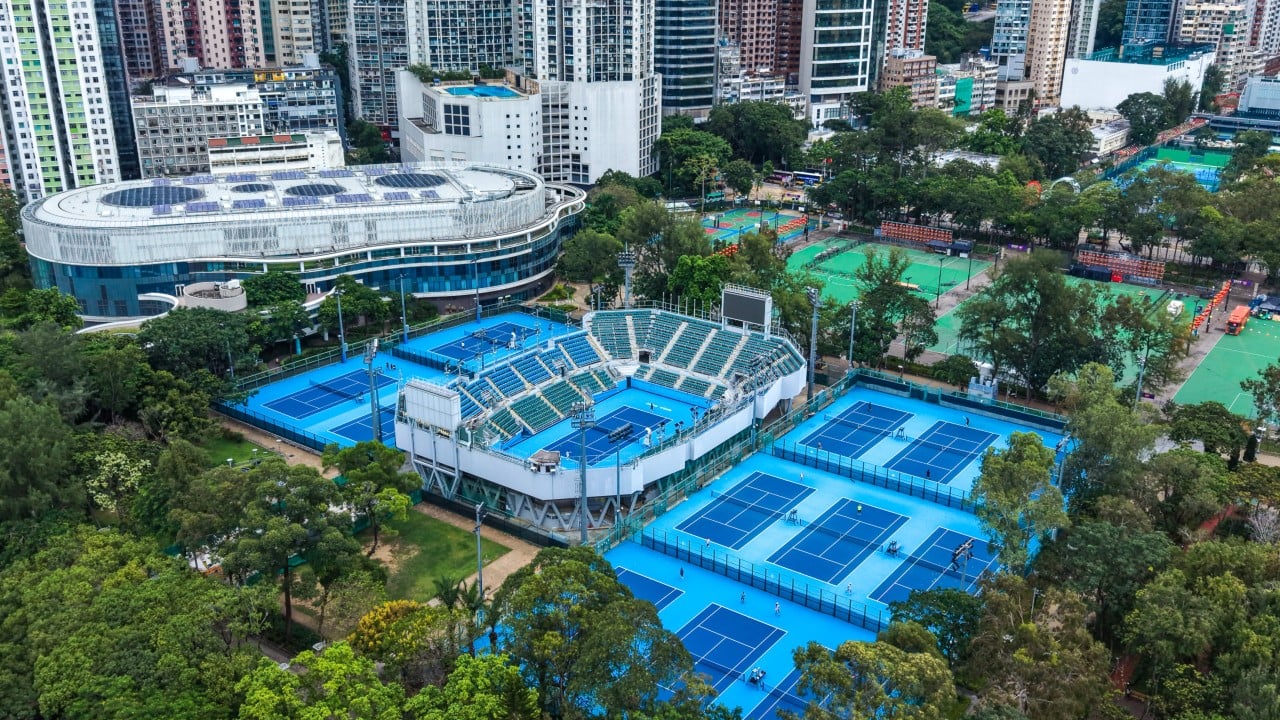
Urban municipal capital allocation frequently prioritizes signature real estate upgrades over baseline civic utility. The official objective to initiate the redevelopment of the Victoria Park Tennis Centre by 2030 reflects a calculated municipal pivot toward high-yield sports tourism and modernized event infrastructure. Deconstructing this initiative requires moving past promotional narratives to analyze the structural constraints, asset utilization metrics, and spatial economics governing high-density urban sports complexes.
The core intent driving this project centers on asset optimization and event yield maximization. Legacy sporting venues built decades ago suffer from structural depreciation, inadequate spectator capacities, and a lack of climate-adaptive architecture. In a dense urban core where land opportunity costs are exceptionally high, maintaining a low-density, single-purpose outdoor facility represents a suboptimal use of public property. Modernizing the Victoria Park facility to include advanced structural configurations, such as a retractable roof and increased seating capacity, addresses a fundamental operational bottleneck: weather vulnerability and rigid event scheduling.
The Capital Expenditure and Opportunity Cost Matrix
Upgrading municipal infrastructure within a constrained urban grid involves balancing capital expenditure against displaced community utility. The financial model relies on capturing higher-tier international tours, specifically transitioning the facility's capability profile to secure superior tournament tiers (such as ATP 500 events). Higher tournament tiers directly influence three economic vectors:
- Direct Tourism Revenue: Attraction of international travelers, driving hotel occupancy rates and retail expenditure.
- Broadcast Value: Enhanced global media exposure, which elevates the city’s brand equity as a regional sports hub.
- Ancillary Commercial Integration: Opportunities for corporate sponsorship, hospitality suites, and high-margin merchandising.
However, the cost function includes negative externalities. During the construction phase, displacement of existing recreational usage forces local athletes and community programs to seek alternative venues. The mitigation strategy—temporarily relocating tournaments to the Hong Kong Stadium during major reconstruction phases—highlights the complex logistical choreography required to maintain event continuity while civil works are executed.
Spatial Constraints and Multi-User Friction
Victoria Park occupies a prime geographical footprint in Causeway Bay. Every square meter allocated to spectator seating or retractable roofing alters the equilibrium between elite commercial utility and grassroots accessibility.
The structural redesign must resolve friction between three distinct user classes:
- Elite competitors requiring international-standard training and competition surfaces.
- Commercial promoters demanding premium hospitality amenities and broadcast-ready infrastructure.
- Local citizens relying on the park for daily recreational fitness and community well-being.
When municipal authorities attempt to satisfy these competing demands, architectural design must incorporate multi-functionality. A venue designed strictly for a single annual tournament produces a poor return on investment over a 365-day operational cycle. Consequently, the engineering parameters must emphasize modularity, allowing the main court and surrounding infrastructure to pivot between large-scale sports entertainment and multi-purpose civic utility.
Managing Construction Risk and Timeline Slippage
A 2030 target initialization date implies a multi-year runway dedicated to feasibility assessments, environmental impact studies, traffic management planning, and legislative funding approvals. Large-scale civic construction projects frequently encounter specific systemic risks:
- Regulatory and Planning Lags: Bureaucratic friction in securing multi-agency sign-offs for structural alterations in heritage-adjacent public parks.
- Supply Chain and Labor Volatility: Fluctuations in specialized engineering materials, particularly for kinetic architectural elements like retractable roofs.
- Scope Creep: Pressures from stakeholders to expand the amenity list, leading to budget inflation before ground is broken.
To mitigate these variables, the planning phase must establish rigid milestones separating design finalization from contractor procurement. The separation of civil works execution from adjacent public park assets—such as swimming complexes and soccer pitches—is critical to preserving baseline municipal activity during the construction window.
Strategic Deployment of Capital
The viability of the Victoria Park upgrade depends on disciplined execution rather than aspirational design. Municipal planners must tie project financing milestones directly to projected yield increases in sports tourism and commercial sponsorship. If the asset fails to elevate its tournament hosting tier or secure consistent multi-tenant utilization, the capital layout risks becoming a subsidized liability rather than a revenue-generating civic engine. The primary operational priority must be ensuring that engineering decisions match the financial realities of international sports economics, balancing marquee events with continuous, high-efficiency community access.