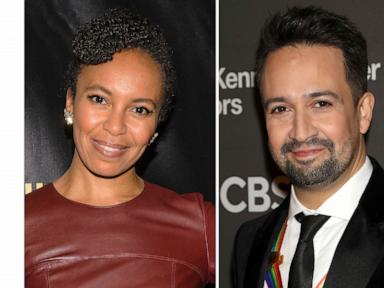
The transfer of the Lin-Manuel Miranda and Eisa Davis musical adaptation of Warriors to the Lunt-Fontanne Theatre in spring 2027 exposes the industrial mechanics underlying modern theatrical production. While general-interest reporting frames this announcement through the lens of creative milestones—marking Miranda’s first complete stage score since Hamilton—the move represents a highly structured framework for de-risking commercial theater. The transition from a 1965 novel by Sol Yurick, to a 1979 Paramount cult film, to a 2024 concept album, and finally to a 2027 Broadway run illustrates a repeatable economic strategy designed to mitigate capital flight in high-risk entertainment markets.
Broadway production models operate under extreme asymmetry; approximately 80% of shows fail to recoup their initial capitalization. To survive this environment, producers increasingly rely on a multi-tiered pipeline that functions as both a market-testing mechanism and a capital-accumulation vehicle. Analyzing the structural framework of Warriors reveals how intellectual property is systematically optimized for the stage.
The Three Pillars of IP Maximization
The viability of Warriors relies on three distinct structural advantages designed to offset the liabilities of modern commercial theater.
       [Source Material Evaluation]
      (1965 Novel & 1979 Paramount IP)
                    │
                    ▼
     [Audience Expansion & De-Risking]
        (2024 Concept Album Release)
                    │
                    ▼
     [Commercial Infrastructure Execution]
        (2027 Lunt-Fontanne Stage Run)
1. Built-in Narrative Awareness
Developing completely original narratives for commercial theater introduces significant customer-acquisition costs. By acquiring rights to an established title, the production captures a pre-existing demographic. The Warriors carries a dual layer of nostalgia: the original counterculture grit of Yurick’s text and the stylized, hyper-visual aesthetics of Walter Hill’s 1979 cinematic adaptation. This existing consumer awareness flattens the marketing expense curve required to establish brand identity during the critical preview period.
2. The Concept Album as an Auditory MVP
A concept album serves as a Minimum Viable Product (MVP) for the theatrical industry. Historically utilized by titles like Jesus Christ Superstar and Evita, this execution strategy allows creators to test musical viability, narrative pacing, and audience engagement before committing to the steep capital requirements of physical staging.
The October 2024 release of the Warriors album acted as a market-validation tool. Achieving the number one position on the Billboard Compilation Album chart and generating 5.5 million global streams in its debut week provided empirical proof of demand. The financial yield from streaming and digital sales simultaneously offsets early development costs while generating an active consumer base before ticket sales open in October 2026.
3. Star-Driven Brand Intersect
The concept album leveraged a highly diversified casting matrix to bridge distinct market segments. Featuring hip-hop and pop icons like Ms. Lauryn Hill, Nas, Busta Rhymes, and Ghostface Killah alongside established Broadway stars like Phillipa Soo and Amber Gray accomplished a dual-hemisphere marketing goal. It anchored the project within contemporary urban music culture—vital for an adaptation of a New York street gang narrative—while maintaining credibility within the traditional theater-going demographic.
The Structural Value of the Concept-to-Stage Transition
The primary limitation of standard commercial theater development is the financial bottleneck of out-of-town tryouts. Traditionally, productions mount short runs in regional hubs to refine the material. This introduces massive sunk costs in physical assets that cannot be easily transferred to Broadway houses.
The concept album bypasses this vulnerability by transforming the developmental phase into a revenue-generating commercial product. The process yields critical operational advantages:
- Sonic Proofing: The orchestration team—led by Kurt Crowley, Scott Wasserman, and Mike Elizondo—could evaluate the fusion of diverse genres (including salsa, ska, hip-hop, agro-rock, and K-pop) in a controlled studio environment. This minimizes the expensive structural changes often required during live orchestral rehearsals.
- Narrative Adaptation Flexibility: In translating the piece to audio format, Miranda and Davis executed significant narrative adaptations, specifically gender-flipping the core protagonist gang into an all-female unit. Testing this structural alteration via an audio format allowed the creators to gauge audience reception to the thematic shifts regarding authority, gender, and urban power dynamics without risking the immediate backlash of a costly physical production failure.
- Brand Distillation: The audio release established structural familiarity with the new numbers, such as the feminist track "Quiet Girls" and the stylistic deviation of "We Got You." When the stage version bows, a statistically significant portion of the audience will already possess familiarity with the score, which correlates directly with positive word-of-mouth metrics during early previews.
The Operational Cost Function of a Broadway Transfer
Staging a production at the Lunt-Fontanne Theatre introduces severe financial pressures. The operational cost function of a Broadway run is dictated by two primary categories: fixed capitalization costs and weekly operating expenses.
Total Staging Capital = Fixed Capitalization + (Weekly Operating Expenses * P)
                       Where P = Previews-to-Recoupment Timeline
Fixed capitalization covers the entire physical build: David Korins’ scenic design, Dede Ayite’s costumes, Natasha Katz’s lighting, and Hana S. Kim’s projections. Because Warriors demands a kinetic, geography-shifting narrative tracking a journey from the Bronx to Coney Island, the physical infrastructure will heavily rely on digital projections and modular staging to maintain pacing without incurring the logistical delays of mechanical scene shifts.
Weekly operating expenses present the highest risk of capital depletion. The production has secured an elite creative engine, appointing Jenny Koons as director alongside co-director and choreographer Andy Blankenbuehler. Blankenbuehler’s kinetic, precision-heavy choreography style—previously central to the pacing of In the Heights and Hamilton—demands a highly disciplined, athletic ensemble. This increases the labor cost function, requiring extensive understudy coverage and physical therapy infrastructure to mitigate performance disruptions.
A critical operational challenge lies in the casting transition. The star-studded lineup of the concept album (including Nas, Marc Anthony, and Colman Domingo) cannot be sustained economically or logistically within a standard eight-show-a-week Broadway schedule. The production faces a critical bottleneck: casting theatrical performers who can deliver the technical demands of the cross-genre score while maintaining box-office draw without the presence of the album's mainstream pop stars.
Strategic Forecast
The staging of Warriors will serve as a definitive test case for the institutional viability of the concept-album pipeline in the streaming era. The production will successfully navigate its preview period in March 2027 and its formal April opening by converting its 5.5 million album listeners into an advance box-office engine. However, its long-term financial yield will depend entirely on how efficiently Koons and Blankenbuehler translate an audio-first intellectual property into physical, spatial storytelling within the constraints of a traditional proscenium arch.
The ultimate operational play for the production company is to utilize the Broadway run not merely as an isolated profit center, but as the foundational validation required to anchor global licensing rights, international transfers, and eventual auxiliary film-to-stage ecosystem plays.


