The coffee at the station kiosk in Erfurt is always too hot and tastes faintly of burnt iron. Standing there in the crisp autumn air, watching commuters rush past beneath gray concrete eaves built in another era, you can feel the quiet weight of a geography that never quite felt at home in its own country. For decades, the maps of Europe have drawn a clean line over the map of Germany, pretending that a wall cut down decades ago left no scar beneath the surface. But history does not vanish just because the concrete blocks are hauled away. It settles into the floorboards. It lingers in the empty storefronts of towns where the young packed their bags and left for Frankfurt or Munich decades ago, leaving behind a population growing older, quieter, and profoundly tired of being governed by people who speak a language they do not recognize.
Consider Thomas, a hypothetical small-business owner whose hardware store has occupied the same corner since the reunification euphoria of 1990. Thomas is not a monster. He is a man who remembers the promises made by politicians in crisp suits who arrived from Bonn and Berlin thirty years ago, promising milk and honey, western wages, and an immediate leveling of the playing field. Instead, Thomas watched his neighborhood slowly hollow out. He watched local factories shutter, replaced by logistics hubs paying minimum wage. When he turns on the evening news, he sees national leaders debating abstractions in Berlin, completely untethered from the reality of a region where public buses run once an hour and the local hospital closed its maternity ward last spring.
When people feel invisible, they look for someone who stares directly at them.
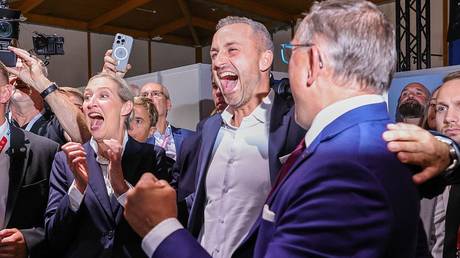
That fundamental human craving for visibility is where political gravity shifts. On a Sunday evening that will be marked in history books, the Alternative for Germany, or AfD, secured a historic victory in regional state voting, claiming roughly thirty-two percent of the vote in Thuringia and making massive strides across the former East. It was a political earthquake. For the first time since the dark ashes of World War II, a far-right party topped the polls in a German state election.
The numbers themselves are stark, cold statistics on a flickering screen. But numbers do not capture the emotional core of why voters like Thomas pulled the lever for a party labeled by domestic intelligence as right-wing extremist. To understand that choice, you have to look past the moral panic of the capitals and examine the mechanics of resentment. For years, mainstream parties erected a political firewall, a rigid agreement never to touch, negotiate with, or legitimize the movement. Yet every time the establishment drew that circle tighter, treating the voters of the east as a misunderstood demographic problem to be corrected rather than citizens to be heard, the wall only drove more people into the arms of the insurgents.
The strategy of the AfD was simple, ruthless, and devastatingly effective. They did not campaign on complex tax reforms or subtle macroeconomic adjustments. They dominated the emotional ecosystem. They walked into villages where the post office had closed, where the local bank branch was a digital ATM three towns over, and they whispered a single, potent message: They have forgotten you. But we see you. They fused economic anxiety with deep-seated cultural grievances, channeling fears of rapid demographic shifts and immigration into a narrative of loss. In a region where people already felt that their traditional ways of life were being erased by western modernism, the anti-migration platform acted as a lightning rod for accumulated frustrations.
Mainstream leaders like Chancellor Friedrich Merz and traditional center-right parties now face an agonizing reckoning. For generations, the foundational identity of modern democratic Germany was built upon a singular, ironclad premise: never again. The entire political architecture was designed to detect, isolate, and neutralize the germs of radical nationalism before they could ever take root again in the soil that bred the twentieth century's greatest catastrophe. Yet here it is, not marching in jackboots through the Brandenburg Gate, but winning democratic mandates in ballot boxes across leafy eastern provinces.
The air in Berlin feels different now. The traditional parties are trapped in a paralyzing arithmetic where winning an election is no longer enough to govern, because no one will cross the firewall to form a coalition. They are left managing a fractured electorate, staring across a chasm at millions of compatriots who feel entirely alienated from the European project.
Back in Erfurt, the station kiosk closes its sliding metal shutter for the night. The commuters have gone home to apartments where the radio hums with panicked analyses from political pundits miles away. But the ballot has already been cast. The invisible stakes of governance have broken out into the open light, reminding everyone that democracy is not a permanent monument carved in stone, but a fragile conversation that ends the moment one half of the country stops listening to the other.
AfD Wins Thuringia Polls: First Victory for German Far-Right Since WW2
This video provides an overview of the historic political shift and voter sentiment surrounding the AfD's milestone victory in the regional elections.