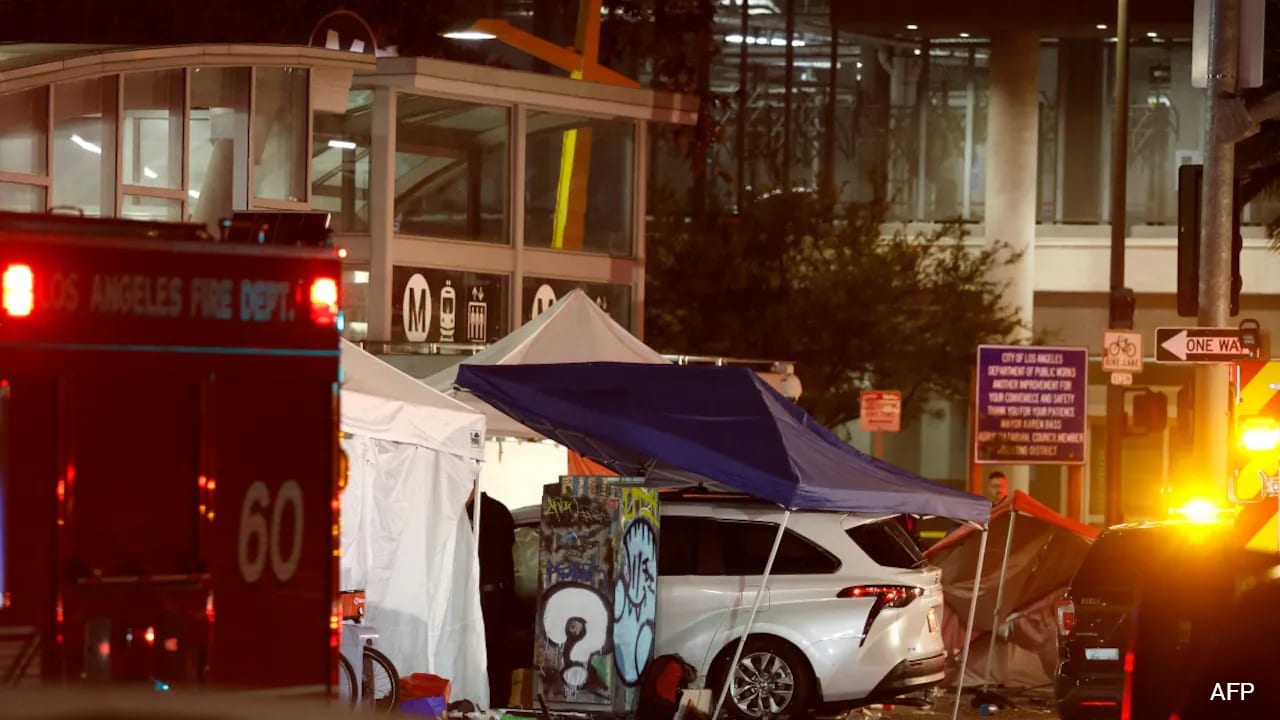
Most initial breaking news coverage of the November 10, 2026 North Hollywood crash got a crucial detail wrong before police even finished clearing the crime scene. Early headlines screamed about a runaway SUV plowing into a crowd, leaving three dead and three critically injured.
Look closer at the official police logs and the district attorney filings that followed. The vehicle wasn't an SUV at all. It was a white Toyota Sienna minivan. And the story isn't just a random traffic tragedy—it's a textbook case of how California's extreme DUI murder laws work when someone gets behind the wheel at more than three times the legal alcohol limit.
When breaking news hits, speed always beats accuracy. Reporters scramble to get a headline live while emergency crews are still cutting people out of wreckage. Now that the dust has settled and prosecutors have filed formal charges, we can look at what actually happened outside the North Hollywood Metro Station, who we lost, and why this specific intersection has been a ticking time bomb for years.
What Actually Happened at Lankershim and Chandler
Around 5:55 p.m. on Tuesday, November 10, 2026, rush hour was in full swing. Commuters were pouring out of the Metro B Line station near the intersection of Lankershim and Chandler boulevards. Right outside the station entrance, street vendors had set up their canopies for the evening crowd, selling food to hungry workers heading home.
According to the Los Angeles Police Department, 61-year-old Valley Village resident Ihor Demianenko was driving southbound on Lankershim Boulevard in a white Toyota Sienna. Police reports state he was traveling at an unsafe speed. Suddenly, the minivan veered hard to the right, jumped the curb, struck a streetlight, and plowed straight through the crowded sidewalk.
It didn't stop until it was buried underneath a food vendor's tent.
Los Angeles Fire Department paramedics arrived within minutes to a chaotic scene. Three women were pronounced dead right there on the concrete. Paramedics rushed two other surviving female victims—both in their 50s—to nearby hospitals with serious, life-threatening injuries. Early dispatch logs and initial news flashes reported three critical injuries alongside the three fatalities, largely because the driver himself had to be extricated from the crushed minivan and transported to a hospital for medical evaluation before being booked into jail.
The Lives Lost Outside the Metro Station
In big-city crash coverage, victims too often get reduced to ages and demographics. That shouldn't happen here. The three women killed on that sidewalk weren't just statistics—they were fixtures of the North Hollywood community.
The Los Angeles County Medical Examiner and prosecutors identified the victims as:
- Francesca Krystine Esker, 39
- Teodora De Jesus Villalobos, 57
- Maria Angelica Peck, 73
By the next morning, a massive memorial of candles, flowers, and handwritten notes covered the stretch of concrete near the station entrance. Neighbors and regular commuters stopped by to mourn women they saw almost every single day. Street vendors in Los Angeles work brutal hours in exposed conditions just to make a living, and they rely on high-foot-traffic transit hubs like North Hollywood to survive.
Within days, Los Angeles City Councilman Adrin Nazarian partnered with the local nonprofit ICON CDC to launch the NoHo Metro Station Street Vendor Support Fund to help cover funeral costs and support the grieving families. If you live in the area or want to verify legitimate relief efforts, always check directly through the council district's official channels rather than random social media links.
Why Prosecutors Filed Murder Charges Instead of Manslaughter
Here is where the legal reality diverges sharply from what most people expect after a fatal car crash. When a drunk driver kills someone, you usually hear about vehicular manslaughter. Not in this case.
The Los Angeles County District Attorney's Office charged Ihor Demianenko with three felony counts of murder, alongside two felony counts of driving under the influence causing injury. A judge set his bail at over $6.1 million, and his arraignment at the Van Nuys Courthouse was scheduled for December 16, 2026. (As with any criminal case, charges are allegations, and he remains presumed innocent until proven guilty in court.)
Why did prosecutors go straight for murder? Because of a legal doctrine in California known as a Watson murder.
Under California law, if you drive under the influence and kill someone, prosecutors can charge you with second-degree murder if they can prove "implied malice". Basically, they have to show you knew the extreme danger to human life and consciously disregarded it. Whenever anyone in California gets convicted of a prior DUI—or even signs certain DMV driver's license applications—they receive a formal warning called a Watson advisement. It explicitly states that driving impaired is inherently dangerous to human life and that killing someone while doing it can result in murder charges.
According to prosecutors, post-crash testing showed Demianenko's blood alcohol concentration (BAC) was more than three times the legal limit of 0.08%. When you combine a BAC north of 0.24% with high speeds on a packed commercial boulevard during evening rush hour, the District Attorney's specialized DUI Training and Prosecution Section (DTAPS) treats the vehicle like a deadly weapon.
Criminal Guilt vs. Civil Liability
People often confuse the criminal trial with what happens financially for the surviving families. They are two completely separate tracks.
Even if a criminal case takes years to wind through the Van Nuys courts, surviving victims and family members don't have to wait for a guilty verdict to pursue civil claims. Under California Vehicle Code Section 21952, drivers are strictly required to yield the right-of-way to pedestrians before driving onto or across any sidewalk. Violating basic speed laws (CVC 22350) and jumping a curb creates overwhelming civil negligence.
The real challenge in catastrophic sidewalk crashes isn't proving fault—it's finding enough insurance coverage to actually pay for three wrongful deaths and two catastrophic hospitalizations. Standard California auto policies rarely carry enough limits to cover five devastated families, which is why attorneys immediately look into umbrella policies, vehicle ownership records, and whether any commercial use was involved.
The Bigger Problem Nobody Wants to Fix at NoHo Station
Look at the intersection of Lankershim and Chandler boulevards on any given Tuesday evening, and you'll spot the urban design flaw immediately.
Lankershim Boulevard is wide, straight, and built like a mini-highway cutting straight through the San Fernando Valley. Cars routinely treat it like a drag strip between freeway on-ramps. Right alongside this high-speed corridor sits one of the busiest transit hubs in Los Angeles—a massive convergence of subways, buses, pedestrians, cyclists, and street vendors.
What separates those speeding two-ton vehicles from hundreds of people standing on the sidewalk? A six-inch concrete curb. That's it.
Urban planners call these high-speed multi-lane arterials "stroads"—hybrids that try to move highway-volume traffic while simultaneously serving dense pedestrian shopping districts. They fail at both. When a driver loses control at 50 or 60 miles per hour, a standard concrete curb acts less like a barrier and more like a launch ramp.
Los Angeles has spent years talking about its Vision Zero initiative—the pledge to eliminate traffic deaths—yet pedestrian fatalities across the city remain stubbornly high. Until the city installs steel-reinforced bollards around major transit plazas and physically narrows lanes to force drivers to slow down, unprotected sidewalks next to fast boulevards remain wide open to disaster.
Practical Steps If You Witness or Are Impacted by a Transit Crash
Seeing something like the North Hollywood crash makes you realize how fast a normal commute can turn into a nightmare. Whether you are a daily transit rider, a local resident, or someone helping a family navigate the aftermath of a severe pedestrian collision, knowing what to do in the first 48 hours changes everything.
- Document before scenes get cleared. If you ever witness a serious crash, take wide-angle photos and video of vehicle positions, skid marks, traffic signal phases, and nearby business security cameras before emergency crews tow the cars away. Businesses along boulevards like Lankershim often overwrite surveillance footage every 48 to 72 hours.
- Give your contact info directly to investigating detectives. Don't assume a passing patrol officer got your statement down accurately. Ask for the investigating traffic division's incident number—such as LAPD Valley Traffic Division—and follow up with your video or eyewitness account.
- Never sign early insurance releases. When multiple victims are hurt in a single crash, insurance adjusters sometimes rush to offer quick, lowball payouts to exhaust policy limits early. Injured pedestrians and grieving families should consult a qualified personal injury attorney before speaking to any insurer on a recorded line.
- Verify community fundraisers before donating. Tragedies always attract fake crowdfunding pages. Stick to verified funds backed by local municipal offices or established community organizations like ICON CDC.
Stay sharp whenever you're waiting near a busy intersection—keep your eyes up, stay back from the curb edge while waiting for buses or rideshares, and never assume oncoming traffic will stay inside the painted lines.
For raw footage of the emergency response and initial local reporting from the scene, watch KTLA's coverage of the North Hollywood Metro station crash. This broadcast captures the immediate aftermath outside the transit plaza and features early statements from first responders on Lankershim Boulevard.


