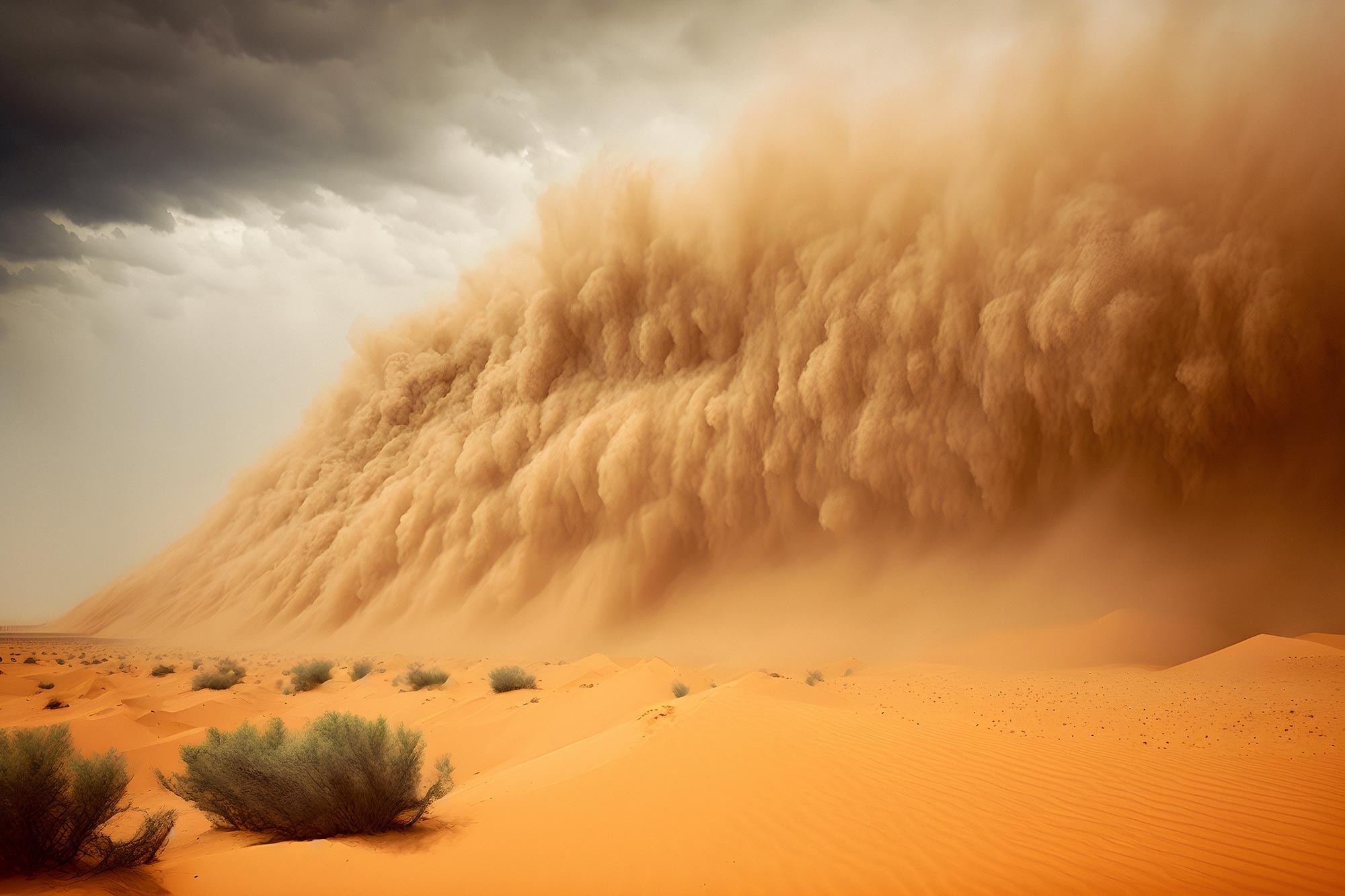
A gray film coat sits on the leaves of a three-hundred-year-old olive tree in Southwestern Turkey.
Touch it. Your fingertips come away blackened by lignite dust, fine as flour and heavy as lead.
For decades, the people who tend these trees have watched the earth open up around them. Giant dragline excavators, tall as four-story buildings, gnaw away at the green hills of Muğla province. They swallow ancient pine forests, crack open bedrock, and leave behind cratered chasms that stretch across the horizon.
Now, as diplomatic delegations negotiate who will host the UN COP31 climate conference, the villagers of İkizköy and Akbelen are sending a message across the globe.
They do not want delegates sitting inside air-conditioned halls sipping bottled water while discussing emissions targets. They want the diplomats to step onto a bus, travel two hours down the highway, and smell the sulfur for themselves.
The Smell of Burning Bedrock
Dust is not just dirt here. It is an omnipresent neighbor.
Consider a hypothetical morning in the life of a woman named Fatma—a composite portrait built from the lived experiences of elderly farmers throughout the Aegean hinterland. Before sunrise, she steps outside onto her porch with a sweeping broom.
Crack.
That is the sound of dry pine twigs breaking underfoot. But the second sound is quieter: a gritty crunch beneath her soles. overnight, the cooling towers of the nearby thermal power plant have breathed out another blanket of particulate matter.
She sweeps the porch. Two hours later, the gray coat returns.
She wipes down the kitchen windowsill. By noon, her cloth is dark again.
This constant fallout is the physical footprint of lignite, the lowest grade of coal. Lignite is moist, soft, and choked with ash and sulfur. Burning it produces less energy per ton than harder coals, which means power plants must burn vast mountains of it to keep the turbines spinning.
To feed those furnaces, mining companies scrape away every layer of topsoil, clearing orchards that have fed families since the Ottoman era.
When an olive tree dies here, it does not die of drought. It smothers. The soot seals the tiny pores on the underside of its leaves, blocking sunlight and halting photosynthesis. The olives shrink, darken, and fall early, ruined before harvest.
The Math Behind the Cough
Behind the emotional toll lies a brutal arithmetic of public health.
Across the globe, open-cast coal mining and coal-fired electricity generation release millions of tons of sulfur dioxide, nitrogen oxides, and fine particulate matter known as PM2.5. These microscopic specks are smaller than 2.5 microns in width—roughly one-thirtieth the diameter of a human hair.
When inhaled, PM2.5 bypasses the protective hair and mucus of the nasal passages. It travels deep into the lungs, penetrating the tiny air sacs where blood exchanges oxygen. From there, it enters the bloodstream directly.
Medical researchers studying coal-adjacent communities in Turkey and across Southern Europe have documented the steady creep of chronic illness:
- Childhood Asthma: Rates in villages within ten miles of thermal plants consistently outpace national averages.
- Cardiovascular Strain: Long-term exposure to sulfur dioxide increases vascular inflammation, driving higher rates of stroke and heart failure.
- Premature Mortality: Environmental health models estimate that historical coal combustion in Western Anatolia has contributed to tens of thousands of premature deaths over the past four decades.
The human body was never designed to process pulverized prehistoric swamps. Yet for rural populations living in the shadow of state-subsidized energy infrastructure, breathing this air is not a choice. It is a daily condition of survival.
When the Forest Stood Up
The conflict reached a boiling point when bulldozers entered the Akbelen Forest to expand the open-pit coal reserve supplying local power stations.
What followed was a defense organized largely by grandmothers and retired olive growers.
Villagers set up encampments beneath the trees. They wrapped their arms around centuries-old trunks to block chain saws. They held up handwritten signs written in red paint while facing lines of riot police armed with tear gas and water cannons.
Why fight so hard for a strip of woods?
Because in rural Turkey, land is not an asset class. Land is identity.
An olive grove is a grandparent's legacy and a grandchild's university tuition. It provides oil for cooking, shade for summer afternoons, and a physical anchor to a lineage. When an open-pit mine consumes a village, it does not merely displace households. It erases history.
Centuries of communal memory vanish into an industrial pit. The village fountain runs dry as mining operations drop the local water table by hundreds of feet. The local mosque or church collapses into the pit edge. Neighbors scatter to high-rise apartments on the outskirts of distant cities, stripped of their livelihood and isolated from their kin.
The View from the Conference Floor
Climate summits often take place inside gleaming convention centers.
Negotiators wearing tailored suits sit in soundproofed auditoriums, arguing over line items in multilateral agreements. They debate phrases like "phase-down" versus "phase-out." They construct complex carbon accounting frameworks and trade offset credits across international boundaries.
The villagers demanding action prior to COP31 are challenging this abstractions-first approach.
They argue that when climate policy becomes a game of numbers and terminology, the human faces inside the extraction zones disappear. High-level promises to reach net-zero emissions decades into the future mean little to an elderly farmer breathing toxic ash today.
If Turkey hosts world leaders for COP31, local activists insist the agenda must extend beyond speeches and photo opportunities. They are extending an open invitation: come sit on a porch in İkizköy. Eat an olive scraped clean of coal ash. Talk to a parent whose child relies on a daily nebulizer treatment to sleep through the night.
Seeing the damage firsthand changes the conversation. It shifts climate change from an abstract technical challenge to an immediate moral reality.
The Long Road Back to Green
Reclaiming a landscape hollowed out by coal is not as simple as planting a few saplings.
When an open-cast mine shuts down, it leaves behind an inverted mountain. The topsoil, built up over thousands of years of organic decomposition, is gone. The remaining subsoil is acidic, dense, and devoid of the mycorrhizal fungi needed to support plant roots.
Environmental restoration requires meticulous effort:
- Refilling the Void: Millions of cubic yards of overburden must be reshaped to prevent landslides and toxic runoff.
- Soil Reconstruction: A layer of organic soil must be imported and enriched before native plant species can take root.
- Hydrological Repair: Aquifers drained by decades of heavy industrial pumping require years, sometimes generations, to recharge naturally.
Yet despite these hurdles, local communities continue to fight for every acre. They plant young saplings in the clearings, watering them by hand with buckets carried from miles away.
They understand that the forest may not fully recover in their lifetimes. They do it anyway.
A Single Branch in the Wind
On a ridge overlooking the open-pit mine, the wind shifts.
The roar of yellow excavators down in the pit sounds like distant thunder, constant and low. A cloud of gray dust rises from the crater floor, catching the late afternoon sunlight before drifting toward the remaining grove of pine trees.
An elderly woman stands at the edge of her plot, her hand resting on the rugged bark of an old olive tree.
She does not look at the machinery below. She looks up at the green canopy above her, watching the leaves rustle against the blue sky.
The tree has survived droughts, freezes, and empires. Whether it survives the world's hunger for coal is a question being decided right now—not just in the dirt of Muğla, but in the polished halls where the future of the planet is negotiated.