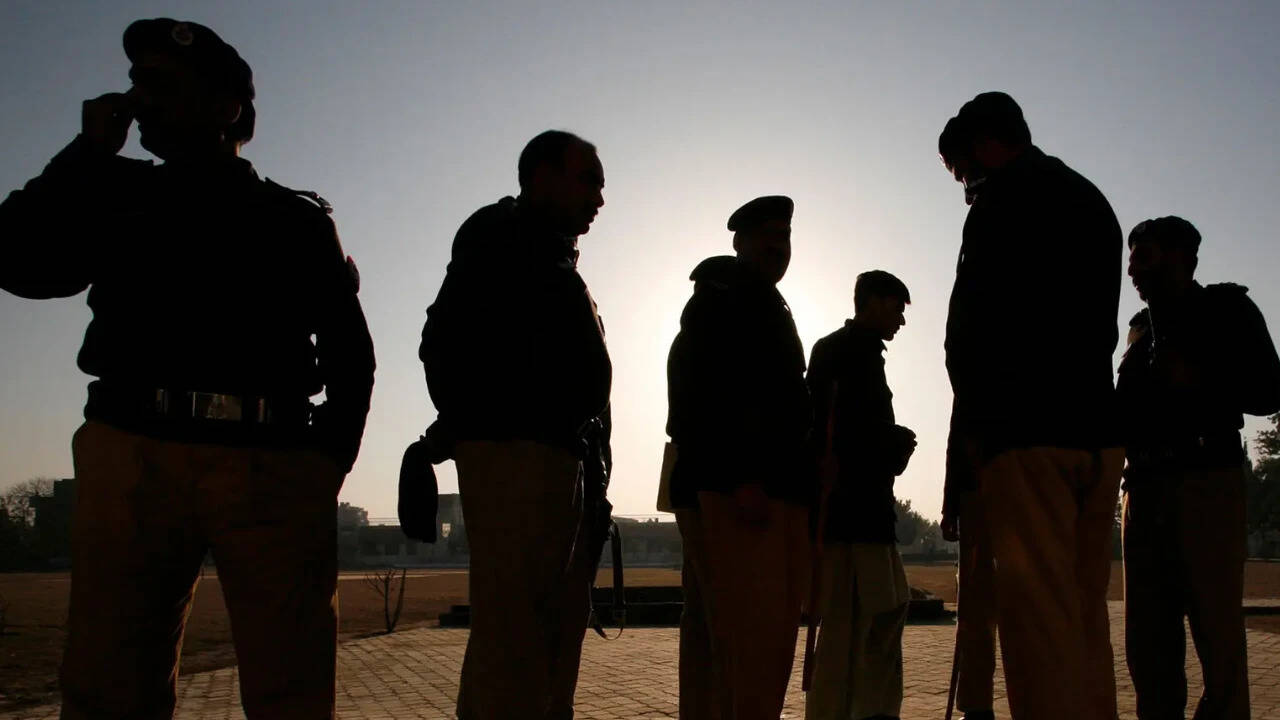
The air in Balochistan does not move; it weighs. It carries the faint, metallic tang of dust and old machinery, a scent that sticks to the back of your throat until you forget what clean air tastes like. For decades, this massive, arid expanse covering nearly half of Pakistan has existed as a paradox. It is a land of immense wealth buried deep beneath the rock—natural gas, copper, gold—and a population that remains among the most impoverished on earth.
When violence erupts here, it does not arrive as a sudden shock. It comes like a seasonal shift, predictable in its brutality, yet devastating every single time it strikes.
Recently, the silence of the highway near Musakhail was shattered. Gunmen blockaded the asphalt, forcing vehicles to a halt. They checked identification cards. They singled out laborers, individuals who had traveled hundreds of miles from the Punjab province just to earn a meager living pouring concrete or digging ditches. Twenty-three of them were lined up and shot. Simultaneously, coordinated assaults struck police stations, railway tracks, and military outposts across the province. The Baloch Liberation Army (BLA) claimed responsibility, launching one of its most expansive offensives in years.
The state’s response was swift, heavy, and telegraphed to a nation desperate for stability. Pakistan’s military apparatus mobilized, launching a massive counter-offensive. Within days, official reports declared that 75 militants had been neutralized.
On paper, the number 75 represents a decisive victory. It is a metric of success flashed across news screens in Islamabad and Karachi to reassure a jittery public and skeptical foreign investors. But on the ground, across the sun-baked ridges of Balochistan, numbers tell a completely different story. They mask the profound, cyclical tragedy of a conflict where the lines between security, survival, and desperation blur into the horizon.
The Human Cost of a Line on a Map
To understand the friction tearing at this region, one must look past the geopolitical chessboards and look at the people caught between the gears.
Consider a hypothetical truck driver named Tariq. He is not a politician. He has no opinion on regional autonomy or macroeconomics. His reality is the steering wheel of a faded Bedford truck, its chassis decorated with intricate poetry and painted flowers, carrying industrial goods from the port of Gwadar up north. For Tariq, a road closure isn't an inconvenience; it is a financial catastrophe. A checkpoint isn't just a security measure; it is a tense gamble where an wrong word or a missing document can cost him his day's wage, or worse.
When insurgent groups strike infrastructure, they claim they are targeting the state's economic arteries to protest the exploitation of Baloch resources. But the immediate casualty is never the state. It is the small-business owner whose shop is burned. It is the family of the Punjabi laborer who will never receive the envelope of cash their son promised to send home at the end of the month.
The retaliatory crackdowns, necessary as they are to restore a semblance of order, inevitably ripple through civilian life. When a village is cordoned off for search operations, life grinds to a halt. Schools close. Markets empty. The suspicion is democratic; it falls on everyone. A young Baloch student walking to a university campus finds himself viewed through a lens of inherent distrust.
This is the psychological tax of a long-standing insurgency. It creates an environment where fear is the primary currency, and trust is a luxury no one can afford.
The Highway of Broken Promises
The heart of the current crisis lies along the asphalt ribbons of the China-Pakistan Economic Corridor, or CPEC. This multi-billion-dollar network of roads, railways, and pipelines is designed to link western China to the Arabian Sea via the deep-water port of Gwadar.
To the planners in Beijing and Islamabad, this is a masterstroke of modern engineering. They see a future where Balochistan becomes a global trade hub, a bustling gateway connecting continents. It is an ambitious vision.
But step outside the heavily guarded gates of the Gwadar port enclave, and the narrative fractures. Local fishermen look at the massive gray ships and the concrete berths and wonder why their own access to the sea is increasingly restricted. They look at the new pipelines and wonder why their own homes still rely on contaminated water trucks or expensive propane cylinders.
This stark asymmetry is the fuel that keeps the insurgency burning. The BLA and other militant factions exploit this grievance with lethal precision. They frame every road, every bridge, and every foreign technician as symbols of an occupying force intent on stripping the land bare while giving nothing back.
The military crackdown that claimed 75 militant lives is an attempt to protect this economic vision at all costs. Security forces are tasked with an impossible mandate: police thousands of miles of rugged, mountainous terrain against an enemy that melts into the local population like shadows into night.
Yet, history suggests that eliminating fighters is only a temporary fix. You can clear a highway with armored personnel carriers, but you cannot secure a road permanently if the people living alongside it feel they have no stake in where that road leads.
The Trap of Total Certainty
There is a dangerous temptation in times of conflict to demand absolute clarity. We want clear villains and uncomplicated heroes. We want to believe that a decisive military operation can draw a neat line under a decades-old grievance.
The reality is messy, uncomfortable, and deeply uncertain.
Pakistan faces an authentic existential threat from militant groups that reject the constitution and use terror as their primary tool. No sovereign nation can allow armed groups to execute citizens on highways or bomb public infrastructure. The state has a fundamental duty to enforce the rule of law and protect its borders. The soldiers who risk their lives in the remote outposts of Balochistan are operating under immense pressure, facing a brutal, asymmetric threat.
But military might alone acts as a tourniquet, not a cure. It stops the bleeding, but it does not heal the wound.
The real tragedy is that the loudest voices belong to those with the guns, while the silent majority of Balochistan’s citizens are left voiceless. They are caught in a vise. On one side are the militants who demand their loyalty and punish cooperation with the state with death. On the other side is a security apparatus that often views local grievances through the narrow lens of national security, sometimes ignoring the legitimate socio-economic despair that drives young men into the hills in the first place.
True authority is not just the ability to wield force; it is the wisdom to know when force has reached its limit.
The smoke from the latest clashes will eventually dissipate, swept away by the dry desert wind. The checkpoints will remain, the soldiers will keep watch, and the trucks will continue their perilous journeys up the highways. The state will claim stability has been restored, while the insurgent networks will quiet down, recruit, and wait for the next opportunity to strike.
Until the economic promises of the future find their way into the homes of the people who actually live upon this mineral-rich earth, the peace achieved will be nothing more than a temporary pause between storms. The ledger of casualties will continue to grow, 75 names at a time, written in dust that never quite settles.